A banana has a difficult job in an advertising agency. It looks much like the next banana. It cannot offer a software upgrade. And the shopper may be comparing prices before noticing anything else. For Oster and Associates, that ordinary piece of fruit opens an unusually useful question: what can a brand promise that the product alone cannot explain?
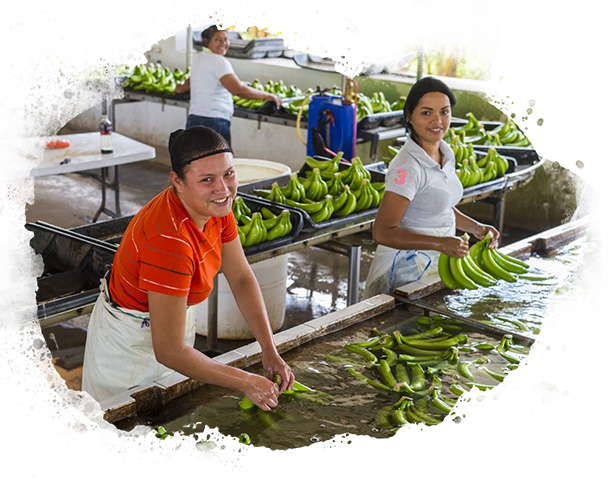
The San Diego firm’s work with Organics Unlimited supplies an answer. In 2005, according to founder Bev Oster’s later account, the agency helped the organic-fruit business start GROW, short for Giving Resources and Opportunities to Workers. The program connects banana purchases with support for farming communities. A small label carries a bigger proposition: the people behind the fruit count, too.
It is an apt introduction to an agency founded in 1986 whose documented customers include plant brands, garden centers, growers, and nonprofits. These are businesses where the story often begins well before the consumer arrives. Somebody grows the plant, somebody stocks it, somebody explains it. Oster’s work lives in those handoffs.
A promise you can count in cents
GROW gives cause marketing a unit of measurement. Veritable Vegetable, a distributor that markets the bananas, explains that 60 cents from each box goes to the program’s fund, independently administered by the International Community Foundation. The supported work includes education, health services, and community projects. The contribution is part of the banana program’s economics, separate from compensation for agency services.
Education · Health · Community support
That structure matters because it gives a retailer something specific to communicate. A produce manager can connect the purchase with a contribution, then point shoppers toward the people and programs it supports. The distributor’s resource page offers signage, recipes, merchandising guidance, and a banana-themed game. A brand promise becomes material a store can actually use.
The program also has a life beyond its launch campaign. In June 2026, trade publication AndNowUKnow reported that GROW had contributed more than $4 million since 2005. That is an achievement of Organics Unlimited and the program’s participants, rather than a measure of Oster’s advertising return. Keeping that distinction makes the story more persuasive: the agency helped communicate an operating idea with substance behind it.
The garden center was an early classroom
Oster’s gardening work makes the sequence of brand building unusually visible. Its relationship with Proven Winners began in 1993, according to the agency’s published history. The account describes developing the brand through business customers, introducing consumer publicity, and expanding into seasonal advertising. By its 2013 account, spring radio advertising and promotions covered 28 markets in the United States and Canada.
The list of materials was wider than the airwaves: retail packaging, public-garden appearances, printed gardening ideas, and social content. Taken together, they illustrate a practical problem for a plant brand. Recognition has to survive the journey from professional grower to retailer to someone standing over an empty flowerpot, wondering what will live.
Proven Winners radio advertising and promotions described in Oster’s 2013 account.
The useful inference is about sequence. Consumer attention is easier to spend well when the trade already understands the product and the retail presentation reinforces the message. A campaign buyer can copy that order without copying a single advertisement: establish what partners need to say, then make the shopper’s version simpler.
What the agency actually sells
Oster is a professional-services business. Companies and organizations hire it for marketing and communications work. Its stated services include branding, advertising, creative development, media buying, public relations, social media, and web design. The commercial proposition is coordination: a client can bring related assignments to one agency instead of managing each discipline separately.
Those assignments can have very different clocks. Brand development builds recognition over repeated encounters. Media buying puts a message in front of an audience at a chosen moment. Public relations helps a company explain something newsworthy. A website gives interested people somewhere to go. For a buyer, the first decision is which of these jobs needs doing, and how the pieces depend on one another.
The client record reflects that range. A published Organics Unlimited testimonial dates its creative-agency relationship to 2000. March for Science organizer Mary Canady, in another testimonial, thanks Oster for helping with media relations in the final days before the event. One is a continuing relationship; the other captures the value of getting experienced help when the deadline is close.
“Oster has been our creative marketing agency since 2000.”
Mayra Velazquez de Leon
Organics Unlimited · Published customer testimonial
That places Oster among integrated agencies, with particular experience in produce and horticulture. The alternatives depend on the brief: a specialist publicity firm, a design studio, a media buyer, or an internal team. Its gardening and produce record gives prospective clients something concrete to assess beyond the broad service menu.
In 2007, green became the calling card
Oster made its environmental emphasis explicit in 2007, announcing a green-marketing focus called The Green Solution. The timing was a commercial judgment. Bev Oster said environmental awareness had long informed the business, but that rising public interest was making the positioning more relevant to potential customers.
“Being environmentally conscious is not a new philosophy for us,” she said at the time. Existing clients helped substantiate the claim: Organics Unlimited, SunOpta Fruit Group, and natural-skincare company CA BOTANA. The agency also identified CPS Printing as a vendor using recycled paper, soy inks, and wind energy.
The move offers a modest lesson in repositioning. An agency can look at the work it already does, recognize a pattern, and name that expertise more clearly. Here, the supporting examples came from client and supplier relationships. That is a stronger starting point for a marketing claim than a freshly designed green symbol.
A later assignment continued the environmental thread. Oster supplied the May 2024 announcement introducing Plant With Purpose’s Community Designed Restoration approach. The nonprofit described locally led work addressing poverty and environmental degradation. Explaining such a program requires translating an organization’s methods into language that makes sense beyond its own staff.
A founder with somewhere else to be
Bev Oster’s involvement in Project Amigo makes the community theme personal. The nonprofit supports educational opportunities in Colima, Mexico. Its board biography says she first connected the organization with GROW in 2005, later served as board president and treasurer, and returned to the board at the beginning of 2025. It now lists her as secretary.

There is a workplace example, too. San Diego Magazine reported in 2017 that Oster supported employee Andres Verjan’s volunteer field trips by giving him paid time to prepare for and lead local children on hikes. The detail is refreshingly practical. A volunteer program needs hours during the school day, and the employer can help by making those hours possible.
An earlier PRNEWS account described another choice: concentrating the agency’s pro bono resources on one client for a year. North Coast Repertory Theatre was the recipient discussed in that report. For a small service business, sustained attention is a real contribution because staff time is also what paying customers buy.
These examples suggest an agency history in which community involvement has taken several forms: the founder’s board service, employee time, and donated client work. They also show why the scale of a commitment matters. A defined assignment with time behind it gives both parties something more useful than a broad promise to help.
Roses, questions, and reasons to show up
Some communications assignments are less philosophical than a banana’s social purpose. Armstrong Garden Centers marked its 130th anniversary with a free rose-plant promotion, and the February 2020 announcement listed Oster as the media contact. The event gave a longstanding retailer a timely reason to invite people in and thank its customers.
In 2019, Oster announced a free Cannabis 101 forum in San Diego. The planned format brought industry participants together for a community discussion, audience questions, and non-medicated sampling. It offered a different route to attention: create an occasion for people to learn, rather than expecting an advertisement to answer every question.
Oster also challenged a familiar assumption in produce marketing. A campaign with Organics Unlimited, reported by Supermarket News in 2018, aimed messages at children accompanying their parents to the store. The premise was that adults may pay, but younger shoppers participate in the decision. It is a useful reminder to observe the buying situation before deciding who the audience is.
The price still has to make sense
A compelling explanation does not remove the economics underneath it. Organics Unlimited’s leadership described the pressure of rising production expenses and thin grower margins in a 2021 industry interview. The company also offered both GROW and Fair Trade Certified labels that year, giving customers different ways to choose socially responsible produce.
For a prospective agency client, that context deserves a place in the brief. A campaign needs a credible product difference, a buyer who values it, and a business able to deliver the promise repeatedly. Where purchasers care only about the lowest price, spending more on an elaborate brand story may accomplish little. That is a commercial limit to consider, not a verdict on a particular campaign.
The practical takeaway from Oster’s history is to start close to the purchase. Decide what the customer should understand, identify the evidence, and give each participant in the selling process a usable version of the story. Then define the agency’s deliverables, the production and media budgets, and the measures that would make the assignment worthwhile.
Oster’s distinctive work makes that exercise tangible. A plant needs to be recognizable when spring arrives. A nonprofit needs people to understand its work. A banana needs a reason to be chosen. The interesting agency work begins when someone asks what that reason could honestly be.