The first advertisement made by the company that became Knoodle contained a nice, dangerous phrase: “with a family just like yours.” The client was Fulton Homes. The year was 1999. The line drew the attention of the Arizona Attorney General’s office. It was an awkward beginning for an advertising agency, especially one whose two founders admit they had precisely zero agency experience.
Yet the more revealing fact is what happened next. Fulton did not leave. It stayed through the renaming of Image Quest as Knoodle in 2004, through a housing crash, Chapter 11, a pandemic and the migration of homebuyers from television to search bars and streaming screens. Fulton is still Knoodle’s largest client. In an industry that regularly repackages short relationships as “partnerships,” 27 years is less a case study than a geological formation.
Knoodle is a 22-person, women-owned Phoenix agency. It sells strategy, creative, media buying, websites, search, social, public relations, video and cause marketing. That list resembles many full-service agencies. The distinction is found in the sequence: research first, then a unifying idea, then every useful channel handled close to home. Knoodle says the work stays in-house so it can control the variables and keep its promises. Its evidence is not an awards shelf. It is the client that never left.
01 / The originA lucky break with terrible timing
Rosaria Cain came from television, radio and newspapers. Caleb Miller came from running businesses. Together they started Image Quest with young children, thin bank accounts and Fulton Homes. Cain has described days when the practical questions were food, gasoline and who could pick up the kids. Within a few years, an attempted merger with a neighboring ecommerce operation collapsed after embezzlement came to light. Later came other expensive lessons: hiring ahead of unsigned accounts, two “superstar” recruits, the wrong partner, business-development directors who departed with clients, and an office in San Diego that should not have opened.
That history matters because Knoodle’s current operating philosophy reads like a response to it. Hire slowly. Do not spend more than you make. Train the next chief executive early. Keep your word. Cain’s 25th-anniversary account is unusually candid about the swing between years profitable enough to take the staff to Italy for New Year’s Eve and years when she personally financed the company. The culture is not built around pretending the errors were masterstrokes. It is built around remembering them.

02 / The insightThe rival was the house with a dead animal in it
During the Great Recession, the obvious competitors for a Phoenix homebuilder were other Phoenix homebuilders. Knoodle’s research pointed elsewhere. Buyers were comparing new construction with cheap foreclosures. Public builders were leaning on incentives and saying little about their brands. Fulton had a different asset: it was talking about pride of ownership, community and causes such as water safety and education.
So the campaign did something strategically impolite. It dwelled on the ugly side of distressed properties - missing appliances, rubbish, mold, even abandoned animals - and contrasted that uncertainty with a new Fulton home. The useful move was not a clever headline. It was changing the category of the competitor. A marketer can copy that by asking three separate questions: What is the customer worried about? What is everyone else saying? What can our brand credibly own?
What choice is the buyer actually making?
What has the market made interchangeable?
What can this company prove, not merely claim?
There is a small price tag attached to this idea. Knoodle recommends compensating qualitative research participants at least $50 each to attract a better sample. That is not the full cost of strategy, creative or media. It is the cost of hearing from someone who is not already sitting in the conference room - often the cheapest useful line in the budget.
Research also expires. After the pandemic, Knoodle revisited a familiar homebuyer brief and found that the old target - homeowners aged 35 to 54 with household income above $60,000 - no longer described the best opportunity. Phoenix had attracted younger workers and technology jobs, including many women. Interest rates had jumped. The agency moved the target. Longevity, in this model, does not mean running the same campaign forever. It means earning the right to ask the question again.
03 / The pivotThe billboard was visible. The result was not.
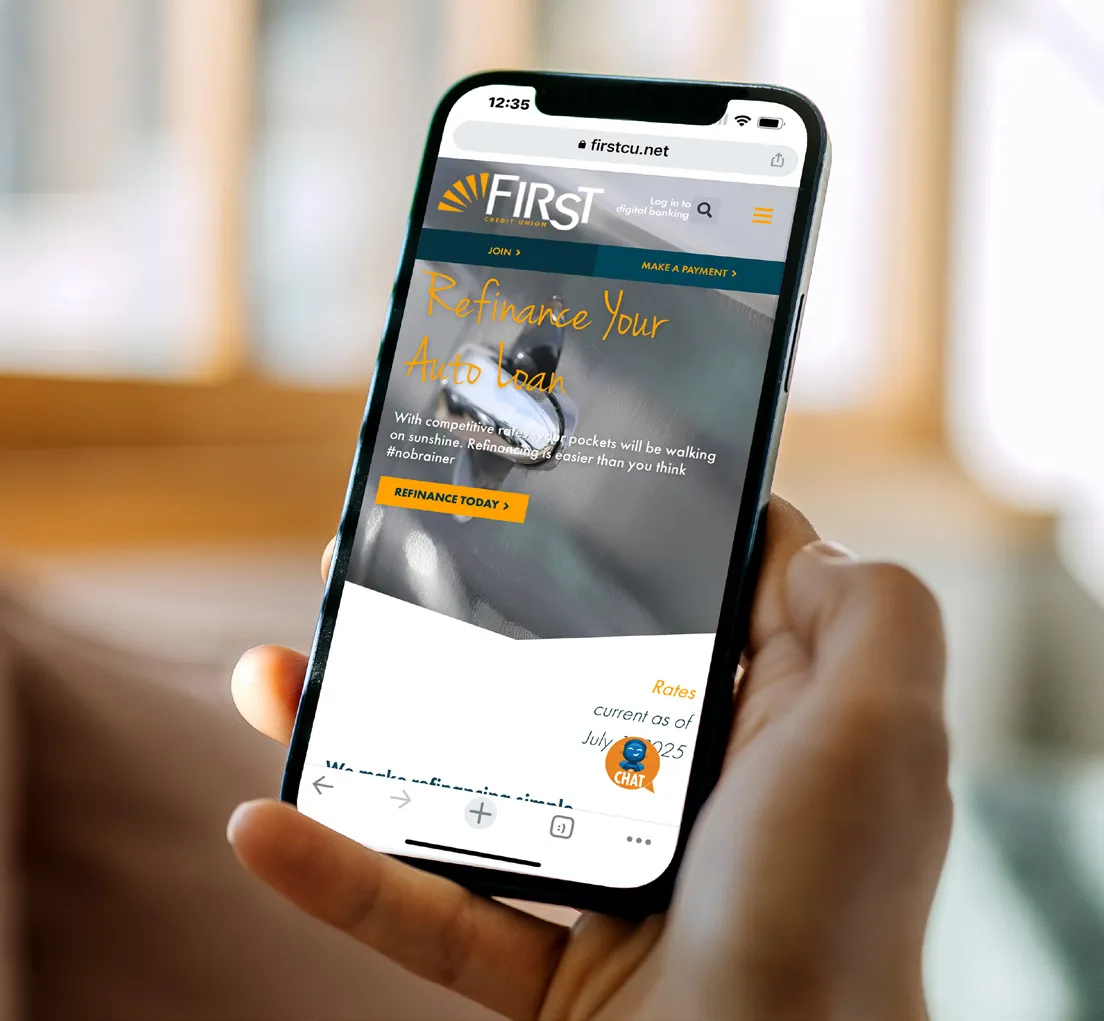
First Credit Union presented a cleaner experiment. Its static billboards created awareness but offered weak attribution and disappointing conversion. Knoodle and the credit union moved spend into targeted OTT streaming, cost-per-click advertising and cause campaigns with community partners. The new system could connect the message to an action.
The result is the best argument for Knoodle’s business model. Site sessions increased only 4 percent, but conversions rose 60 percent, applications 94 percent and new memberships 141 percent. Cause referrals converted at two to three times the rate attributed to billboards. The campaign did not simply pour more people into the top of the funnel. It found people with more reason to care.
First Credit Union / reported lift after the media shift
The bars are scaled to the largest reported change. The point is not traffic volume - it is what the traffic did.
04 / The nicheA cause, plus the unromantic machinery
Knoodle says it produces more than 30 cause-marketing programs a year. For Fulton alone, the tally exceeds 250. The issues include schools, veterans, pets, water safety and first responders. For First Credit Union, the Mad City Money program paired a hands-on budgeting simulation with radio promotion, public relations and event video. Over three years it reached more than 1,200 teens and family members; one year to the next, attendance doubled, and registration sold out.
The agency’s formula is plain enough to fit on a whiteboard: cause plus PR plus project management. The last term is the one most likely to be cropped out of an awards entry. It means arranging partners, producing material, chasing coverage, filming the day and keeping the message consistent. In 2020, Knoodle expanded that machinery by merging with ANGLES Communications, bringing a public-relations team under the same name.
This approach has limits. A cause cannot rescue a product people do not want. A local community program has less leverage for a brand with no genuine connection to the place or issue. And an integrated agency is a poor bargain for a company that needs one isolated deliverable and already has strategy, production and distribution covered. Knoodle makes the most sense when the problem crosses channels - when a campaign must be researched, made, placed, discussed and measured as one piece of work.
05 / The positionSmall enough to remember, broad enough to execute
Knoodle sits between two common alternatives. On one side is the large network agency, with deeper benches and offices everywhere. On the other is the specialist shop or freelance roster, hired for one craft at a time. Knoodle’s wager is that a compact in-house team can offer enough disciplines to keep an idea coherent without turning the client into the traffic manager.
Its strongest markets follow the lessons it learned early: homebuilding, real estate, home services, nonprofits, healthcare, finance, senior living, retail and business-to-business services. These are categories where trust is not a decorative word. A home, a bank account or a healthcare decision carries consequences. The creative can be playful; the underlying argument has to survive inspection.
This is why the Fulton relationship remains more persuasive than the service list. Over 27 years, the agency made more than 200 television spots, 334 radio executions, 85 billboards, documentaries, websites, search campaigns, social ads and cause programs for one company. The media changed. The relationship accumulated context. That context allowed Knoodle to notice when the competitor became a foreclosure, when the target grew younger, and when a seven-minute film belonged in a cinema.
The company almost called itself Platypus 7. The name was unavailable because an adult-content business had claimed it first. This may have been Knoodle’s earliest lucky break. The better name came later. So did the better habits. The client, improbably and instructively, stayed for all of it.
Keep Knoodling
See the agency’s work, current interviews and channel-by-channel practice.