The most economical fact in the history of Never Boring is that its founder was named Boring. David Boring had spent childhood learning what other children could do with that surname. By late 1982, while considering names for a new business, he understood something his classmates had taught him for free: a name works when people can repeat it. His father advised against beginning a company name with a negative word. The son, usually obedient on hard questions, took a chance on this one.
In 1983, Never Boring Associates began as a sign shop in Boring's Modesto home. The proposition was painted right on the tin. Over the next four decades the tin got much larger. Signs led to graphic design; design led to identity; identity led to advertising, media, publications, websites, search, social campaigns and film. The agency eventually kept its office on 14th Street and a film studio a few blocks away on I Street. It could name a company, wrap its trucks, build its website, buy its media and shoot its commercial without sending the owner on a tour of five vendors.
One conference table, fewer loose ends
Never Boring called itself full-service, an elastic phrase in advertising. Here it had literal heft. A client such as Burnside Body Shop used the firm for print, a website, social media, search optimization and film commercials across a relationship the agency said lasted 14 years. Haggerty's work stretched from trade-show banners and vehicle wraps to social media and a recruiting film. Humphreys University received a new identity, billboards, search work, social templates, digital ads, radio, collateral, a website and student-testimonial video.
The advantage was not that Never Boring had invented any of these disciplines. It was that the disciplines could remember one another. The university's torch logo hid the initials HU in its handle; the same identity then had to hold up on a billboard between Stockton and Modesto, in a social post, on an application brochure and across a complicated university website. After three months of steady digital campaigning, Humphreys reported a 22 percent increase in online traffic. Integration, in this case, meant the left hand had designed the typeface before the right hand bought the click.
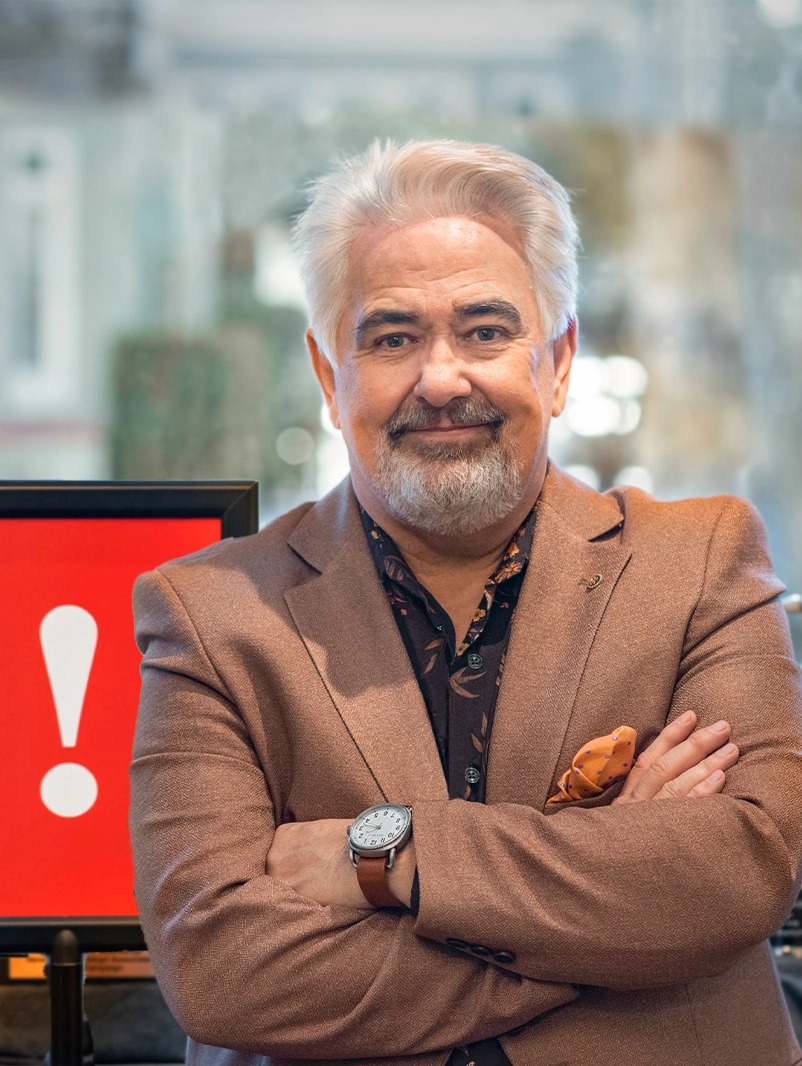
“We do marketing because we're curious.”Never Boring's account of its working method
Curiosity sounds soft until it is applied to a narrow market. Tactical Back Office placed trained remote staff in a sliver of the medical industry. Never Boring's research found that broad outsourced-labor messaging would miss the point, so the advertising addressed durable medical equipment and home medical equipment operators specifically. When COVID made an ordinary testimonial shoot impractical, the team recorded clients through video-conferencing software, edited the conversations into full testimonials and cut smaller answers for frequently asked questions. The camera changed. The credibility problem did not.
The full-service loop
and the audience
across many formats
close to home
Public briefs put numbers on the creative fog
Private agency fees are usually invisible. Government work leaves a paper trail. In 2015, Stanislaus County hired Never Boring for a regional-parks assignment that covered a system brand, separate park logos, brochures, web pages, press planning, social accounts and promotion for an Easter egg hunt. The initial contract was $46,186. The county later approved a $199,255 amendment for broader implementation, including more advertising, email, updated brochures, short videos, an event and a mascot. The first Easter egg hunt at Modesto Reservoir drew roughly 900 people.
These figures are examples, not a menu. What they expose is scope. A logo was rarely just a logo; it arrived with the places the logo had to live and the people it had to move. That suited institutions with many public touchpoints and not much appetite for managing specialists. It was less naturally suited to a company wanting one narrow, globally scaled technical discipline. Never Boring's edge came from density: many services, many years and a relatively concentrated geography.
A sign shop gives away the sign files
The first visible contraction came from the activity that had started everything. On March 1, 2022, Never Boring stopped producing signs directly. The company described the move as a refocus on its core marketing and advertising business, not as a failure. More interesting was the handoff: Harbor Signs and Graphics took over the old production location, and Never Boring passed along client contacts and applicable artwork so repeat orders would not begin with an archaeological dig.
Two years later, that small transition looked like a rehearsal. Never Boring announced that all production would stop on December 31, 2024. Boring called it semi-retirement. The company first informed staff and supplied a timeline, then contacted clients with projects underway, raced to complete most of them, and introduced ongoing accounts to nearby agencies. Arranca, led by former Never Boring employee Gil Cisneros, was recommended for web hosting, URL renewals, accessibility and search. Gerbo Designs took on Bogey, the Del Rio Country Club magazine. Accessible working assets went with the work.
The last campaign was continuity: tell people early, finish what you can, and make the introduction before switching off the lights.
Closures are often narrated as mysteries or calamities. This one was written as production management. There was no soaring claim that the firm had transformed advertising. There were names, specialties, phone numbers and a candid acknowledgment that only a few projects remained. Boring thanked former longtime partner and art director Julie Orona, credited generations of staff for more than 350 national and international awards, and left his own email address for questions.
The useful parts to copy
- Turn an apparent liability into a name people can repeat, but make the work earn the joke.
- Sell coordination when the customer's real burden is managing too many vendors.
- Research the narrow audience before choosing the broad channel.
- When a service leaves, transfer the usable files and make a warm introduction.
- Treat a shutdown like a client project, with owners, dates, dependencies and handoffs.
The agency as a piece of local infrastructure
Never Boring sat between the specialist studio and the national agency network. A specialist might bring deeper expertise in one channel; a network might bring offices and buying power. The Modesto firm brought accumulated context. Its portfolio crossed auto repair, construction, higher education, medical staffing, county parks, transit, chambers of commerce and nonprofits. Boring served in local civic roles. The agency donated time and projects. Publications such as Progress and Bogey were both client work and community plumbing.
That model depends on conditions that cannot be pasted into every market. The agency needs a place with enough organizations to support broad work, yet enough social overlap for reputation to compound. Clients must value one accountable table more than a collection of remote specialists. Staff must keep relearning the tools as signs become sites and sites become search campaigns. And succession has to be planned before fatigue or circumstance plans it instead.
The name Never Boring promised novelty. The company's longer achievement was almost the opposite: staying put, learning the same region repeatedly, and becoming familiar enough to be trusted with the next medium. The clever name opened the door. Forty-two years of useful memory kept it open. Then, when Boring decided to close it, he held the door for everyone walking out.