Consider the modest ambition of a customer-service call: one person has a problem; another person fixes it. Between those two events sits a small bureaucracy. Someone must identify the caller, find the record, decide who can see it, route the conversation, and remember what happened. The telephone rings once. The organization has several jobs to do.
- OSD connects enterprise communications with the records and controls around them.
- Its buyers include Thai businesses and public-sector organizations; banks have a dedicated debt-management product.
- Software, integration, training, and ongoing service form the commercial proposition.
This is a useful way into OSD, a Bangkok technology company established in 2003. Its catalog stretches from contact centers to privacy management, from single sign-on to AI agents. Viewed as a shopping list, it feels crowded. Follow the information through a business, however, and the relationship between those products becomes easier to see.
A phone system learns to travel
In February 2017, OSD announced a Cloud PBX service with Ericsson-LG. The intended buyers were revealing: collection businesses, insurance telesales operations, call centers, and car-rental companies. These were organizations where conversations were part of production. A missed connection could interrupt the work itself.
Orasa Khawngam, identified in the launch announcement as chief executive director, explained the move through growing demand for cloud services and OSD’s existing voice expertise. The proposition was practical: employees could use landlines or mobile phones, while businesses could expand their systems and reduce equipment and maintenance spending. That was management’s rationale for changing direction.
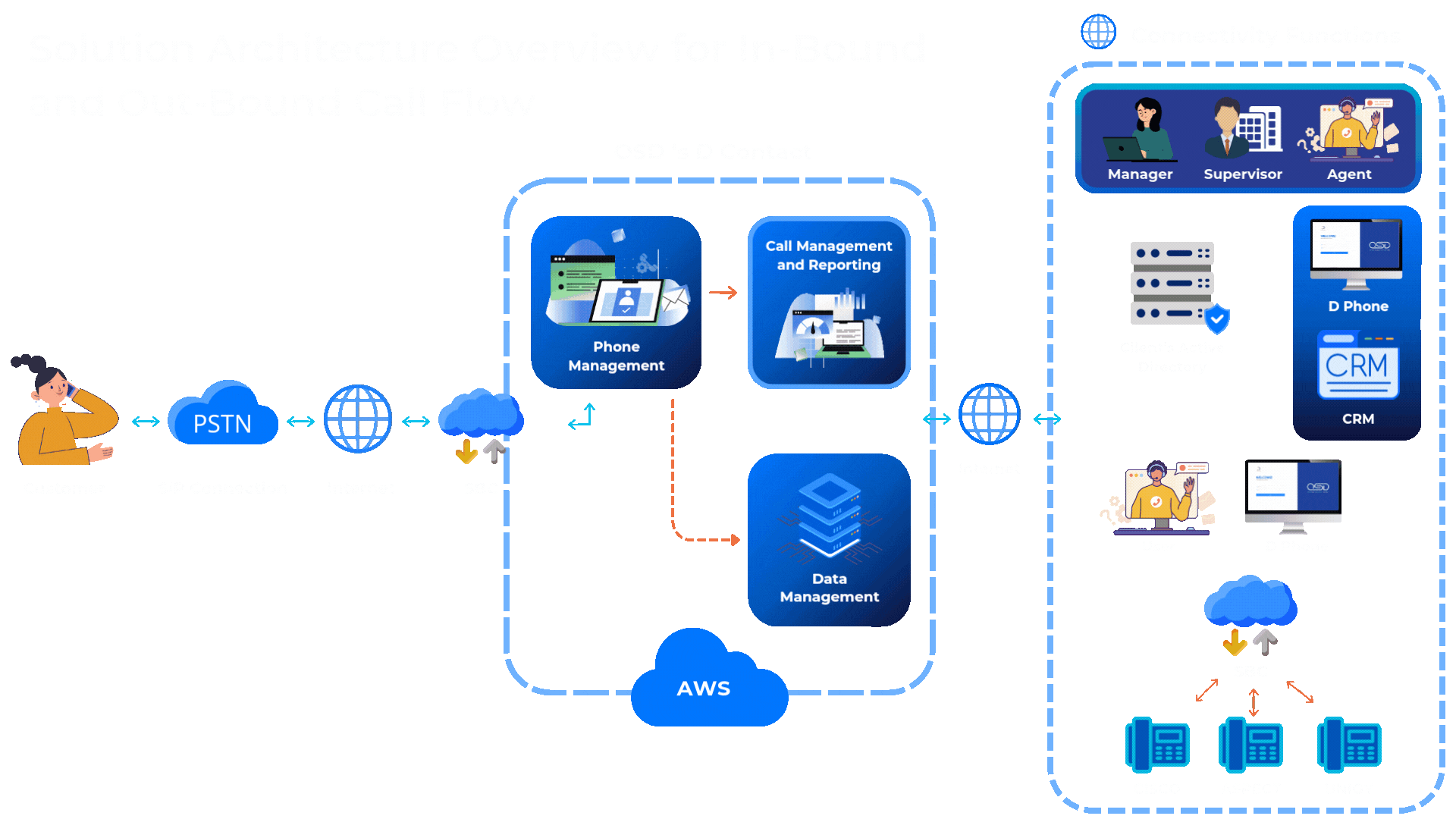
Today, D-Contact carries that communications thread forward. Its D-Phone softphone works through browsers and mobile apps. The surrounding contact-center tools handle queues, routing, recording, and reporting. The important change is that a telephone function can sit beside the information an employee needs to act.
The customer record has a second life
Take a hypothetical bank collection team. A call is only one step in its work. An agent needs the debtor’s history, a next action, and a record of the conversation. A supervisor needs to know which cases deserve attention. A legal team may eventually need the file.
D-DEBT addresses that sequence with debtor profiles, interaction histories, scoring, case assignment, and click-to-call integration. Its D Legal add-on covers stages from filing through enforcement. OSD markets deployment on premises or in the cloud. The product is designed around a specialist operational problem, with communications inside the workflow.
- 01IdentifyID24
- 02ConnectD-Contact
- 03ResolveD-DEBT
- 04GovernD-PDPA
Illustrative relationship between products, rather than a required implementation sequence.
The same record raises a permissions question. ID24 offers centralized accounts, single sign-on, directory integration, multi-factor authentication, and audit logs. Its appeal is familiar to anyone who has watched an employee accumulate logins: applications multiply faster than the organization’s ability to administer them individually.
Then comes privacy. D-PDPA organizes consent, processing records, impact assessments, and data-subject requests. OSD says lawyers and software engineers developed the platform together. The interesting detail is the choice of on-premise, hybrid, or full-cloud deployment. Different organizations can want the same workflow while having different requirements for where it runs.
The contract tells you who belongs here
OSD’s public pricing offers a useful interruption to the technology pitch. Its D-Contact page lists D-Call Center at 6,500 baht per license, D-DEBT at 10,000, and CRM Tele-sales at 5,000. Setup and configuration are listed separately at 500,000 baht, alongside training, quality assurance, and after-sales support.
Listed on OSD’s D-Contact page. Final pricing depends on users, organization size, and deployment; confirm rate periods and scope in a written quote.
This is a purchase for a team with a recurring operational need. A small office seeking an occasional calling tool should examine that commitment carefully. A procurement team should compare the whole deployment: migration, interfaces, training, support, and continuing usage charges. A per-license number describes only part of the decision.
OSD occupies the space between software vendor and systems integrator. It sells named products alongside infrastructure design, custom development, consulting, and managed services. Buyers can also assemble specialist tools with another integrator. The meaningful comparison is whether the proposed system can complete the organization’s actual work, within its budget and operating constraints.
AI arrives through an existing door
The newer catalog adds Agenza, a low-code environment for building AI agents and arranging workflows visually. OSD advertises CRM and ERP connections, role-based access, lifecycle management, and private deployment. Those details matter because an agent needs access to business systems before it can do useful business work.
The portfolio also reaches beyond office applications. ATOM, developed by subsidiary ADOT, combines cameras, IoT, dashboards, and alerts for urban operations. OSD’s VoC offering analyzes customer feedback; its associated suite advertises Thai and English language processing. Local language and existing infrastructure give the broad AI proposition a more concrete setting.
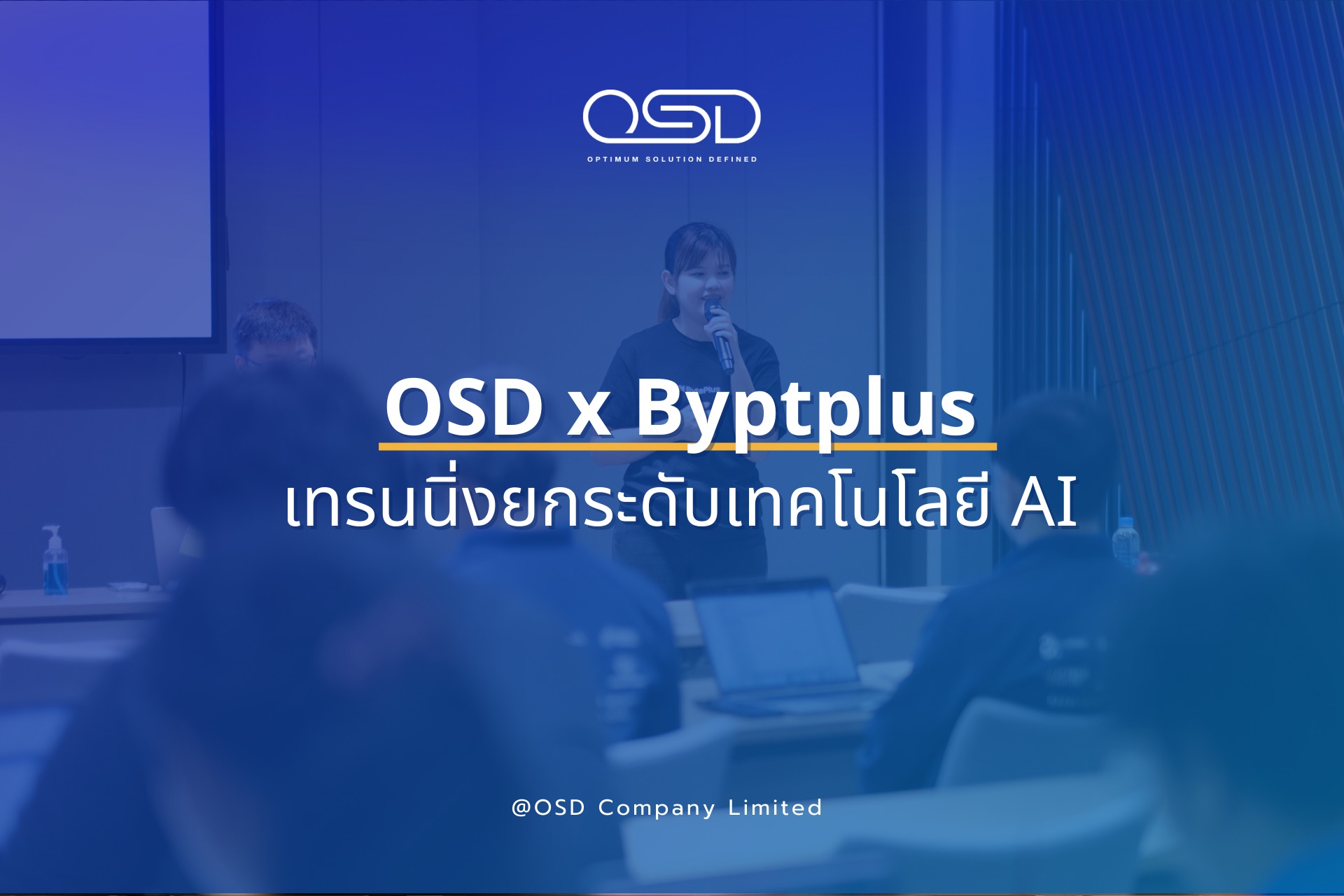
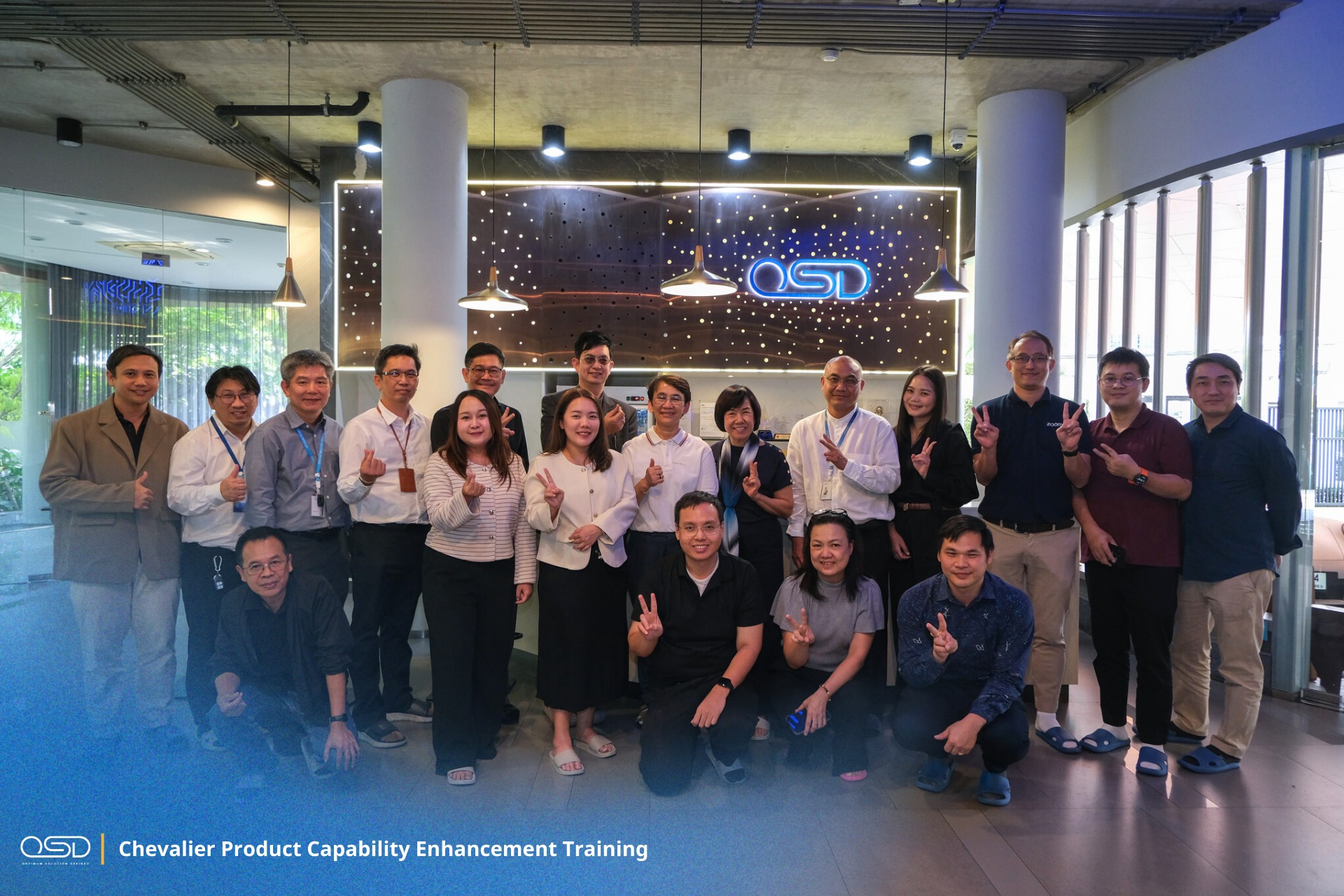
A February 2026 report describes a BytePlus cloud workshop held the previous December, covering migration and ongoing operations. Another documents product training with Chevalier. These are small, useful glimpses of implementation work: a platform needs people who understand how to install, explain, and maintain it.
“Doing what we promise, when we promise it”
OSD’s published commitment value
That promise has particular weight in this kind of sale. OSD’s partnership program invites resellers, integrators, technology vendors, and consultants to help deliver projects. Responsibility can cross company boundaries as well as application boundaries. A buyer should establish who handles an incident, who maintains each interface, and who confirms that a fix actually reaches the person waiting on the phone.
The lesson a reader can copy is an exercise: choose one customer interaction and draw every handoff. Ask who owns the record, who may open it, and how resolution gets recorded. Then test that complete journey with representative data. Disconnected records or unclear responsibilities deserve attention before automation makes them travel faster.
That exercise explains OSD’s unusual breadth. The telephone starts a conversation. The rest of the business has to finish it.