The person who needs Synthflow is usually not dreaming about artificial intelligence. She runs a clinic whose front desk cannot catch every call. He manages a contact center with a Monday-morning queue. They want fewer abandoned callers, clean appointment data, and a graceful transfer when a conversation gets strange. Synthflow AI turns those jobs into a visual workflow staffed by a synthetic voice. It can answer, ask, look something up, book, update a record, send a text, or pass the caller to a human. That is the why. The who is any operation with repeatable phone work and enough volume to justify treating the phone line like software.
The Berlin company began in 2023 when Hakob Astabatsyan, Albert Astabatsyan, and Sassun Mirzakhan-Saky experimented with text bots, tried voice, and discovered a nest of difficult problems: latency, interruptions, routing, and the tiny pauses that make a conversation feel alive or painfully fake. They spent the year building, released an early product in 2024, and moved upmarket quickly. Synthflow now presents itself less as a handy no-code agent builder and more as a full Voice AI operating system for contact centers, BPOs, and enterprise teams.
That change matters to buyers. A small business can still build an agent free and pay as it goes once calls begin. Yet the current product story is aimed squarely at production operations: custom annual agreements, planned concurrency, SIP and PBX connections, region choices, security reviews, deployment support, and live monitoring. If your need is “please answer five calls after dinner,” this may be more cockpit than bicycle. If your queue handles claims, bookings, qualifications, or service requests all day, the cockpit starts to make sense.
The voice is the visible trick. The plumbing earns the contract.
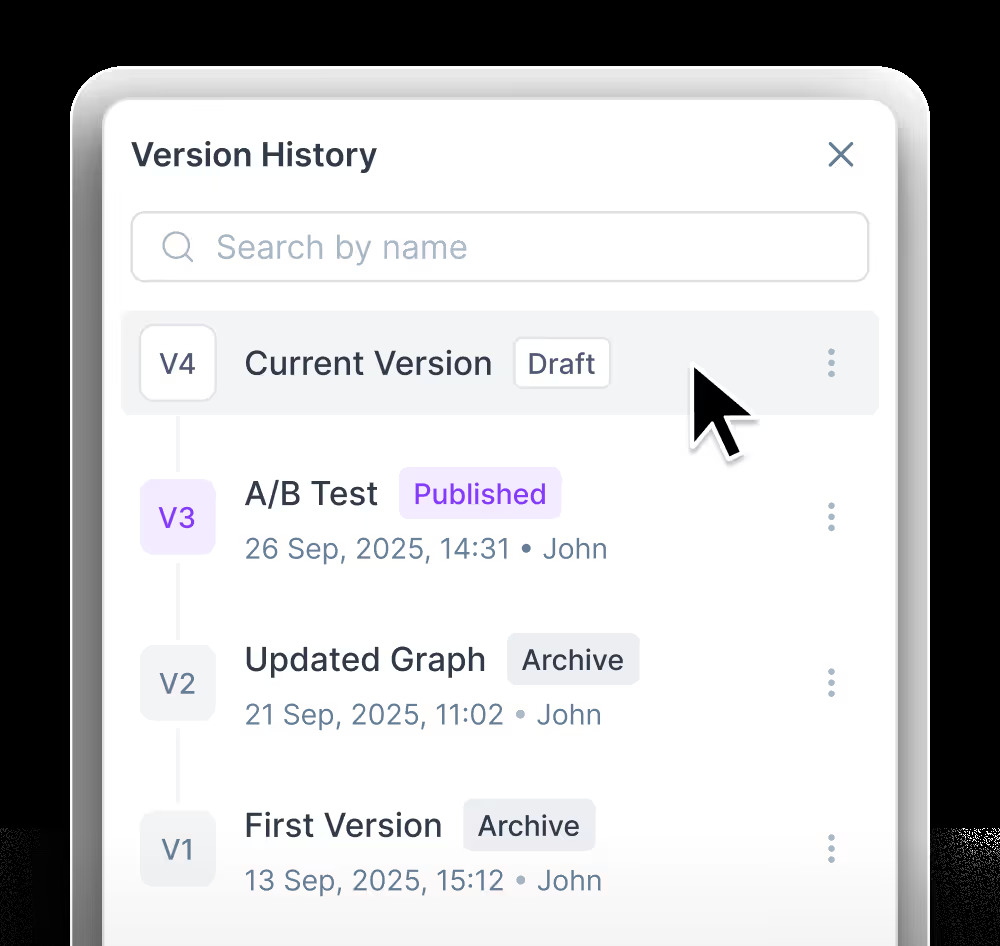
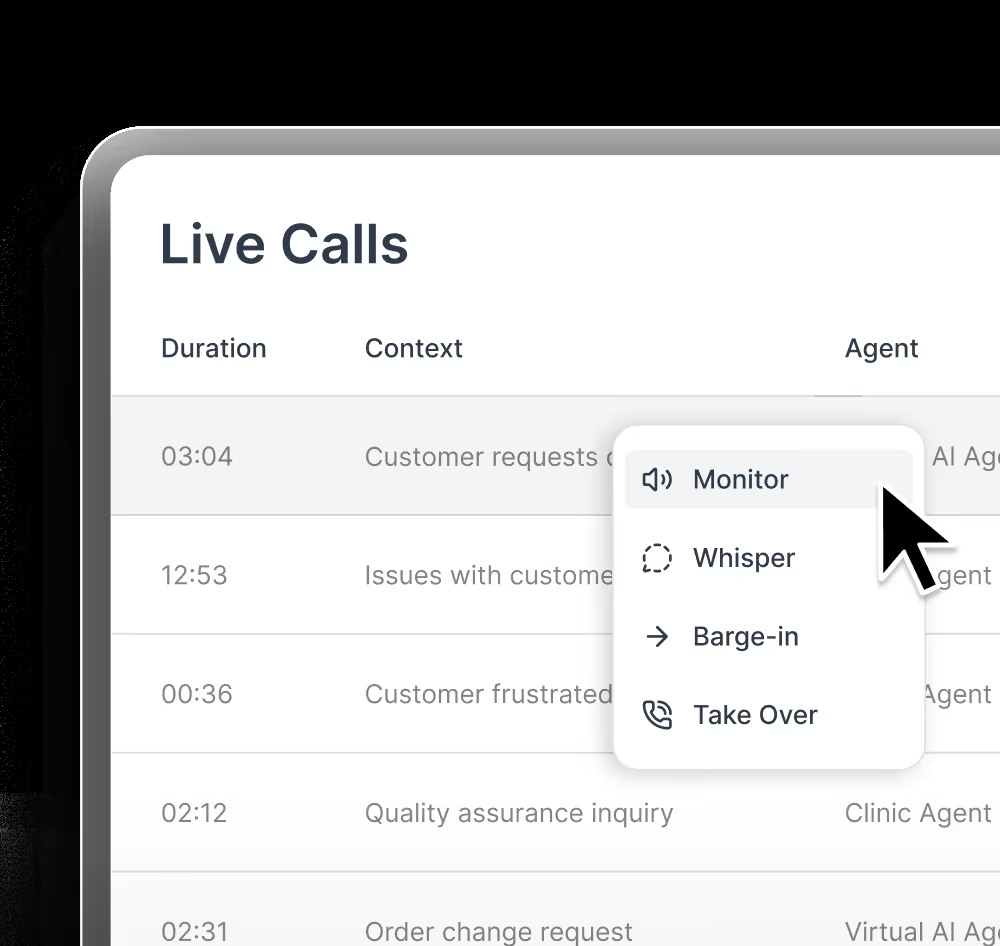
A good demo call can flatter almost any voice product. Production adds bad microphones, accents, callers who interrupt, IDs read digit by digit, broken webhooks, an overbooked calendar, and a customer who changes the subject halfway through. Synthflow’s answer is to own more of the route from design to outcome. The visual Flow Designer maps approved logic and specialized subflows. Custom actions reach outside systems. The Test Center simulates calls. Version history lets teams compare and roll back. Monitoring exposes calls, webhooks, and API events. Human handoff gives the machine an exit.
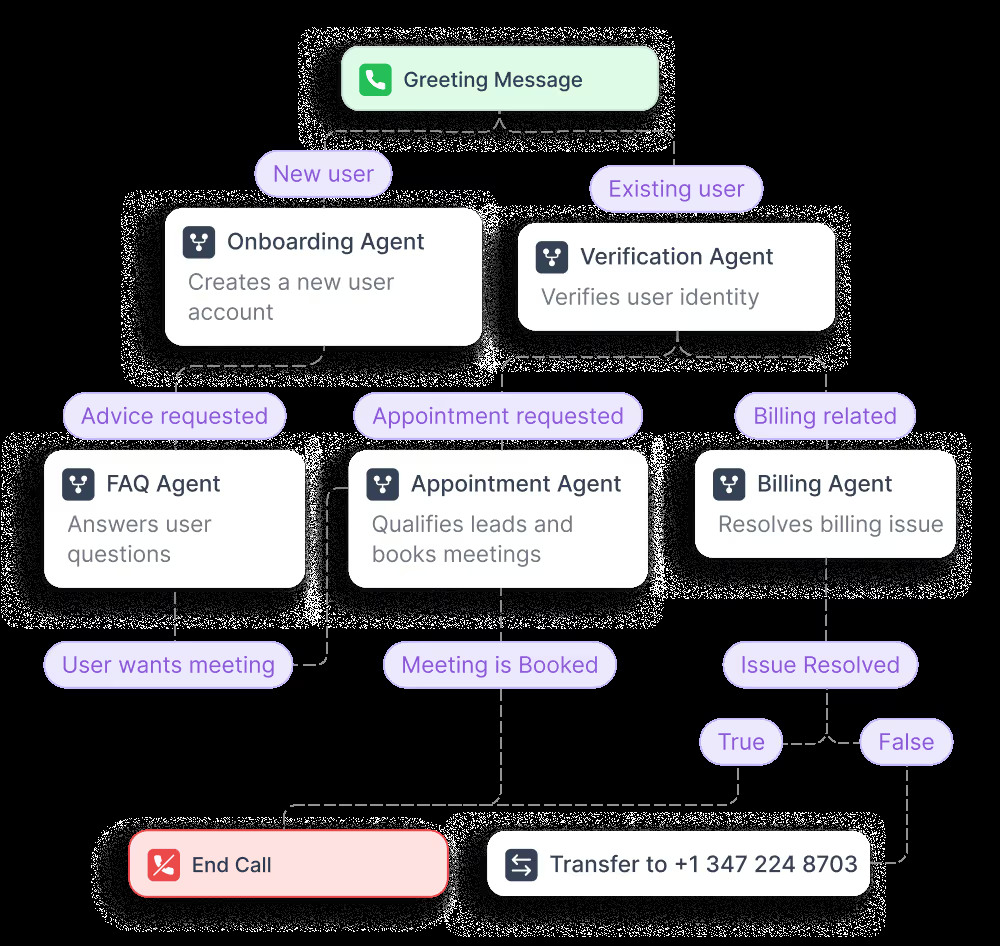
Its organizing idea is BELL: Build, Evaluate, Launch, Learn. The name sounds like something on a hotel counter, which is fitting for software designed to answer promptly. More importantly, the loop acknowledges that a voice agent is never finished at launch. Teams build its logic, evaluate it against simulated callers, launch through telephony infrastructure, then study real conversations and improve the next version.
Synthflow also operates its own telephony infrastructure while supporting existing carriers and SIP-based systems on enterprise arrangements. The company claims sub-100 millisecond network latency and 99.99 percent uptime on its current homepage. Those are vendor figures, so put them into a service agreement and measure them in the regions where your callers live. The useful promise is architectural: operations can connect Cisco, Avaya, Genesys, RingCentral, 8x8, Five9, Zoom, or another approved path without replacing the entire phone estate.
What you can hand over, and what you should keep
The cleanest use cases have a defined finish line. Book the appointment. Confirm the account detail. Answer the policy question from an approved knowledge base. Qualify the lead against five criteria. Collect a service request. Route an urgent caller. Send the promised follow-up message. These tasks tolerate structure and produce a result that can be checked. Synthflow supports inbound and outbound calling, voicemail detection, SMS, chat, WhatsApp, calendars, CRMs, knowledge bases, and more than 200 integrations.
| Call job | Fit | Guardrail to add |
|---|---|---|
| Booking and rescheduling | Strong starting point | Confirm timezone, availability, and cancellation rules aloud. |
| Lead qualification | Good when criteria are explicit | Write consent rules and a clean CRM handoff. |
| Tier-one support | Useful for known questions | Restrict answers to approved material and provide escape routes. |
| Billing disputes | Proceed carefully | Authenticate first; transfer exceptions to trained staff. |
| Medical or financial judgment | Keep humans responsible | Limit the agent to intake, routing, and approved information. |
The trick is to automate the choreography without outsourcing judgment. Let the agent collect the claim number, but let a qualified person decide the claim. Let it find an appointment, but make it repeat the time. Let it answer the return-policy question, but transfer the caller who says the delivery caused an emergency. Synthflow provides branches, sentiment signals, fallback responses, and transfer triggers. Your team still has to decide where those rails belong.
The reviews agree on speed. They disagree on the landing.
Public feedback is large enough to be informative and messy enough to read with care. G2 listed a 4.5 out of 5 rating across 1,010 reviews when checked. Its summary highlights easy setup, an intuitive interface, and integrations; recurring negatives include expense, cost limits, learning curve, and limited customization. One reviewer praised the “low latency and the natural cadence of the AI voices.” That is precisely what the product must get right: nobody calls a dentist hoping to admire a language model.
A voice agent lives or dies in the half-second after the caller says, “Sorry, one more thing.”
Trustpilot showed 4.1 out of 5 across 215 reviews, but its recent entries were more severe, including complaints about billing, cancellation, support, hallucinations, and unreliable triggers. Trustpilot itself warns that the profile has not invited reviews recently and may not be representative. Reddit posts range from small-business delight at setup and time savings to warnings that scaling becomes expensive and complex flows can feel constrained. The sensible reading is neither applause nor panic. Reviews describe different plans, dates, workloads, and support experiences. Use them as a test script.
Why teams like it
Visual setup, natural cadence, templates, broad integrations, fast prototyping, and one place to test and operate calls.
Where to press
Total cost at volume, regional number coverage, edge-case reliability, integration failures, support response, cancellation, and deep customization.
A prospective customer should ask Synthflow to reproduce the awkward cases before procurement. Interrupt the agent. Give it two dates. Spell an uncommon surname. Read a policy number quickly. Trigger a calendar conflict. Break a webhook. Ask for a human twice. Call from the weakest supported region. Then inspect the transcript, latency, API logs, recovery behavior, and invoice units. A pleasant scripted demo is theatre; recovery is the product.
Pricing is a math problem wearing a headset
The current site lets you build for free, then charges for live calls and chats on a pay-as-you-go basis. Enterprise plans are sales-led annual agreements shaped by volume, concurrency, telephony, integrations, security, and support. A July 2025 company post advertised enterprise volume pricing from $0.08 per minute, but that is a historical starting figure, not a quote for your deployment. Current documentation says exact rates and allowances come from the account or agreement.
Billing details deserve a spreadsheet. Calls are measured per second while the human and AI are connected, then aggregated into whole minutes. Failed and user-canceled calls are not billed; no-answer calls receive a flat five seconds. Billing stops when a transfer completes. Chat usage converts at five AI messages to one billable minute. Add carrier charges, phone numbers, premium voices, model or provider costs where applicable, simulations, peak concurrency, implementation work, and the staff time needed to review calls. Compare the full number with both a human queue and rival platforms.
The six-call audition
- Pick one narrow workflow with a measurable finish, such as a confirmed appointment or correctly routed request.
- Connect a sandbox CRM and calendar. Never let the first experiment write into production records.
- Create six caller types: cooperative, hurried, noisy, accented, confused, and determined to reach a person.
- Score task completion, factual accuracy, latency, transfer success, integration success, and cost per resolved call.
- Review consent, recording disclosure, retention, residency, and outbound-calling rules with the people accountable for them.
- Run a limited live pilot with daily transcript review, a rollback plan, and a human owner for every failure.
Who should buy it?
Synthflow belongs on the shortlist for operations teams that want visual control without assembling speech recognition, a language model, text-to-speech, telephony, testing, analytics, and integrations themselves. It is particularly coherent for contact centers and BPOs, agencies managing subaccounts, and businesses whose revenue leaks through missed calls. The 8x8 partnership and new integrations with enterprise contact-center systems reinforce that direction.
Developer-led teams that prize component-level freedom should compare Retell AI, Vapi, and Bland AI. Large customer-experience programs should also examine Cognigy, PolyAI, and Sierra. A receptionist-style service with human backup may make Smith.ai or another managed option worth a look. The question is not which homepage has the most lifelike waveform. Decide whether you want a configurable operating layer, a developer toolkit, or a managed answering service. Synthflow sits firmly in the first camp, with an API available when the flowchart needs help.
Our verdict: Synthflow has grown into a credible control room for automated phone work. Its strongest idea is operational discipline. Build the path, rehearse it, launch carefully, and learn from the calls. Its risk is the same one carried by every platform that promises to simplify a complicated stack: complexity does not disappear; it moves into pricing, integrations, edge cases, governance, and support. Buy the control room if you have an operator, a clear call job, and the patience to test the fire alarm.