A property investor has a list of addresses. A rental-data company has the numbers that could help evaluate them. Between the two sits a surprisingly stubborn obstacle: somebody has to make the machinery usable. Rentometer’s customers included people who needed its data but weren’t engineers. ORIL’s assignment was to close that gap. The result began with a batch-processing tool. A user could submit many properties together, rather than repeat the same lookup all afternoon.
- ORIL builds custom software, with real estate at the center of its work.
- Its projects connect interfaces, data systems, and everyday operating decisions.
- Customers buy design and engineering capacity, often through continuing partnerships.
There is a temptation to describe this kind of company through its programming languages. ORIL’s portfolio suggests a more revealing description: it works on the distance between having information and being able to use it. That distance can be a spreadsheet, an awkward interface, or an unreliable sensor. Each demands a different repair.
The address list becomes a product
Rentometer already had a functioning core business. It wanted additional tools without diverting the people keeping that business running. ORIL began with product analysis and an internally used minimum viable Batch Processor. Its current case study describes an application that accepts up to 500 addresses at once.
The engagement then widened into a Yield Tracker, a Deal Worksheet, and a mobile app. The first helps investors find properties using rental estimates and gross yields; the second lets them adjust financing, expenses, and other assumptions. There is a small but consequential change here. A customer can move from finding a property to testing a deal without assembling the workflow from disconnected spreadsheets.
- 01Batch ProcessorMake repeated lookups usable.
- 02Investor toolsFind properties. Test assumptions.
- 03Data architectureAdapt to the larger workload.
Scale changed the technical assignment, too. ORIL says the data requirements shifted during the project and the data layer was reworked using MongoDB. Its account describes Yield Tracker analysis involving files of more than 400,000 records. That number describes the workload, rather than the number of customers. The achievement claimed is keeping the complexity underneath the interface.
Six months to make the model usable
Consider a different customer: gReenvision. Its problem concerned energy systems. People needed a way to explore combinations of solar panels, wind turbines, and batteries, and understand the implications for electricity supply and cost. ORIL turned client-supplied mathematical formulas into an interactive web application.
The company describes five specialists, six months of development, and another six months of support. The interface reduced the journey to results to five steps. Users could explore an off-grid home, design an energy mix, and estimate a monthly electricity bill. The engineering mattered because it let a complicated model become something a non-specialist could manipulate.
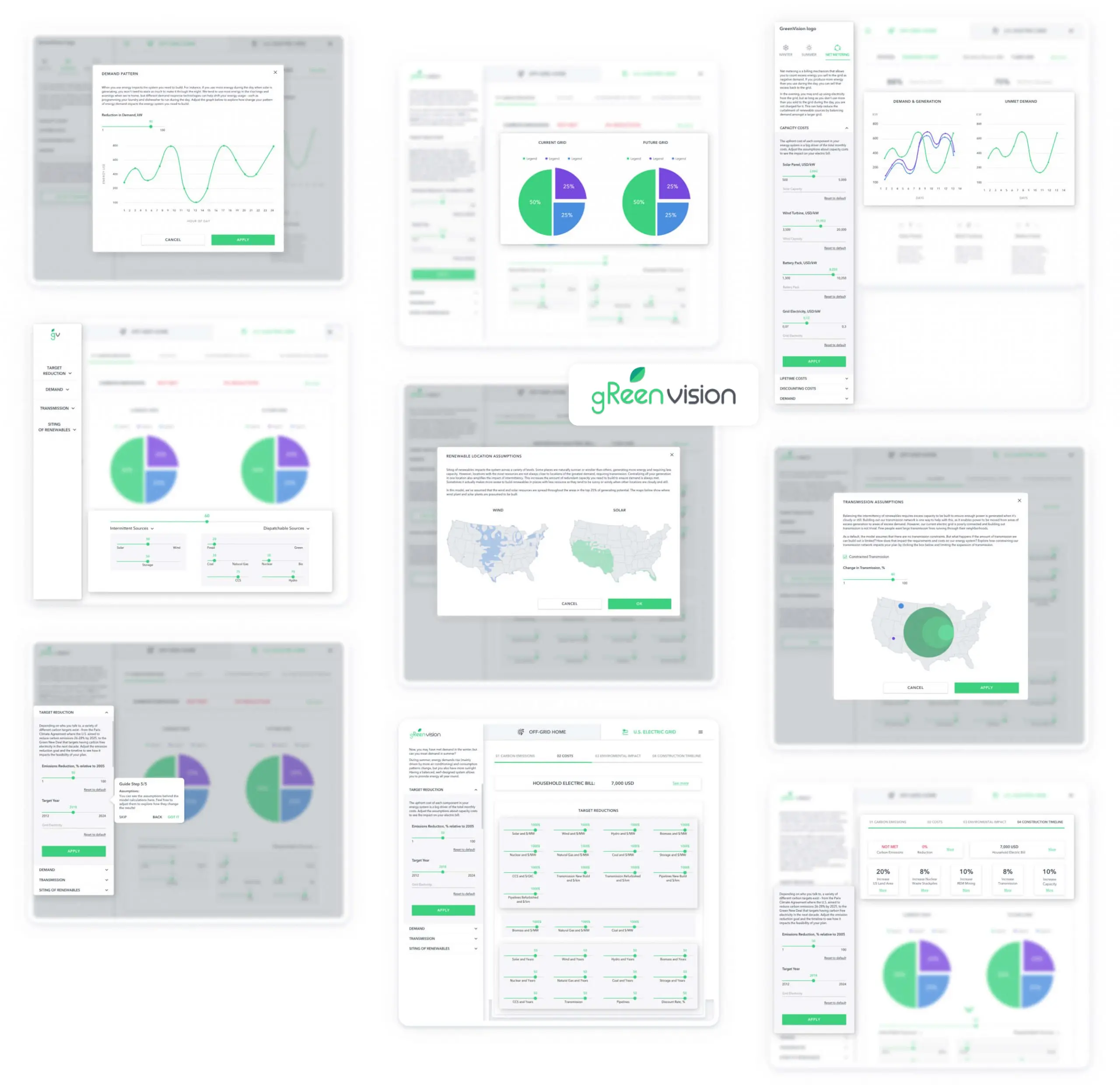
ORIL reports that the platform reached more than 1,000 households and was used in seminars and conferences. Those are measures of exposure and use. They should not be mistaken for measured emissions reductions. The interesting outcome is educational: the model acquired an interface through which people could investigate its assumptions.
The sensors need a skeptic
In an occupied apartment building, the stakes change. Parity’s HVAC optimization platform collects information from equipment and uses software to adjust operations. Before better decisions come trustworthy inputs. ORIL’s account describes inconsistent sensor readings, unstable data, and an architecture that needed stabilization.
Its work included reverse-engineering the platform, improving data collection, validating connections, integrating weather information, and modernizing infrastructure. Bad readings had to be excluded from analysis. Reports needed credible baselines. Real-time adjustments had to coexist with resident comfort. A polished dashboard would have been insufficient if the numbers feeding it were unreliable.
“UI/UX expertise. Experience from other software development projects.”Richard Liang, Brickeye CTO, on what he valued in ORIL’s collaboration
Brickeye offers another version of the same problem. ORIL redesigned a construction-risk application and mapped user flows for the LumiCon platform. The deliverables included prototypes and a shared design system. For construction software used on site, consistency is a practical concern: workers should be able to recognize how a tool behaves without relearning it on every screen.
The smaller assignment that worked
The tidy case studies become more useful beside an untidy early review. In 2019, Robins & Morton’s Steve Moore reported communication problems and slow progress on a complex assignment. Moving ORIL to a meeting-feedback application produced better results; a different project manager and an additional resource helped further. The review placed that engagement in the $10,000-$49,999 range.
That is a useful buying lesson. Team structure and the size of the assignment can change the result. Today, ORIL describes PlusDelta as a continuing relationship, with anonymous feedback, prioritization, analysis, and later additions. The transferable move is to define a useful first task, observe delivery, then expand responsibility as the evidence supports it.
Buying a team, keeping the problem
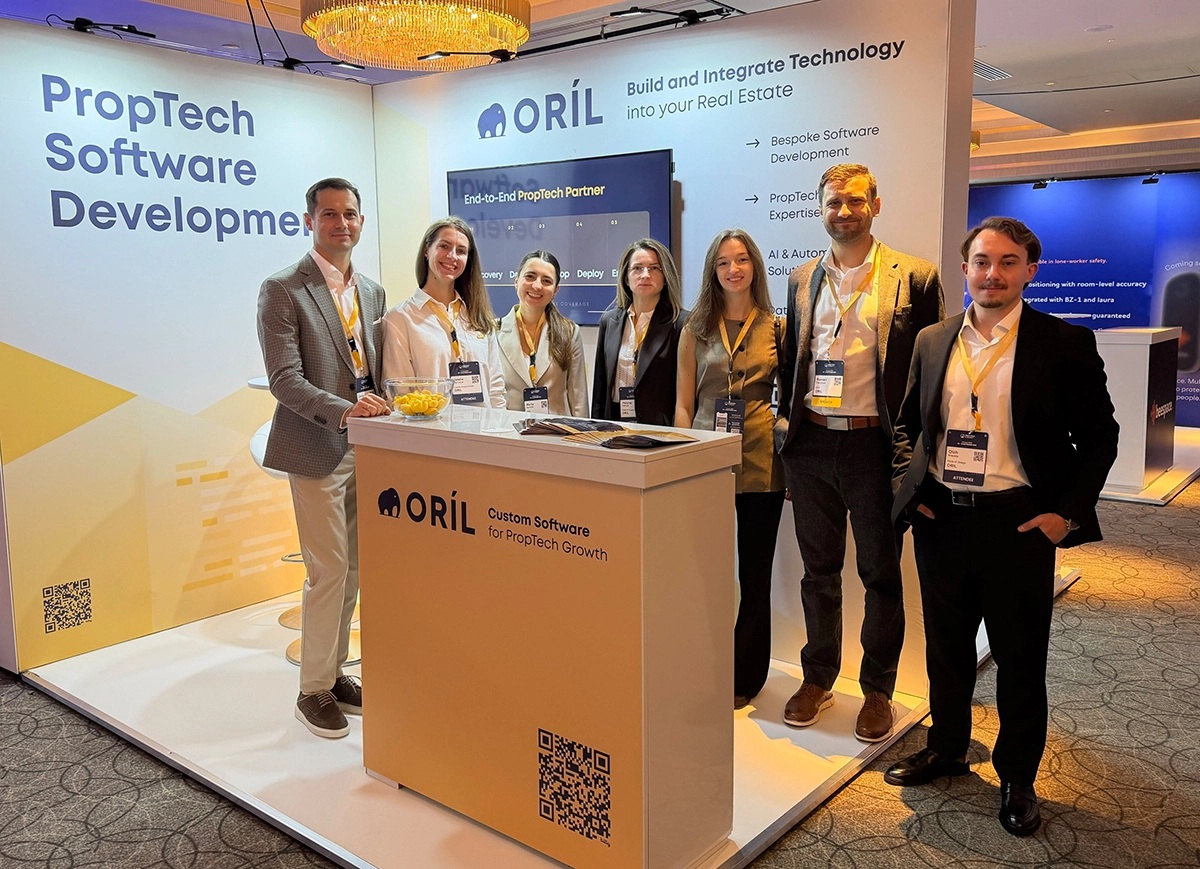
Founded in 2015 by CEO Roman Havrylyuk, ORIL sells product strategy, design, application development, AI enablement, and team augmentation. Its market position is a specialist development partner for real estate businesses, alongside work in finance, healthcare, and transportation. The alternatives include an internal team, a general software agency, or an existing software subscription.

The commercial distinction matters. Clients pay for building and extending their systems; ORIL’s portfolio is not a catalog of products it sells everyone by subscription. Clutch currently lists a $50,000 minimum project and a $25-$49 hourly band. Those are directory-listed buying signals, rather than a quotation for a particular build.
Recent partnerships make that positioning clearer. In March and April 2026, ORIL announced collaborations with BatchData, Dwellsy IQ, and The Warren Group. The proposed division of labor pairs property or rental data with ORIL’s implementation work. Its June internship account describes trainees building a real internal collaboration platform with mentors. Both reveal a company organizing around applied work.
For a buyer, the conditions are fairly concrete. Custom development makes sense when the workflow matters enough to fund its maintenance, the data can be trusted, and someone can make product decisions. When a standard tool already handles the job, the expense deserves scrutiny. ORIL’s most instructive projects begin with a specific obstruction: an address list, an energy model, a bad reading. Start there.