A car loan can be approved and still be stuck. Somewhere between the yes and the money, somebody has to find a missing signature, compare an income figure, or turn a sideways document the right way up. At Consumers Credit Union in Michigan, this unglamorous work had become a constraint on growth. The institution could attract borrowers. Processing their paperwork was another matter.
- Origence connects credit unions with car buyers through a shared dealer network.
- Its software and services handle the work between application and funding.
- The advantage is the connection: distribution, processing, and member follow-up.
Consumers adopted Origence’s document processing automation. In the resulting company-published case study, average funded deals per processor rose from about ten a day to twenty. The credit union estimated annual staffing cost savings of roughly $210,000. Those are one customer’s reported results, but they point to a useful question: what if the obstacle to lending more money is all the small jobs surrounding the loan?
The dealership was the missing branch
Origence’s answer began in 1994. The California Credit Union League and Golden 1 Credit Union each committed $200,000 to a venture called Credit Union Direct Lending. Tony Boutelle, working at the league, led the business from its beginning. The initial idea addressed a distribution problem. Credit unions needed a practical way to offer financing where people were already buying cars.
A credit union can offer an attractive rate and still lose the loan if the buyer never encounters it. CUDL connected dealers to credit union lenders, putting those institutions into the financing conversation at the dealership. The company later became CU Direct, then adopted Origence as its parent name in 2022. The word combines origination and experience. The business has spent decades filling in the distance between them.
auto dealers↔1,100
credit unions
One shared network. Each lender sets its own rules.
Today, Origence reports a network of about 1,100 credit unions and 20,000 dealers. A participating lender chooses its dealers and underwriting strategy; joining the network does not mean surrendering those decisions. CUDL also supports integration with an existing loan origination system. That matters for an institution that wants access to dealers without replacing every piece of its lending operation.
After yes comes the hard part
The product names describe different jobs. Origence arc OS manages loan and account origination, with configurable decisioning and workflows. Arc DX provides the borrower’s digital application experience. Arc MX handles marketing automation. Origence Lending Services supplies operational help, including processing and underwriting. AutoSMART puts vehicle shopping on a credit union’s website.
SmartFund lets dealers submit funding packages electronically. The newer eContracting for CUDL reaches further into the transaction: creating contracts, checking their data, collecting signatures, and delivering the package. The distinction is practical. Sending a document digitally does not automatically make the information inside it complete.
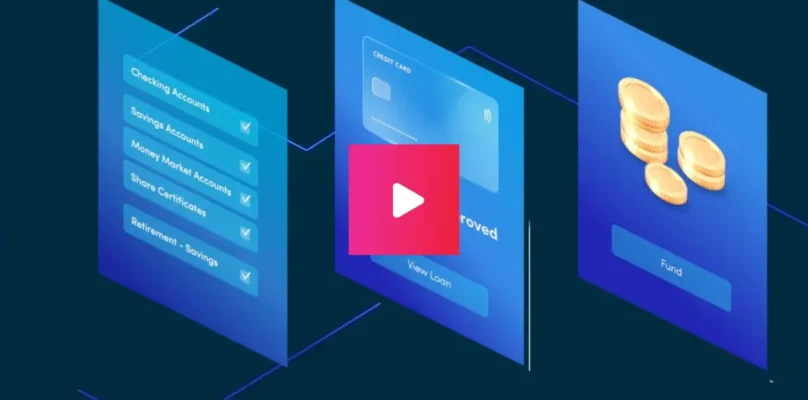
At Consumers, the trouble started with manual review and verification. Employees moved information between screens and checked documents one by one. Automation sorted incoming files, extracted information, and summarized validation results. Notifications helped dealers correct missing items before funders became involved. The gain came from changing the sequence of work, as well as the tools.
More deals through the same desk.
Average funded deals per funder, per day. Customer-specific results.
A customer can also be an owner
Origence operates as a credit union service organization, or CUSO. Its 2025 reporting lists 124 shareholders. This ownership structure puts credit unions on both sides of the vendor relationship: buying the technology and holding a stake in the organization behind it. Credit union executives also sit on its board.
“We go as credit unions go.”Tony Boutelle · President and CEO
The commercial details deserve equal attention. CUDL says credit unions pay for funded loans, with no per-application fee. That makes the charging trigger a completed lending outcome. Buyers still need to examine their particular contract, service scope, and integration requirements. A funded-loan fee tells you how one service charges; it does not tell you the total cost of changing a lending operation.
In consumer origination, MeridianLink is an alternative; its own annual report identifies Origence as a competitor. Origence’s distinctive case rests on the combination of lending software, dealer distribution, and operational services. Comparing application screens alone would miss much of what a customer is choosing.
The next dealership is a checkout screen
The company reported $62 billion in loans funded through its platforms in 2025, up 17% from 2024. That figure measures lending flowing through the business. It is not Origence’s revenue. The company’s next distribution moves are easier to understand with that distinction in mind: more places for credit unions to encounter borrowers.
FI Connect, its licensed finance subsidiary, provides one connection for retail partners. A December 2023 Tesla partnership brought credit union financing into Tesla’s website and app. FI Connect purchases and places contracts with partner credit unions, which service the loans. On October 1, 2026, Origence announced Hello Refi, an auto refinance offering launching with 47 credit union clients.
The work worth copying
The lesson for another lender is to count the handoffs. Measure how many deals a processor funds, how often documents come back, and how much work follows an approval. Then connect acquisition to processing and member communication. At 3Rivers Federal Credit Union, the motivation for adopting arc MX included more targeted outreach and better human support than its previous marketing system provided.
The connections have limits. Dealer access to eContracting depends on the credit union adopting it. Its published FAQ supports retail new and used vehicles and currently excludes spot delivery. Origence’s Zest AI relationship adds underwriting and fraud capabilities, but a lender still needs a strategy for decisions and exceptions. Faster processing cannot decide which loans an institution should want.

That human layer appears inside the company, too: five employee resource groups and support for credit union community events. It fits a business built around institutions working together. For a borrower, the useful outcome is much simpler: the credit union is there when the car is chosen, and the paperwork lets the money follow.