Eight months after Orgain arrived in Whole Foods, founder Andrew Abraham got the call every food entrepreneur rehearses and never expects. Customers said the chocolate and vanilla shakes were clumpy. He drove to a store, bought four cartons, opened one in the parking lot, tipped it toward his mouth - and nothing came out. The drink had become a pudding with a packaging problem.
There was no safety scare. There was still a catastrophe. Orgain voluntarily pulled the batch and destroyed the product. Abraham later put the cost at about $50,000, an existential sum for a company he was running alone from home and coffee shops while completing medical residency. His food scientist could adjust the formula but could not guarantee the next run. Abraham approved it anyway. Another failure, he understood, would probably end both his Whole Foods relationship and his ability to pay for a recovery.
The second version poured. That small fact is the hinge in Orgain’s history. Today the Irvine company sells protein powders, ready-to-drink shakes, bars, children’s nutrition, collagen, creatine and functional blends online and through more than 40,000 U.S. retail locations. Nestlé Health Science bought a majority stake in 2022 and increased it in 2025. The origin, though, is less corporate strategy than a teenager staring suspiciously at a hospital shake.
01 / The patient becomes the formulatorA product brief written by chemotherapy
At 17, Abraham was diagnosed with rhabdomyosarcoma. Treatment cut his weight to roughly 100 pounds and made liquid calories necessary. The conventional shakes he was given tasted bad to him and carried ingredient lists he disliked. His mother began blending smoothies from fruit, vegetables, protein and other whole-food ingredients. They were not shelf-stable, scalable or cheap. They were simply tolerable at a moment when tolerability mattered.
Abraham recovered, studied medicine and eventually treated patients who asked for the same thing: something nourishing they could grab without recreating his kitchen routine. The question changed from “what helped me?” to “can this survive six months in a carton?” That is a much harder problem. Organic certification narrowed the stabilizers available. Contract manufacturers rejected the tiny brand. Food scientists quoted intimidating sums. Abraham kept testing.
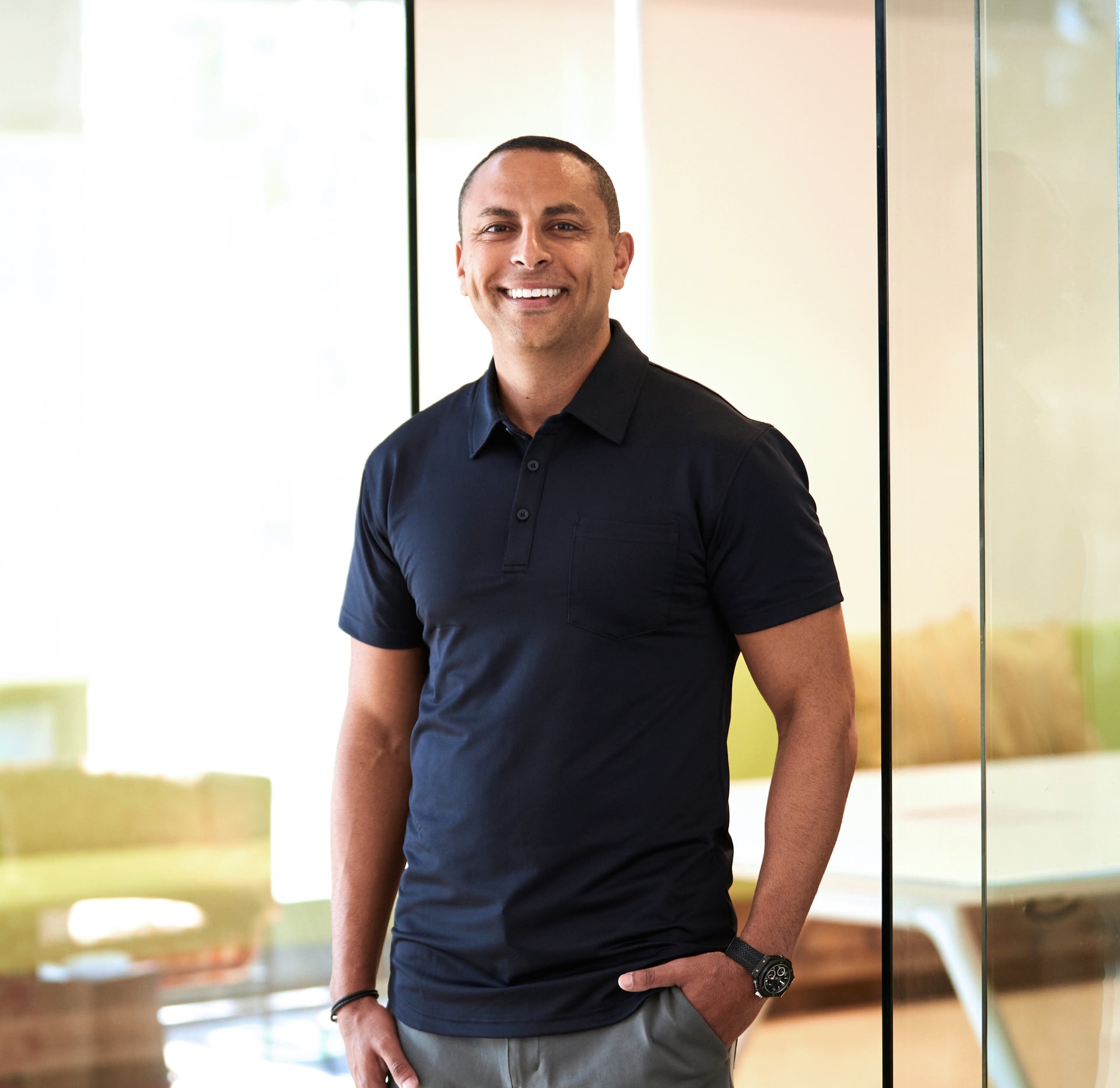
In 2009, he brought rough samples to a natural-products trade show. The booth looked amateur beside polished, multi-story exhibits. A Whole Foods buyer stopped anyway and later offered a national launch. Abraham had about 90 days. He missed the deadline by a couple of weeks. He had no office, no employees and no marketing money. On retailer forms, he used the names of his mother and wife for different departments while routing the phone numbers back to himself. Between hospital rounds, he placed orders for enormous quantities of organic cocoa.
The first cartons retailed for $2.99. Whole Foods did not quite know where to place them because the organic meal-replacement proposition did not fit neatly into an existing category. That ambiguity became an advantage. The likely buyer was already trained to pick up a package and read the ingredient panel. With no ad campaign, the label and the founder’s story did the selling. Reorders came faster than Abraham expected, and the business reached profitability in roughly its first year.
02 / Failure with textureWhat failed first, and what it really cost
The product itself failed before the proposition did. Twenty-six organic ingredients behaved differently over time. A shake that looked fine after manufacturing gradually thickened on the shelf. The $50,000 withdrawal measured wasted inventory, but not the larger cost: Abraham had to spend scarce credibility with his only major retailer. He also had to keep the flavor familiar while changing the mechanics beneath it.
The repair was unglamorous. Working with his food scientist, he adjusted the protein and reran the product. No grand pivot, no new brand identity, no inspirational campaign. Just a slightly different formulation and months of waiting for a second phone call that never came. This is the part worth copying: when the promise is right and the delivery fails, repair delivery before rewriting the promise.
The improvised company gets very real
Approximate sales markers recalled by Abraham in his 2023 How I Built This interview. Orgain does not publish standalone audited revenue.
Abraham continued medicine after residency, joining his father’s Long Beach clinic in 2011. At night he ran Orgain until two or three in the morning, then returned to patients at six. The workload forced the decision. So did the arithmetic. A busy clinic could treat dozens of people per day; a shelf-stable product could plausibly reach hundreds of thousands. He left the practice. His father did not understand the choice at first, but customer letters changed his mind. The impact, not the sales, made the strange career switch legible.
03 / The expansion trickOne promise, many tubs
Orgain’s difference is not that it invented protein. Abbott’s Ensure and Nestlé’s Boost already owned clinical familiarity. Vega and later brands made plant-based powder a crowded field. Premier Protein competed hard on convenient macros and price. Orgain occupied the seam between them: a doctor-founded story, natural-grocery ingredient cues, everyday taste and enough format variety to serve patients, parents, athletes and commuters.
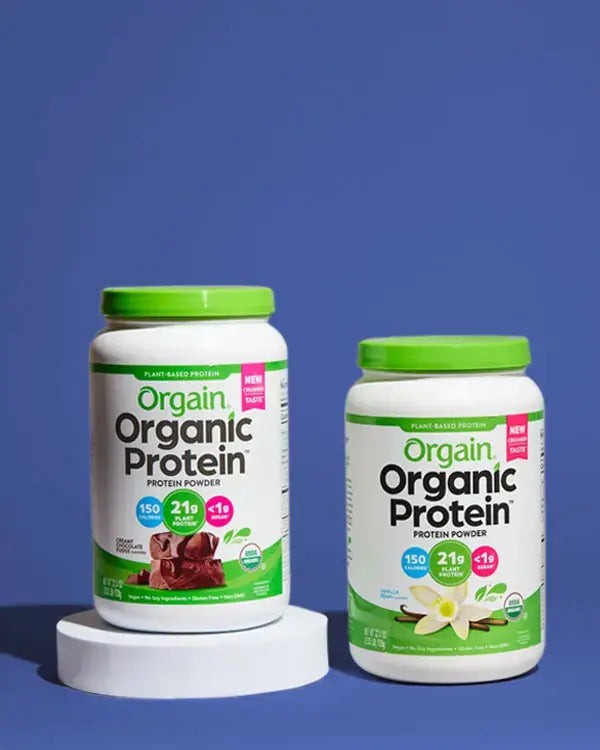
The portfolio now includes organic and non-organic products, plant and dairy protein, adult and kids lines, powders and ready-to-drink cartons, collagen from several sources, creatine, superfood blends and higher-protein performance products. In 2026 it pushed further with clear protein, colostrum, a 30-gram A2 milk shake and a 35-gram dairy-free Costco format. “Clean” is the umbrella, not a claim that every product is vegan or certified organic. Buyers still need to read each label.
Where Orgain sits in the nutrition aisle
The business model follows the shelf. Orgain sells wholesale into grocery, club, pharmacy and specialty retail; sells through Amazon and other online marketplaces; and operates a Shopify-based direct store with subscriptions and loyalty. A healthcare-professional arm offers samples, product guidance, continuing education and a nutrition podcast. That practitioner layer matters because recommendation can bridge the gap between a supplement ad and a trusted routine.
External manufacturers handled production from the beginning, letting a tiny team focus on formulation, sales and distribution. That asset-light structure helped the company grow early, but it only works with reliable partners and obsessive specifications. The shelf-stability crisis is the warning label on the model: outsourcing equipment does not outsource accountability.
04 / The copyable playbookSteal the constraint, not the smoothie
Name one painful job
Orgain began with drinkable calories for people who rejected the standard option. “Wellness” came later.
Find concentrated behavior
Whole Foods gathered shoppers who read labels. The first retailer functioned as targeting, education and proof.
Ignore premature shelf theater
An adviser wanted up to six flavors. Chocolate and vanilla kept purchasing and production manageable.
Protect trust quickly
Orgain withdrew the bad batch, destroyed it and corrected the formula before expanding the story.
The partnership sequence added scale in layers. Butterfly Equity bought a majority position in 2019, with Ontario Teachers’ participating and Abraham staying as CEO and an owner. An athlete advisory council followed with Patricof Co. in 2021. Nestlé Health Science acquired control in 2022, attracted by a leading U.S. plant-protein position and the chance to widen distribution. Nestlé reported a further ownership increase in 2025.
That scale brings a tension worth watching. Orgain earned B Corp certification with a 90.4 impact score and says more than 75 percent of its portfolio is USDA Certified Organic. It has documented large food donations, including more than 330,000 meals in 2022. Yet it operates inside a global parent that some clean-label shoppers view skeptically. Certification helps quantify practices; it cannot make brand trust automatic. The product still has to earn the next purchase one label, taste and batch at a time.
Do not copy Orgain’s early operating minimalism when the product is unsafe, highly regulated beyond your expertise, impossible to test over its full shelf life, or dependent on one retailer you cannot afford to disappoint. Lived experience creates insight, not manufacturing competence. Bring in food scientists, quality systems, working capital and recall plans before velocity turns a small defect into a national one.
The company’s neatest strategic move is that it never had to abandon the original problem. A cancer patient, a parent of a picky eater and an athlete recovering from training have different lives, but each occasionally needs nutrition to be convenient, tolerable and understandable. Orgain built a broad shelf from that shared moment. Its empire, if the word fits, was not born when the carton worked. It was born in the parking lot, when the carton did not - and the founder treated the failure as a formulation problem instead of a branding emergency.