In the desert, a pond looks like an argument with geography. These ponds contain something stranger still: a marine crop destined for the supplement aisle. iwi life grows Nannochloropsis, microscopic algae rich in EPA omega-3. The setting supplies its central business idea. Land unsuitable for ordinary crops, saline groundwater and abundant sunshine can become agricultural assets when the organism is chosen to suit them.
- Marine algae, grown inland in Texas and New Mexico.
- Fish-free supplements sold online and through U.S. retailers.
- A proprietary EPA ingredient, AlmegaPL, behind the consumer brand.
- A second route to customers: supply other brands through SourceOne.
The Houston company is called iwi, pronounced ee-wee. Its argument begins with a small correction to a familiar assumption. The omega-3 story starts farther down the food chain than the fish on the label. Algae supplies the original source. iwi’s trick is to cultivate that source on land, then persuade shoppers that a green organism belongs in their daily routine.
A farm with the wrong kind of water
iwi’s sustainability page says 97% of its saltwater can be recycled into its ponds. That is a company-reported operating claim, not an independently audited footprint. Still, the underlying choice is concrete: cultivate algae with saline aquifer water rather than ask a desert to behave like fertile farmland. Photosynthesis provides the crop’s energy; the farm also needs equipment, nutrients and processing.
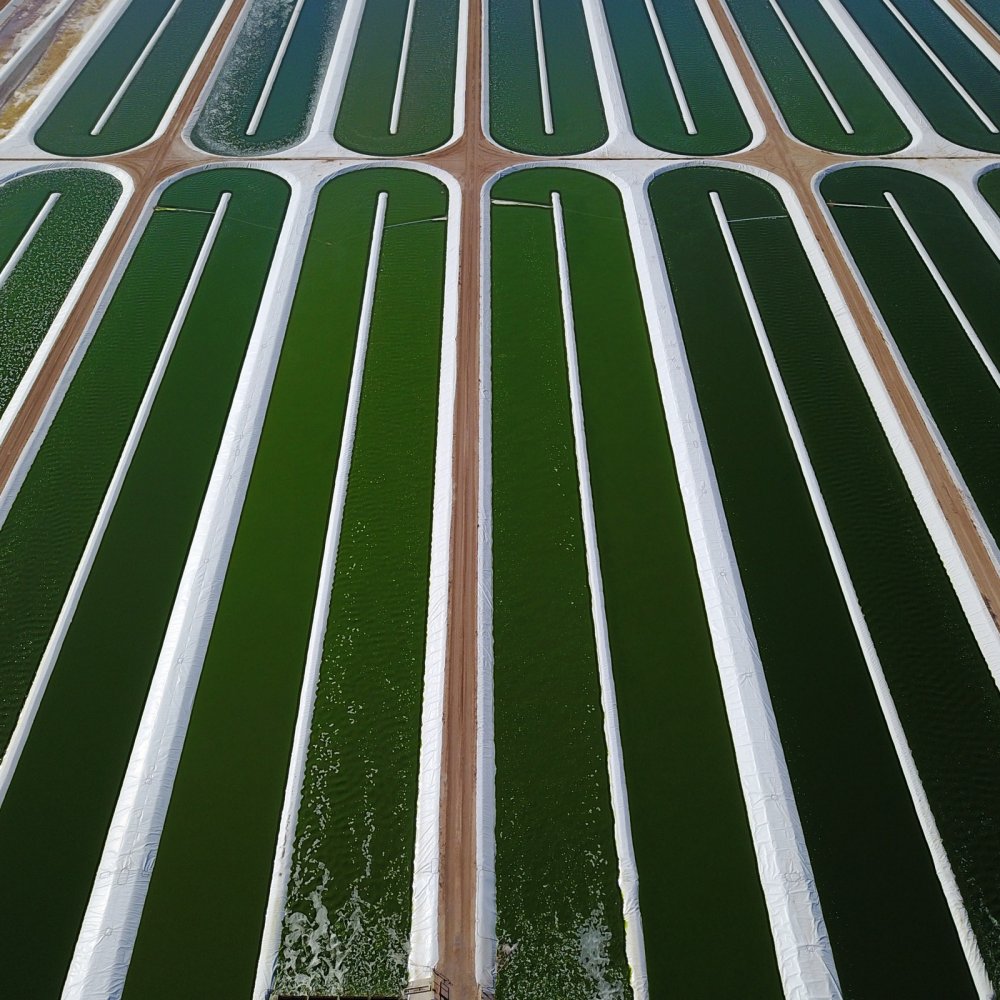
The crop has an awkward distinction: other organisms consider it lunch. A farm account describes controlling microscopic predators by changing conditions such as pH and nitrogen supply. Harvesting takes only part of a pond’s contents, leaving the remaining algae to multiply. This resembles maintaining a sourdough starter more than gathering a field of wheat. The expertise lies in managing a living system repeatedly.
- 01Sun + saline water
- 02Algae cultivation
- 03Harvest + extract
- 04Oil into softgels
The ingredient comes before the bottle
Behind iwi life sits Qualitas Health. Its scientific founder, Isaac Berzin, worked on algae cultivation before the consumer brand appeared. The company lists 2017 as iwi life’s founding year, but Qualitas was completing pilot work in 2012. That earlier history matters. This business had to learn how to produce an ingredient before it could learn how to sell a household habit.
AlmegaPL is an EPA-rich oil containing polar lipids. EPA and DHA are different omega-3 fatty acids, and the distinction is easily lost amid shelf talk. Nannochloropsis supplies EPA; AlmegaPL itself contains no DHA. iwi’s finished Omega-3 product offers both through a blend. Heart centers on EPA, while Sport is marketed as a higher-DHA formulation for post-exercise recovery.
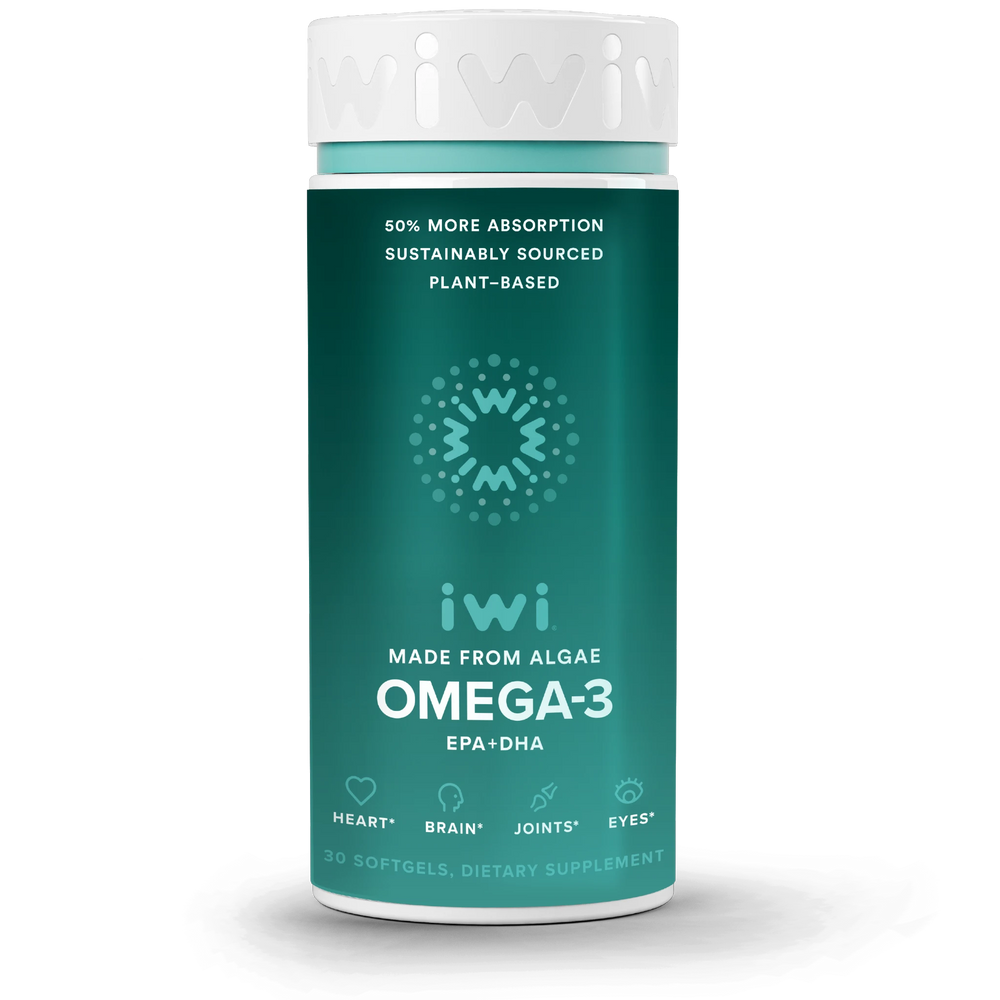
The customer is someone who wants supplemental omega-3 without fish or krill: a vegan, a vegetarian, or a shopper who prefers that sourcing choice. Brain adds another focused formula to the range. The daily Omega-3 bottle lists at $34 for 30 servings, about $1.13 per day; Heart lists at $42. Subscriptions offer discounts and repeat delivery. Prices checked in October 2026 may change.
A number worth reading twice
iwi markets AlmegaPL around a 1.7-times absorption claim. The frequently cited 2013 paper compared algae oil and krill oil in ten healthy men after a single dose with a high-fat breakfast. It measured fatty acids appearing in blood over hours. That is useful evidence about absorption under those conditions. It cannot establish that every user will get better health outcomes than with every competing oil.
Ten participants. One dose. A measurement of absorption, rather than a verdict on lifelong health.
Reading the 2013 study’s design
A separate 2024 post-market study followed consumers taking AlmegaPL and reported changes in blood lipids. Qualitas funded the work, and two authors were company employees. Unlike a randomized placebo comparison, a consumer cohort leaves other explanations harder to exclude. For buyers, the sensible distinction is between a supplement marketed to support normal cardiovascular function and a medicine demonstrated to treat disease.
The price of building two businesses
The financial story also rewards a second look. In January 2021, Qualitas announced $10 million in venture funding at a $73 million post-money valuation. Investors included PeakBridge, Arancia and Minrav. The money was intended to support customer acquisition, clinical work and algae protein development. Protein was a commercialization ambition; the established consumer shelf described here is supplements.
$5.5mSenior secured debt
$2.5mDirect equity
Genesis Park’s January 2022 announcement added $8 million, comprising $5.5 million in senior secured debt and $2.5 million in equity. The distinction matters because debt carries repayment obligations. By August 2024, SourceOne had announced global distribution of AlmegaPL ingredients and turnkey softgels. The same cultivation expertise could now serve brands with their own customers, alongside iwi’s direct and retail sales.
The farm does not fit on the label
Retail introduced a different constraint: room to explain. Brij’s case study says iwi initially tried QR codes that simply redirected shoppers to product pages. The team wanted a richer experience and switched to video-led education, including a farm tour. Brij reports almost six-times return on advertising spend for an initial subscription win-back mailing, counting only the first subscription month. This is a vendor-reported campaign result.
The copyable move is to match the explanation to the shopper’s uncertainty. Show how the unfamiliar ingredient is made; let product details and purchasing follow. It is especially useful when provenance helps justify a purchase. It offers less to a commodity bought solely on price, and it cannot make a higher-priced product affordable to everyone. A farm tour still has to earn its place in the basket.
iwi’s careers page promises integrity, commitment and innovation, with a boots-in-the-dirt sensibility. Those values suit a company whose attractive idea depends on unglamorous repetition. The algae must grow, the oil must meet specifications, and customers must reorder. Its wider proposition is intriguing precisely because it begins with such a small transaction: a marine nutrient, raised in the desert, purchased one bottle at a time.