A protein powder has an awkward job. It must persuade somebody to swallow the same idea tomorrow morning. The first sale can come from an attractive label; the second encounters taste, texture and the small indignities of washing a shaker. KOS built a business around that encounter. Its tubs are cheerful. Its proposition is ordinary enough to be useful: put plant-based nutrition somewhere people already eat.
- Organic plant protein is the anchor; functional supplements widen the shelf.
- Online customers helped KOS test products before broader retail launches.
- Two reported funding rounds brought in $14.1 million.
- A new ownership chapter puts manufacturing and formulation back in the foreground.
A change of appetite
Allan Stevens and Tony Stahl came from online marketing. Nutrition was unfamiliar territory. In a 2022 interview, Stevens described how the death of a colleague, Tucker Heinz, made him reconsider his own health. The experience helped turn the founders’ attention toward wellness. There is no need to dress this up as a discovery of a miraculous ingredient. They had discovered a reason to care.
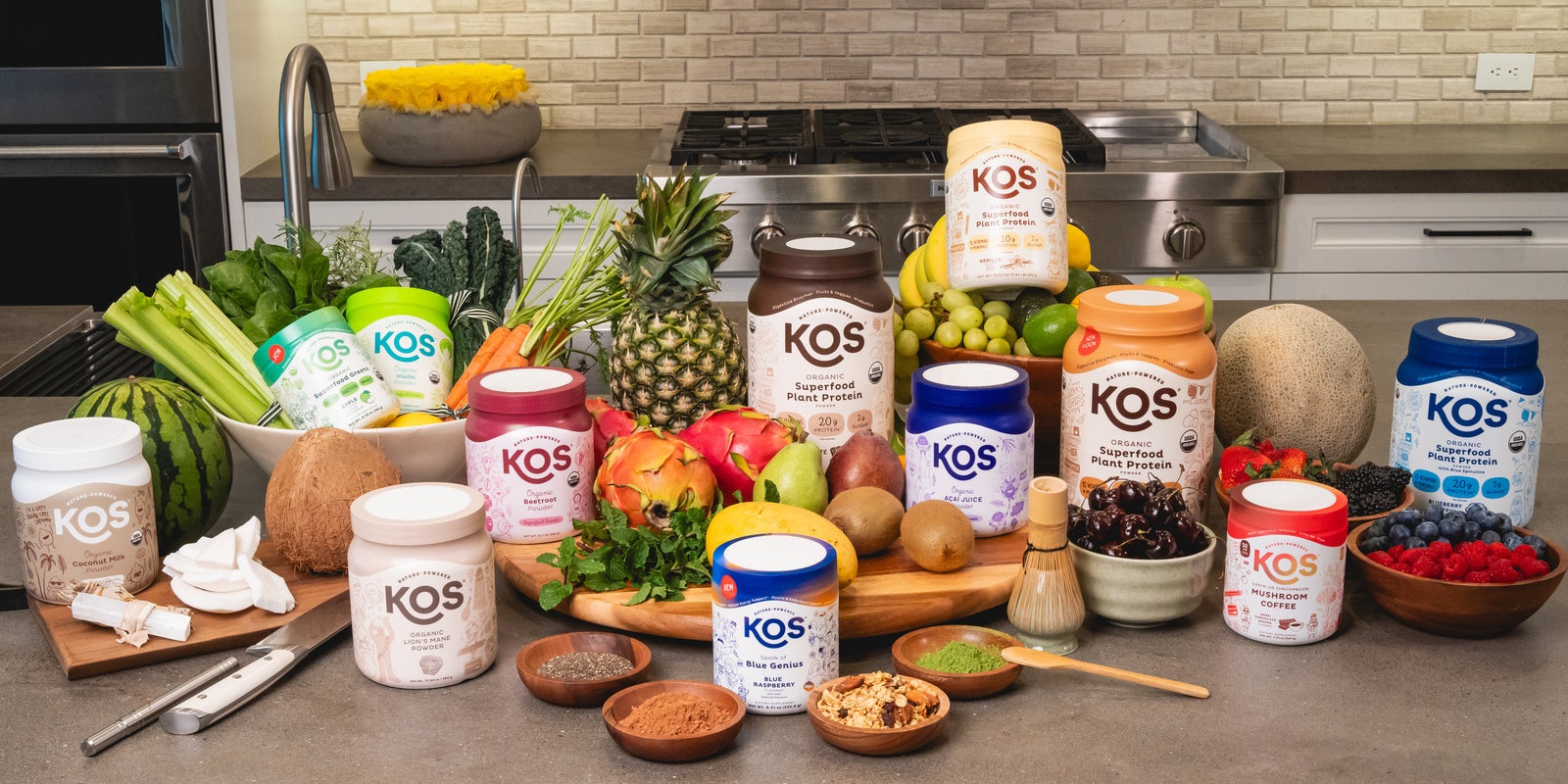
Founded in 2017, KOS began selling chocolate and vanilla protein powders online late that year. The name looks to the Greek island associated with Hippocrates. Later products acquired names such as Holy Cacao! and Sippin’ on Shroom Boom. A brand invoking ancient medicine had apparently decided that breakfast could survive a joke.
The shopper need not take an oath
The business occupies the meeting point of packaged food, supplements and everyday convenience. Customers include vegans, people avoiding dairy, smoothie drinkers and shoppers adding plant foods without changing their entire diet. That last group matters. Buying a plant-based powder is a smaller commitment than adopting a new identity. KOS can meet a person at breakfast without asking them to defend dinner.
Its vanilla protein listing specifies 20 grams of protein per serving, from a blend including pea, pumpkin seed, quinoa, chia and flax. Vitamins, minerals and digestive enzymes accompany the protein. The practical uses are familiar: shakes, oatmeal, pancakes and baking. What KOS sells is a shortcut for adding nutrition to an existing routine, with an organic, dairy-free formula as part of the appeal.
Orgain, Vega and Garden of Life inhabit the same crowded plant-protein neighborhood. KOS’s distinction is a combination of approachable branding, multiple plant sources and attention to flavor. That is positioning, not proof that every shopper will prefer it. A powder wins its place in the cupboard one glass at a time.
The checkout became a test kitchen
The founders’ digital experience gave them something a supermarket shelf cannot easily provide: a conversation. In the 2022 funding announcement, Tony Stahl explained that direct customer contact let KOS detect changing needs and test products online before wider retail launches. His phrase, “before taking them to the broader retail market,” describes a sensible order of operations.
Test a product where the customer can answer back.THE TRANSFERABLE IDEA
The first difficult transition was retail. Stevens told BevNET that category crowding and limited brick-and-mortar experience complicated that leap. KOS began a Whole Foods rollout in early 2020, brought in experienced consumer-products personnel and raised outside capital. The lesson is almost impolite in its simplicity: knowing how to sell through a browser does not automatically teach you how to work a grocery aisle.
Someone building another consumer brand can copy that sequence: choose a channel where feedback is available, test a narrow offering, then recruit the expertise the next channel demands. It requires customers willing to respond and enough time to revise a product. Advertising alone cannot tell you whether the second shake tastes better than the first.
Capital has a job description
KOS raised $2.1 million in 2020, with Springdale Ventures, former Whole Foods chief Walter Robb and Jim Schneider backing the round. A $12 million Series A followed in February 2022, led by Clayton Christopher and Brian Goldberg, with Springdale investing again. The stated purposes included distribution, awareness, product development and hiring. These figures describe money raised, not a receipt for everything spent.
The 2022 announcement reported 38,500 distribution points at the end of 2021, up 470% over 2020. Read the noun carefully: distribution points should not become a count of unique shops. The same announcement named Walmart, CVS and The Vitamin Shoppe as retail partners and reported support for more than two million Feeding America meals by January 2022.
What a daily habit costs
The website combines one-time purchases with subscriptions offering a stated 20% discount. In October 2026, its vanilla 28-serving tub was listed at $59.99: about $2.14 a serving before shipping or discounts. This is a recurring pantry purchase with a premium price attached. Whether that represents value depends on the buyer’s budget, ingredient preferences and willingness to keep using it.
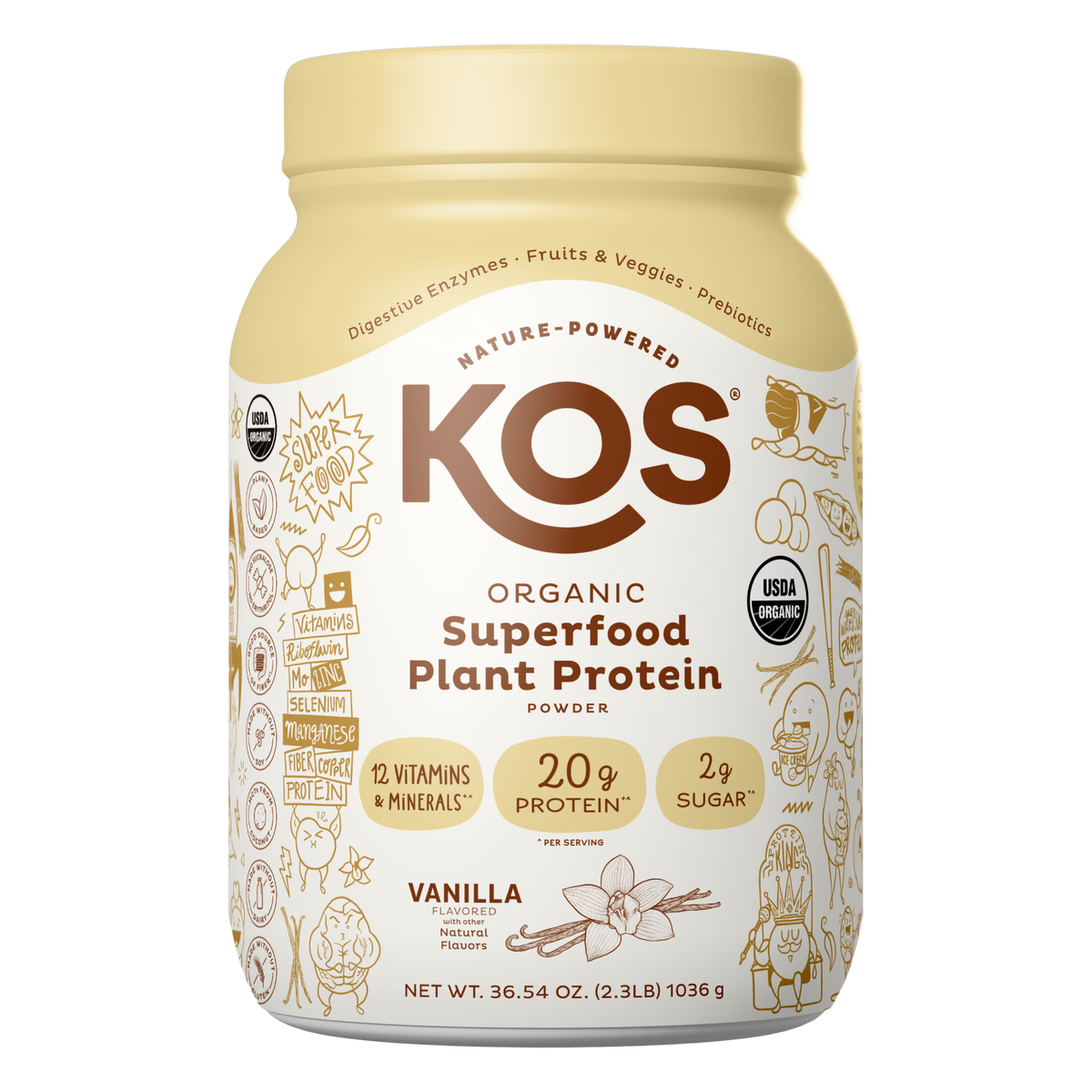
$2.14 per listed serving.
Calculated from $59.99 ÷ 28; October 2026.
There are ordinary limits. A flavor somebody enjoys may leave somebody else complaining about sweeteners. An organic badge does not answer every quality question. KOS’s current quality page offers a batch-specific certificate-of-analysis lookup using the lot number and UPC digits. That is a more concrete inspection tool than a reassuring adjective on the front of a tub.
A wider shelf, a harder promise
In September 2026, chief innovation officer Sahar Sheida described a change of ownership roughly a year earlier and work on sourcing, manufacturing and quality control. “For us, manufacturing isn’t something that happens after innovation,” she said. The current range includes Smart Creatine, Oh My NMN! and Microbiome Fiber. Performance, longevity and digestive wellness now sit alongside protein.
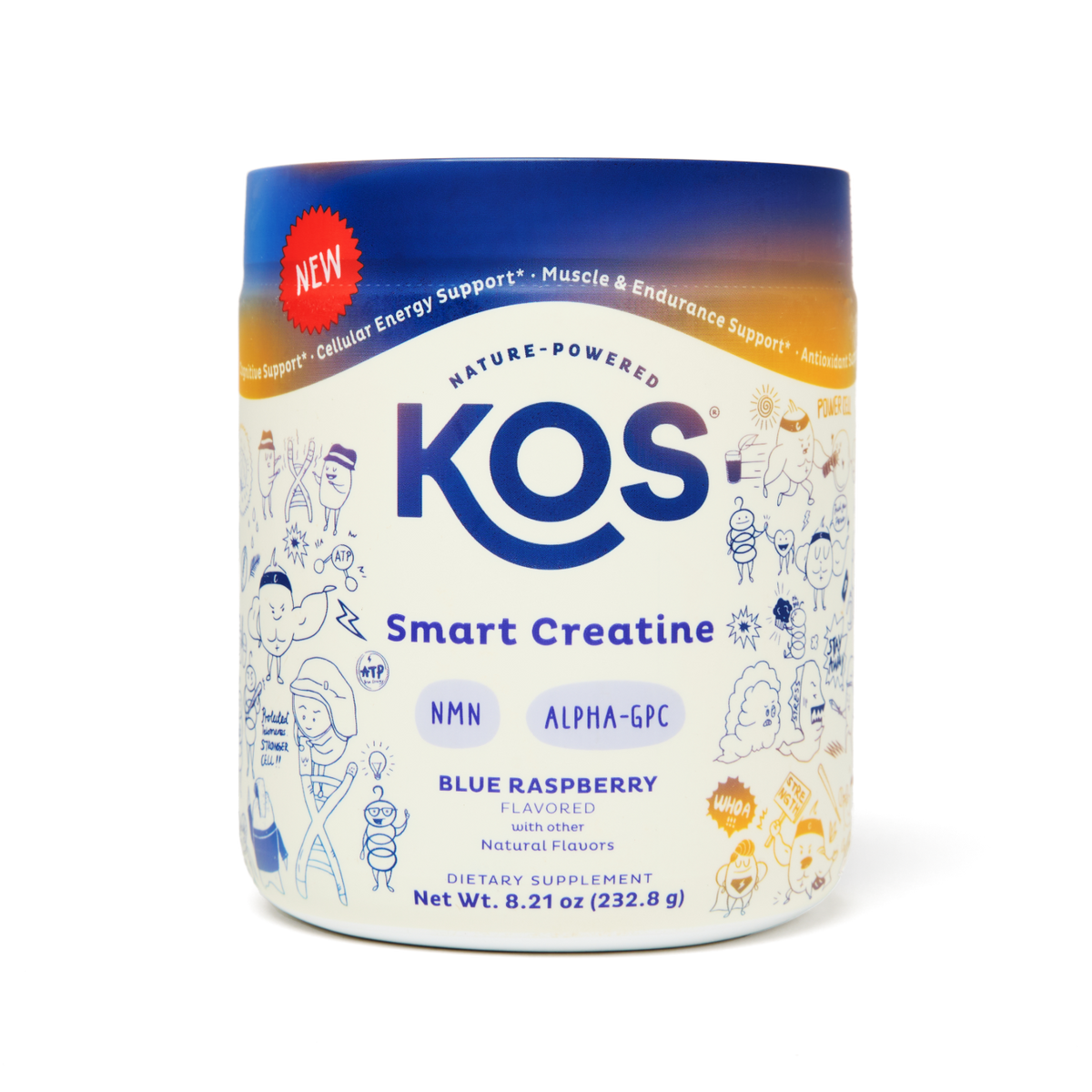
Those are product ambitions, not guaranteed outcomes. Evidence about an ingredient does not settle every claim about a finished blend. KOS’s next commercial test is whether familiarity with a breakfast powder carries into more complicated formulas. The useful idea survives either way: make something people can fit into Tuesday, listen when they tell you how Tuesday went, and give them a reason to return on Wednesday.
Keep the conversation going
Explore KOS’s shop, product articles and batch testing lookup. Hear the 2026 NutraCast conversation or the Spencer Lynn podcast.