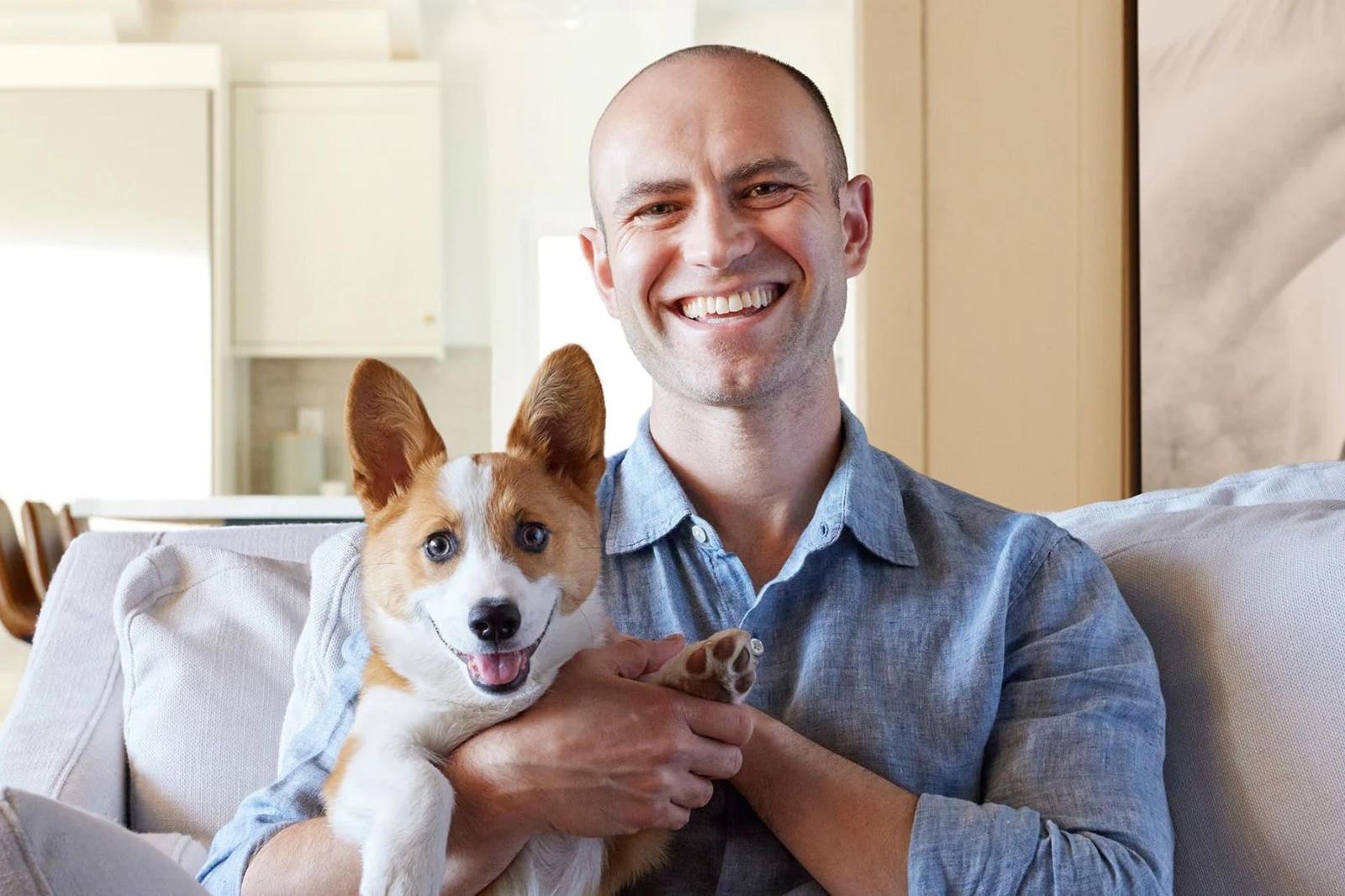
The small patient was Eddie, a corgi with excellent ears and poor judgment. During the pandemic, he ate four chocolate M&Ms. Joe Spector spent hours finding an emergency veterinarian and left with a bill that reached $4,000. Eddie recovered. The invoice stayed in Spector’s head.
A lesser annoyance might have dissolved into dinner-party material. For Spector, it collided with inconvenient expertise. He had just spent four years helping build Hims & Hers, the consumer telehealth company that went public in 2021. Human care had moved onto the phone. Pet care, from his new owner’s-eye view, still demanded a scavenger hunt, a car ride and an open wallet.
The contrast produced Dutch, the virtual veterinary company he founded in 2021. It also returned Spector to his preferred habitat: the beginning, when the product is debatable, the culture is wet paint and every ordinary decision arrives wearing a tiny existential hat.
“I love creating the universe and the uncertainty of it all.”Joe Spector on the early stage of company building
The distance to zero
Spector’s comfort with uncertainty predates Silicon Valley. At ten, he left Uzbekistan with his family in the late 1980s. Their route passed through a refugee camp in Italy, where they lived under a tent, before they reached the United States. His parents had brought the family away from the Soviet Union with little certainty and few possessions.
He has explained the effect with unusual bluntness. Once you have lived with nothing, the prospect of losing what you built can feel less mythical. Poverty was not a motivational poster, and he does not decorate it as one. It did, however, alter his calculation of risk. He had seen his family begin again and survive.
Education offered the next set of coordinates. He earned a business degree at UC Berkeley’s Haas School in 2001, then worked in investment banking at J.P. Morgan. At Wharton, where he completed an MBA in 2007, he reached the semifinal of the school’s business-plan competition and won a national MBA case challenge run by Goldman Sachs. The spreadsheet years were useful. They were not home.
Spector moved toward young technology companies. He worked on partnerships at TuneIn, founded the cocktail-kit business SaloonBox and joined the founding group at Hims in 2017. The thread was not an industry so much as a stage: early, mutable and close enough to the customer that one decision could change the shape of the whole enterprise.
The bell, then the itch
Hims gave Spector a laboratory for bringing a sensitive, regulated service directly to consumers. The company invested in clear design, memorable language and the delicate business of making an awkward subject feel ordinary. It expanded into Hers, grew quickly and reached the public market four years after launch.
Spector got to ring the New York Stock Exchange bell. He has called it an immigrant dream come true, a phrase whose sentiment survives the cliché because his route to the podium had included that Italian camp. Yet the bell also closed a chapter. A public company needs scale, rhythm and repeatability. Spector missed the loose floorboards.
He once described having a nearly “masochistic” affection for the startup fire. When Hims became calmer, the clarity itself told him to move. Eddie arrived at just the right moment, a pandemic puppy with the comic timing of a business-school case.
A name with teeth
Dutch began, appropriately, with television. Spector and his wife were watching The Crown when they learned that “Dutch” had been a childhood nickname for Princess Diana. The word stuck. It was difficult to misspell, ended in the hard sound he wanted and could stretch beyond one condition or one species.
Then came the domain. Dutch.com was available for a low-six-figure price. Spector moved before fundraising news could make the seller more ambitious. He had learned this particular lesson at Hims, whose team had once tried to buy hims.com by appearing at the owner’s home with a pile of cash. The internet has its own property barons; they simply dress more casually.
The name was not cosmetic. Spector believed that an unfamiliar service in a regulated market had to look trustworthy before consumers would use it. “People are going to smell” a cheap brand, he has said. At Dutch, the cultural design started before launch, at what he jokingly called day negative ten.
There was also a less photogenic rule: nobody was too good to take out the garbage. This is perhaps the cleanest summary of Spector’s operating personality. He likes cosmic verbs such as creating, but he attaches them to chores.
When the old playbook meets a new animal
Experience gave Dutch a head start and a trap. Spector initially brought a condition-specific approach from Hims. Human telehealth had demonstrated the efficiency of building focused experiences around discrete needs. Pets made the analogy wobble. They present a wider mix of problems over shorter lives, and their care is largely paid in cash. The narrow opening was not the whole doorway.
Dutch adjusted. The company expanded its scope, built its own clinical-record software, added prescription delivery and offered ongoing access through a membership. Spector’s public advice grew more compact as the system became more elaborate: “You learn by doing. Don’t overthink things. Act and iterate.” A good lawyer can define the lane, he argues, but customers reveal whether the road goes anywhere.
That last distinction matters because Dutch’s first launch did not simply glide on Hims’s reputation. The initial model separated a few problems into neat lanes, just as a pitch deck might wish. Real households were untidier. One animal could need help with several unrelated concerns in a short stretch, while its owner still experienced the service as a single relationship. Spector has since described consumer conversations and frequent tests as the mechanism that unlocked the business.
There is a useful humility in the second-time founder admitting that the borrowed model missed. Success often turns a method into doctrine. Spector kept the Hims lessons about trust, presentation and removing embarrassment, but allowed the different customer economics to dismantle the rest. Dutch reportedly began running three to five tests a week. The number is less interesting as a growth ritual than as a confession: strategy would remain provisional.
By May 2025, Dutch said it had completed nearly 700,000 visits, treated more than 150 conditions and worked with 200 veterinarians. It had also raised a reported $43 million, including an $18 million Series B in 2023. Partnerships with PetMeds and Ancestry suggested the broader destination: not a video-call feature, but a pet-care platform spanning consultation, prescriptions and personalized information.
Scale has not removed the legislative puzzle. Veterinary telemedicine rules differ by state, which turns growth into an exercise in law, operations and patience. Spector seems to enjoy the resistance more than most. His test is practical: does the service help people? If the answer is yes, he believes policy can eventually catch up. It is an entrepreneur’s answer, optimistic about motion and mildly suspicious of gates.
“You learn by doing. Don’t overthink things. Act and iterate.”Joe Spector on building in regulated markets
The second beginning
Spector is an investor and advisor as well as an operator, but Dutch is the job in front of him. He has spoken about expanding into insurance, nutrition and pharmacy. He has also said plainly that he wants the company to go public. Ambition, in his telling, should leave space for possibilities that do not yet exist.
The tension is productive. He insists founders think bigger while submitting ideas to constant experiments. He spends freely where trust requires patience, yet celebrates moving with feline speed. He admires the universe and takes out its garbage.
Perhaps the most revealing Dutch moment happened not in a boardroom but at a veterinary conference. Spector sat on a panel while people from the industry said they visited the company’s website almost every day. He laughed that he probably did not check it that often himself. Then the implication landed: people were watching.
That attention can feel like validation or surveillance. For Spector, it seemed to become fuel. The former refugee who learned English after arriving in America, the banker who preferred startups, the public-company co-founder who walked back into uncertainty - each version is connected by an alertness to the next opening.
Eddie’s misadventure made the opening visible. The rest has been the less cinematic work of regulation, software, hiring, customer calls and repeated correction. Four M&Ms did not build Dutch. They merely offended Joe Spector’s sense that an awkward system had to remain awkward. Founders have begun companies for stranger reasons, though few have had a better-eared accomplice.