The curious thing about David is that its protein bars have a fish problem. Choose a measure flattering enough to sell your snack, and sooner or later you discover that cod does rather well by it. David’s response was to sell the cod, too. For a brand named after Michelangelo’s sculpture, this is an unusually practical relationship with perfection.
- Gold’s promise: 28g protein, 150 calories, 0g sugar.
- The first recipe changed when taste and shelf life demanded it.
- David bought Epogee, the supplier behind its low-calorie fat.
- Bars now share the shop with pints, shakes and canned cod.
Peter Rahal and Zach Ranen brought different kinds of experience to the company. Rahal had co-founded RXBAR; Ranen had founded low-carb dessert business RAIZE. Their September 2024 launch put that experience into a portable bar. Cookie dough and blueberry pie supplied the familiar invitation. The nutrition panel supplied the reason to stay.
The denominator does the selling
Protein bars usually announce grams of protein. David asks what those grams cost in calories. Gold contains a labeled 28 grams in 150 calories. Using the conventional four calories per gram of protein, that is approximately 112 calories from protein, or 75% of the total. The denominator makes the claim memorable.
Gold: 28g × 4 kcal ÷ 150 kcal ≈ 75%
Approximate arithmetic from labeled values; labels use rounding.
That positions David for someone with a particular constraint: more protein, limited calories, little time. Fitness enthusiasts and people watching their intake are obvious customers. Rahal also sees an audience among people taking GLP-1 medications. His argument is commercial positioning, rather than evidence that a particular bar produces a particular health outcome.
The distinction matters. A convenient supplement can help someone fit protein into a busy afternoon. It cannot perform their resistance training or furnish an entire balanced diet. David competes with Quest, Barebells, Built and RXBAR on the shelf, but also with powders, yogurt and whatever protein-rich food a customer already enjoys.
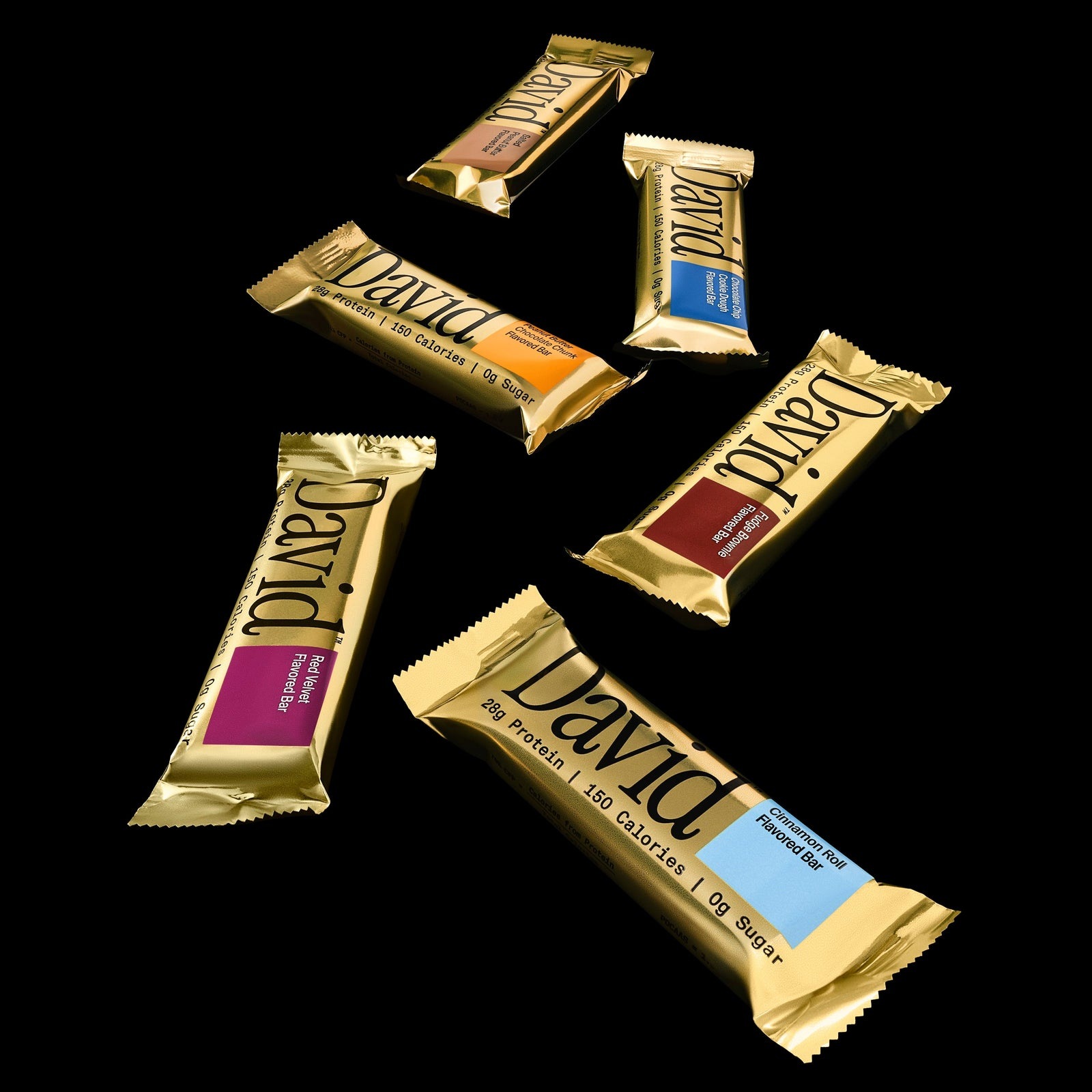
The price establishes another constraint. A $39 carton of 12 bars works out to $3.25 each; the 10% subscription discount makes the carton $35.10. David charges for a ready-to-eat formulation and portability. Whether that convenience earns the premium depends on the buyer’s budget and alternatives.
Taste gets a vote
There is a pleasing reversal in Rahal’s second act. RXBAR made its ingredient list part of its identity. David makes the nutritional result the attraction. Its protein system blends milk protein isolate, collagen, whey protein concentrate and egg white. Its formulation treats protein, binding, fat and flavor as separate problems to solve.
The first version nevertheless arrived with a familiar reassurance: no artificial sweeteners. By February 2025, that claim had yielded to a new recipe containing sucralose, acesulfame potassium and artificial flavors. The founders said the changes improved taste, texture and shelf life. A review in The Quality Edit described the original as dense and chalky, then found the revised version substantially improved.
This was the early weakness: the eating experience needed work. The public explanation for changing course was better food performance. David kept the central nutritional promise while changing how it delivered it. For another founder, the useful question is which promise customers came for, and which promise merely sounded attractive at launch.
Gold and Bronze now make the trade-off visible. Both are labeled 150 calories and zero sugar. Bronze supplies 20 grams of protein and a chocolate-flavored coating, compared with Gold’s 28 grams. The range acknowledges that a customer may want a different texture more than eight additional grams.
Labeled values per bar. Choose a measure to compare.
Buy the bottleneck
A bar with those numbers needs something to perform fat’s textural duties without fat’s full calorie contribution. EPG, a modified plant fat made by Epogee, is central to that calculation. The supplier describes it as delivering much of traditional fat’s eating experience; its stated energy contribution is 0.7 calories per gram rather than nine.
In May 2025, David announced a $75 million Series A led by Greenoaks with participation from Valor Equity Partners, alongside its Epogee acquisition. Rahal explained that controlling supply would reduce the risk to David’s growth. A consumer brand had moved upstream to secure an ingredient on which its promise depended.
“We wanted to de-risk things and control the supply.”Peter Rahal · AgFunderNews, May 2025

Ownership also brought conflict. Other Epogee customers sued, alleging exclusion from EPG supply; David denied hoarding the ingredient. A February 2026 court order dismissed the then-operative antitrust complaint while allowing plaintiffs to seek permission to amend. The acquisition illustrates a tension: securing your own production can threaten businesses that need the same supplier.
David also publishes laboratory results for its products, including protein and contaminant testing. That gives a customer something more concrete to inspect than a partner’s endorsement. For a brand whose sales argument starts with numbers, making the evidence accessible is part of the product experience. Precision in the pitch invites scrutiny of the packet.
The latest financing widens the picture. Medici Brands, David’s parent, announced a $250 million Series B in September 2026. It also owns confectionery brand HallPass and Epogee. The round finances a portfolio, so treating every dollar as a standalone David investment would misread the business.
The fish makes sense
David’s shop now includes frozen protein pints and ultra-filtered milkshakes with 30 grams of protein. Its current canned Atlantic cod lists 18 grams in 70 calories and contains just cod and salt. It is a different product from the frozen Pacific cod launched in 2025. The fish gives the ratio a literal demonstration.
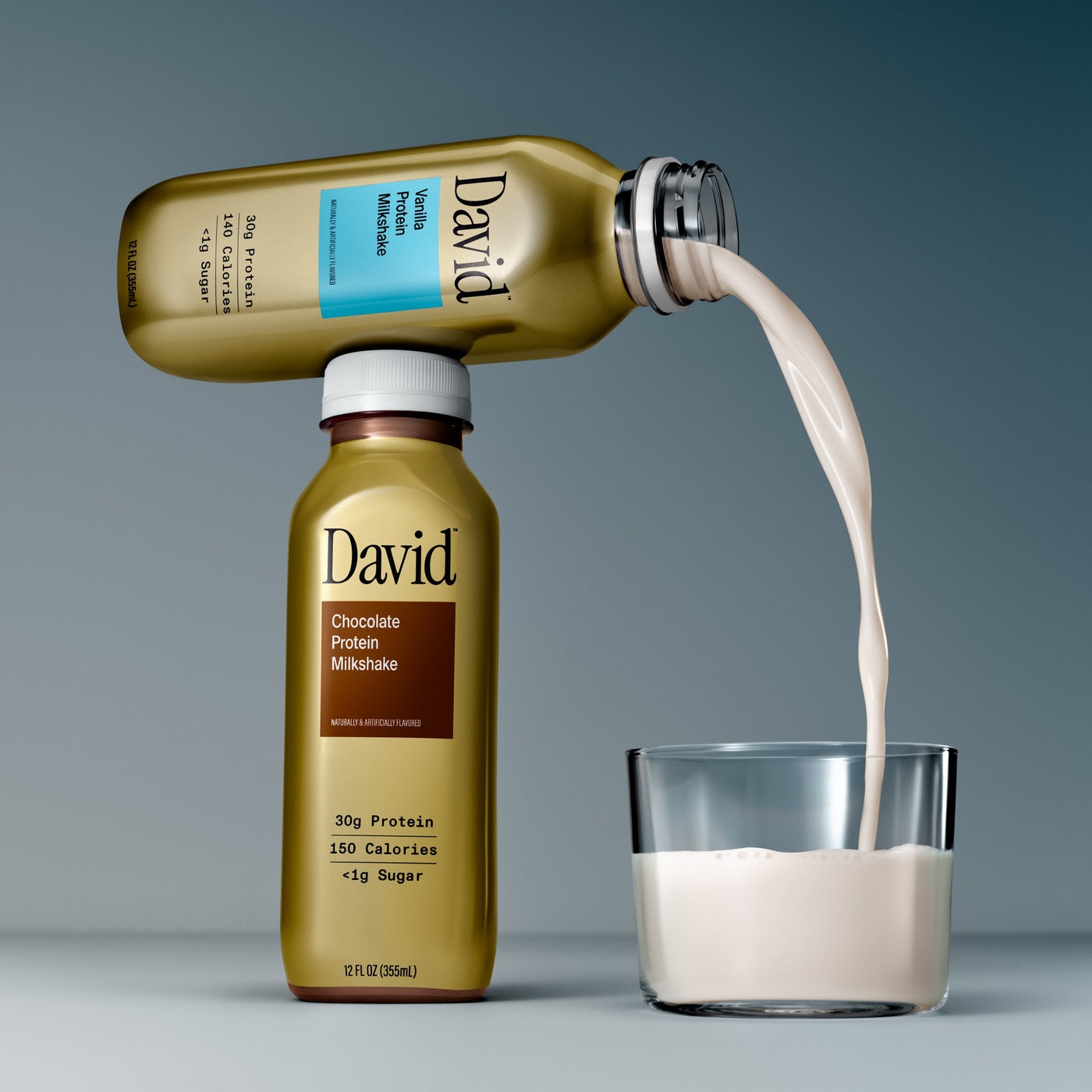
The September funding announcement reported more than 35,000 retail locations, including Walmart, Target and Costco, and forecast revenue above $300 million for 2026. The forecast is not a completed-year result. The expansion does show how far the proposition has travelled from its original online launch.
The idea transfers more easily than the recipe: find a customer’s measurable constraint, make the answer easy to repeat, and revise what disappoints them. It works less well when the buyer values minimal processing, wants a vegan bar, dislikes the sweeteners or cannot justify the price. David’s appeal is specific. Even the fish knows its audience.