The useful appointment is not the one that exists. It is the one a person can see, understand and book. Somewhere, a provider has an empty hour. Somewhere else, a patient is dialing a list, repeating an insurance number and collecting the small defeats of voicemail. Between them sits a piece of information with nowhere sensible to go.
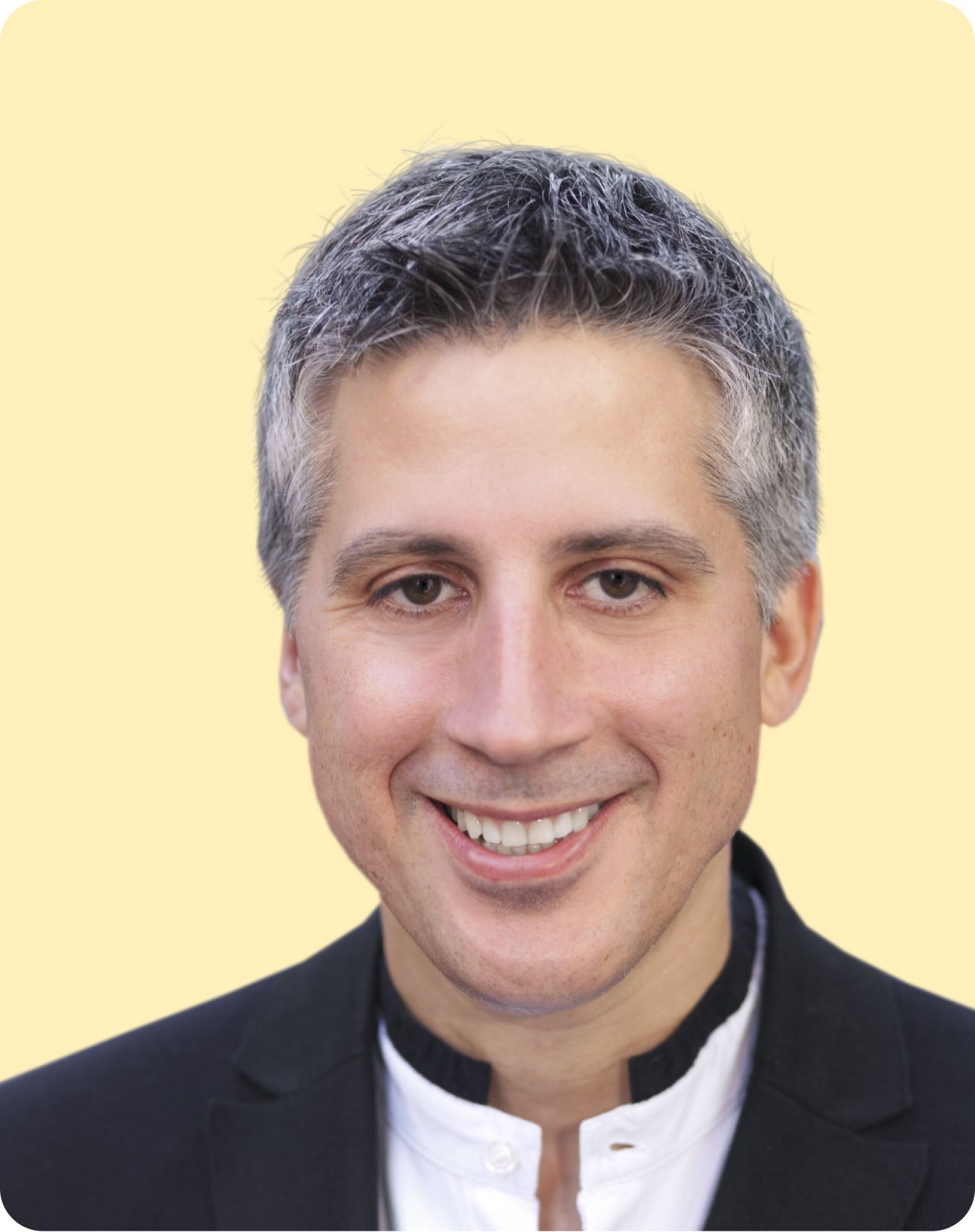
Oliver Kharraz has spent most of his professional life worrying that piece of information into motion. He co-founded Zocdoc in New York in 2007, became its chief executive in 2015 and remains in the job nearly two decades after launch. Longevity has made the company familiar. It has also made its original provocation easy to miss: a medical calendar ought to behave less like a private ledger and more like a live invitation.
This is not a romantic subject. Calendars rarely get optioned for films. Provider directories lack charismatic lighting. Yet Kharraz's work sits precisely where large systems become personal: the minute when somebody asks, who can see me, who takes my insurance, and when?
Three educations, one obsession
Kharraz arrived at software by an admirably indirect route. Born in Germany, he comes from a family that Zocdoc describes as having a 300-year tradition of physicians. In Munich, he studied medicine and neuroscience at Ludwig Maximilian University. He also earned a master's degree in philosophy from the city's Jesuit College of Philosophy. Before all that was finished, he had already built and sold an early internet software company in 1994.
The sequence looks eclectic on a résumé and almost suspiciously coherent in retrospect. Medicine taught him what happens one patient at a time. Neuroscience brought him close to complex systems. Philosophy trained him to inspect the premise before admiring the conclusion. Software offered scale, including all the mischief that scale can introduce.
He practiced as a resident doctor in Munich, then joined McKinsey & Company. During seven years there, he worked on patient-utilization models for government health services and large hospital chains. The consulting years moved the camera backward. A clinical encounter became a flow of people, rooms, schedules and incentives. Kharraz later explained his departure from practice plainly: helping one person was satisfying, but limiting. He wanted to work at a larger scale.
“The problem is that I was helping people one at a time when I was working as a doctor, which is both satisfying but also limiting.”Oliver Kharraz, 2016
At fifteen, an exchange year in the United States had already given him a taste for the country's optimism. He remembered the can-do posture, the sense that the next generation could make things better. McKinsey later brought him across the Atlantic for good. New York supplied the density, impatience and ringing telephones.
The inventory nobody could see
Zocdoc began with Kharraz, Cyrus Massoumi and Nick Ganju, colleagues connected through McKinsey. The service launched at TechCrunch40 in 2007 and started narrowly, with dentists in Manhattan. The narrowness mattered. One city. One category. Enough constraint to discover whether real-time availability was real at all.
The early lesson was not that appointments were scarce in every absolute sense. It was that supply was hidden inside office routines, disconnected calendars and, sometimes, Post-it notes. Search without action would merely produce a prettier directory. Zocdoc had to make the final step transactional.
inside a practice
plus insurance fit
and confirms
The company expanded across cities and specialties. Reviews helped patients judge fit. Insurance filters reduced one species of unpleasant surprise. Forms, reminders and calendar integrations followed. Kharraz eventually described Zocdoc as a “private sector interoperability layer for healthcare logistics,” a phrase engineered in a consulting laboratory but useful nonetheless. The platform was trying to translate incompatible systems into a consumer decision.
The expensive art of changing your mind
Founding stories favor the opening scene. Operating stories begin after the applause, when a successful product acquires habits and those habits acquire defenders. Kharraz became CEO in November 2015. Zocdoc later described the company he inherited as losing money, dependent on fundraising and stuck with slowing growth. The diagnosis was uncomfortable. The prescription was worse.
The team changed its culture and rebuilt the commercial model. Zocdoc had charged providers a flat subscription. It moved toward fees associated with new-patient bookings, an attempt to align what customers paid with value delivered. Providers pushed back. A marketplace does not get to change an incentive quietly; the incentive is the relationship.
In a 2026 podcast conversation with Christina Farr, Kharraz revisited the strain of that overhaul, including customer dinners where anger came with the entrée. The change tested both the company's balance sheet and its conviction. Zocdoc reported reaching EBITDA profitability in September 2019 and its first profitable quarter on that basis at the end of the year. After the pandemic interrupted the run, it said it returned to profitability in July 2020.
A business model is not backstage plumbing. In a marketplace, pricing tells each participant what the platform values. Change the price and you change the plot.
Kharraz's philosophical training is tempting to treat as decorative biography, a leather-bound volume placed behind the founder. His own account makes it more practical. He has said Hugo Ball's Critique of the German Intelligentsia helped him see how many beliefs are assumptions that other cultures or periods do not share. Questioning a premise is useful when the premise happens to be your revenue model. It is considerably less cozy when payroll depends on the answer.
“What we build today has a half life of two years. We will have to disrupt ourselves.”Oliver Kharraz, 2017
A voice at the front desk
Kharraz's latest chapter sounds new and behaves like the old one. Zocdoc introduced an AI phone assistant in 2025 to answer calls, route requests and book appointments. At Axios's Future of Health Summit that May, he argued for “superhuman” augmentative uses of AI. The emphasis was not on making the professional vanish. It was on removing functions around the encounter that consume time without improving the encounter.
In 2026, he pushed the point further. Large language models are most useful, in his telling, when they can transact rather than merely converse. A pleasant answer about appointment options is theater if it cannot reserve one. Voice is another bridge across the old gap: the patient who still calls and the availability that software can finally expose.
His public writing also resists the easy apocalypse. Kharraz has argued that doctors and AI can become co-pilots rather than competitors, even as patients increasingly arrive with machine-generated opinions. He predicts more real-time, actionable directories and warns against efficiency that erases human connection. The machinery should work harder so the people do not have to behave like machinery.
There is an operator's consistency here. In 2026, Kharraz wrote that many CEOs tell their teams to use AI without using it themselves. His rule is to ride the bike first. It suits a founder whose education repeatedly crossed the distance between abstraction and practice: philosophy and management, a provider's calendar and a patient's Tuesday.
The useful kind of optimism
Away from the corporate chronology, Kharraz has offered small clues about how he sustains a long project. He wakes an hour before his family to read beyond the day's work. He favors pen and paper for early thinking. His subjects include history, religion, economics and science fiction, especially old predictions that failed. His mother taught him discipline and the obligation to keep a promise. He ends his day with family when he can.
He lives in Brooklyn with his wife, a pediatrician, and their twin daughters. Fatherhood, he has said, taught him the difficult balance between guidance and autonomy, a lesson he also applied as a CEO. It is an unusually humane management analogy because it admits that control and care are not synonyms.
Kharraz has also written that he does not follow sports but loves a comeback. Zocdoc's recent history gives the line some ballast. In May 2026, he marked the close of what he called a decade-long turnaround chapter. A comeback in this setting was not a buzzer-beater. It was years of revised economics, annoyed customers, rebuilt systems and ordinary Tuesdays.
The aspiration now is broader than a directory and more grounded than a digital oracle. Kharraz wants Zocdoc to be connective tissue: a place where accurate information, live availability, patient preference and a completed booking meet. The language will evolve. The interface may speak. The old problem remains beautifully stubborn.
Somewhere, an hour is still empty. Somewhere else, somebody is still looking. Oliver Kharraz has built a career in the distance between those two facts, trying to make the distance exactly one click, one tap or one sentence shorter.