In 2014, when most marketers wanted a single famous face and a big check, Mae Karwowski did the opposite. Her first campaign for the agency she'd just started - out of a Lower East Side apartment, on a few thousand dollars - used 1,000 micro-influencers for Uniqlo. The bet was almost heretical at the time: that a thousand small, credible accounts could move product better than one celebrity nobody quite trusted. The company she built on that idea is called Obviously, and the name turned out to be a decent joke about hindsight.
Obviously is an influencer-marketing agency, but the more useful description is that it's a data company that happens to sell a service. It identifies the right creators, produces the content, runs the campaign, and - the part competitors often wave at - measures what actually happened. Over roughly a decade it has done this for Google, Amazon, Coca-Cola, Ulta Beauty, Lyft, Ford, Converse, Domino's, Campbell's, CVS and Uniqlo, racking up what the company reports as around five billion organic impressions along the way.
The Contrarian ThesisFollowers Are Vanity. Purchases Are the Point.
The line Karwowski repeats in interviews is deliberately blunt: "The number of followers a so-called influencer has does not correlate to purchases." It sounds obvious once you say it out loud, which is roughly the whole brand. The industry spent years paying for reach - big accounts, big numbers, big invoices - and Obviously's argument was that reach is a proxy, and a bad one, for the thing brands actually want.
"If you're a big brand, you can't work with 15 creators and expect measurable results. You need to be working with 2,500 creators."
Mae Karwowski, Founder & CEOThat number - 2,500, not 15 - is the entire operational challenge, and it's where the software comes in. Running a campaign with thousands of creators is not a creative problem; it's a logistics-and-data problem. You have to find them, vet them, brief them, ship them product, chase the content, and then prove it worked. Do that by hand and you need an army of account managers. Do it with a platform reportedly spanning around five million creators, and you can staff it with a lean team and let the tooling absorb the scale.

Who Pays For ThisFortune 500 Logos, Nano-Influencer Tactics
Obviously's customers are enterprise brands with real budgets and a nervousness about wasting them. The pitch that lands with a Google or an Amazon isn't "we know cool people online" - it's "we can run this at scale and hand you a dashboard that says whether it worked." As Karwowski puts it, the appeal of the format is that "ads appear where the customer is engaged and with content that they care about from people that they care about." It's advertising that doesn't feel like advertising, delivered at industrial volume.
What It Actually SellsThe Stack Behind the Campaigns
Strip away the jargon and Obviously offers a full pipeline. It starts with influencer identification and vetting - the creator database that ranges from nano and micro accounts up to celebrities with 100 million followers. Then content creation and campaign management, the operational muscle that keeps thousands of posts on-brief and on-schedule. Then reporting and analytics through a real-time dashboard, so a brand can watch impressions and output as they happen rather than waiting for a slide deck.
On top of that sit the packaged offerings the company has built over time: Custom Creator Networks, which give a brand an exclusive community of creators plus ownership of that first-party data; Share of Influence, an AI reporting tool that estimates what competitors are spending and posting; and a growing line of social-commerce work - repurposing creator content for Amazon storefronts and live shopping, where a post can turn into a checkout in a couple of taps.
The Business ModelA Services Company Wearing a Software T-Shirt
It's worth being precise about what Obviously is not: it's not a self-serve SaaS tool you buy a seat in. It's a tech-enabled agency. The revenue comes from managing campaigns for big brands, and the margin advantage comes from the proprietary platform that lets a modest team run campaigns most agencies couldn't staff. That distinction matters, because it explains both the ceiling and the moat. The ceiling: you grow by winning accounts and doing the work, not by shipping licenses. The moat: the data and automation are hard to copy, and they compound with every campaign run through them.
"Everyone told me I needed to raise VC money. We did not."
Mae KarwowskiWhich brings up the most unusual line on the company's resume: it never raised venture capital. In a decade where nearly every creator-economy startup ran on other people's money, Obviously bootstrapped, stayed profitable, and grew - Karwowski says revenue climbed roughly 50% a year for several years. During COVID in 2020 she reportedly turned down a $25 million offer. The reward for that patience wasn't a down round or a fire sale. It was a clean exit on her own terms.
The ExitSold at Cannes, Signed by WPP
The decision to sell was reportedly made at the 2022 Cannes Lions festival. The buyer, announced on March 27, 2023, was WPP - the London-based holding company that is, by most measures, the largest advertising group in the world. Terms were not disclosed. In a telling detail about how hot influencer marketing had gotten, Obviously was the second influencer agency WPP bought that single week; it had just picked up a firm called Goat. WPP folded Obviously into its agency VMLY&R, since rebranded as VML, and Karwowski stayed on as Founder and CEO.
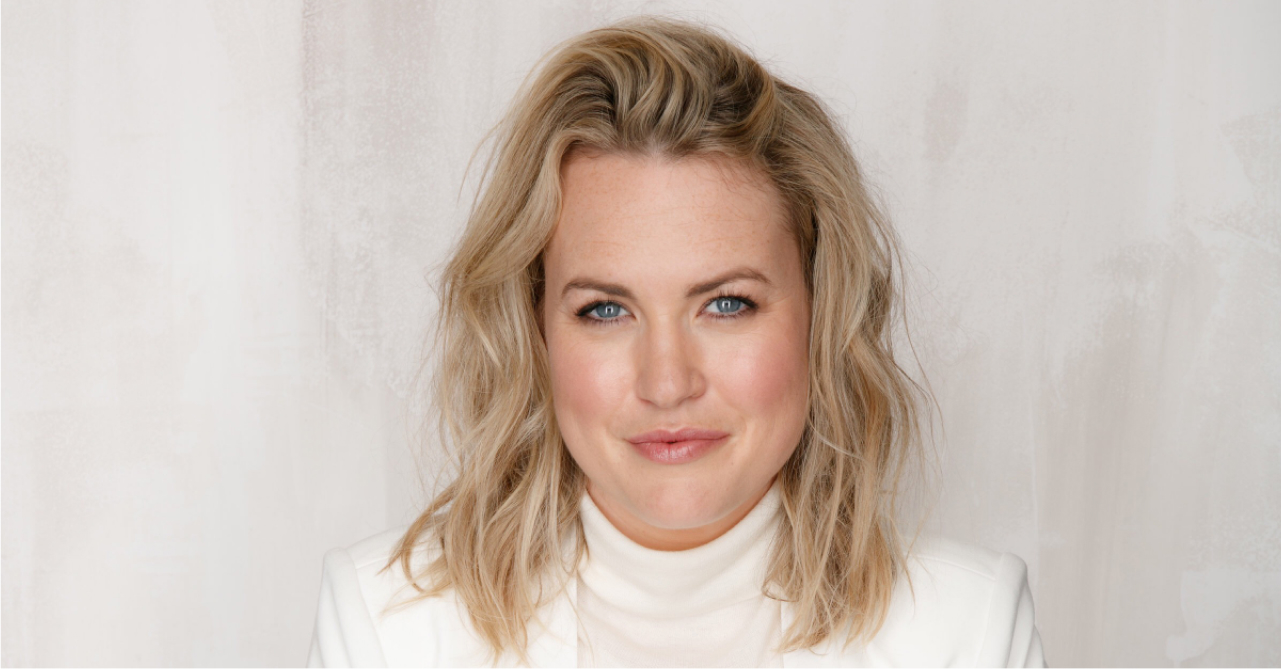
"This acquisition is the best of both worlds; we retain our agile and entrepreneurial culture while benefiting from VMLY&R's depth."
Mae Karwowski, on the WPP dealThe Competitive SetHow It's Different From the Pack
The influencer-marketing field is crowded - Linqia, Viral Nation, Open Influence, Upfluence, Influential, Billion Dollar Boy and a long tail of platforms all want the same enterprise budgets. Broadly they split into two camps: pure-software platforms that hand a brand a tool and a login, and creative agencies that handle taste but not scale. Obviously's positioning is the awkward, valuable middle - an agency that owns its software, so it can promise both the human judgment and the industrial scale.
The Usual Options
- Software platform: you get a login and do the work yourself
- Creative agency: great taste, but hand-managed and hard to scale
- Buy on reach; report after the fact
- Often VC-funded and growth-at-all-costs
The Obviously Approach
- Agency service and proprietary platform under one roof
- Built to run thousands of creators, not dozens
- Buy on measurable outcomes; real-time dashboard
- Bootstrapped and profitable before the exit
The Track RecordFrom Apartment to Holdco

Where It Fits NowA Bootstrapper Inside the Machine
Inside WPP, Obviously sits at the intersection of two things holding companies are hungry for: creator marketing and first-party data. It's now described as powered by WPP Open, the group's AI platform, and Karwowski has spent the last couple of years as a public face for the field - talking Amazon influencer marketing at Cannes Lions and turning up in trade press as a go-to voice on where creator commerce heads next.
The lesson worth stealing isn't complicated. Pick the metric that actually matters - here, purchases over followers - and then build the boring machinery to deliver it at a scale your competitors can't be bothered to. It won't work for everyone: a services business grows slower than software, and running thousands of creators only pays off for brands big enough to need that volume. But for a decade, on a contrarian bet and no outside money, it worked well enough to make the largest ad company in the world come knocking. Obviously, in hindsight.