YesPress Profile • Creator Commerce
Howl
The platform that turns a creator's recommendation into a paycheck - and a brand's budget into a real sale.
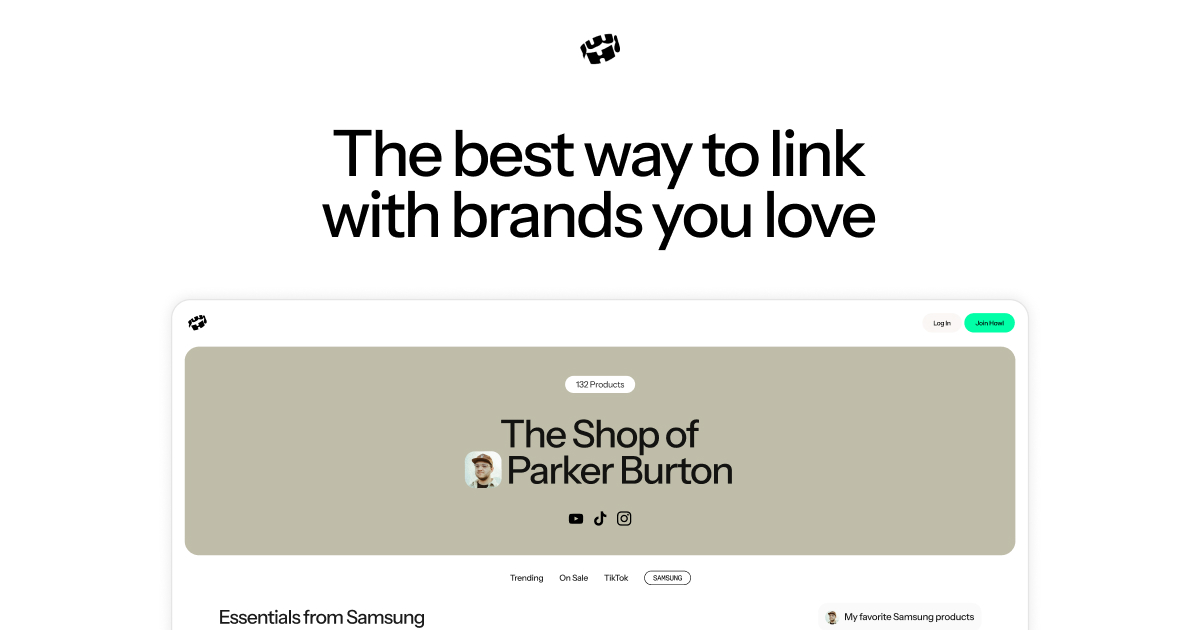
The platform that turns a creator's recommendation into a paycheck - and a brand's budget into a real sale.
It is a Tuesday night. A gaming streamer mentions the headphones she actually uses, drops a link, and keeps talking. Within minutes, strangers are buying. She gets paid - not pennies, and not three months late. That small, almost invisible loop is the whole business of Howl, a New York company that has spent the last few years convincing the internet that a creator's word is worth real money, and then making sure the money shows up.
Howl calls itself the place "where creators and brands link up." The tagline is cuter than the math behind it. Since 2022, the platform has driven more than $1.1 billion in creator-led commerce and paid over $100 million to roughly 23,000 creators. It is, by creator surveys, the top non-Amazon affiliate platform. Not bad for a company most shoppers have never heard of, which is rather the point.
For years, the deal offered to creators was lopsided. Traditional affiliate programs handed out commissions so thin they felt like an apology. Influencer "brand deals" paid up front but tracked nothing, so brands never really knew if a post sold a single item. Creators were told they were the future of retail while being treated like a rounding error in the marketing budget.
Meanwhile the actual money in retail - the enormous retail media budgets that brands spend to win attention - flowed to search ads, marketplaces, and a handful of platforms that behaved like toll booths. Creators drove the demand. The toll booths collected the fare.
That is the tension Howl exists to resolve: the people generating sales were the people least likely to be paid like it. Closing that gap is harder than it sounds, because it means rerouting money that powerful incumbents would very much like to keep.
Li Haslett Chen did not arrive at this by accident. She started at McKinsey, ran marketing at fashion platform Moda Operandi, and in 2017 founded Narrativ - an early attempt at commerce infrastructure that landed on Fast Company's Most Innovative list and the Forbes AI 50. Narrativ taught her where the money hid and who was guarding it.
In 2022 she launched Howl as the sharper, second swing. The bet was specific and a little audacious: if you could plug creators directly into retail media budgets - the deep pool, not the shallow affiliate one - you could pay them dramatically more and still give brands cleaner measurement than they had ever had. Creators earn; brands see exactly what they bought. Make social commerce, as Howl likes to put it, a team sport.
Investors found the logic persuasive. Howl raised a $27 million Series A led by Highland Capital Partners, with Talis Capital and Act One Ventures along for the ride. Haslett Chen, for her part, collected the kind of decorations that tend to follow this sort of conviction: World Economic Forum Technology Pioneer, Financial Times Fashion Disruptor, Ad Age 40-Under-40, and a board seat at Warner Bros. Discovery.
Li Haslett Chen founds Narrativ, an early bet on commerce infrastructure that serves consumers over monopolies.
The second act: a marketplace where fan communities profit from creator and brand collaborations.
Highland Capital Partners leads, with Talis Capital and Act One Ventures. Fuel for the creator-payout engine.
Authenticated launch links with dynamic pay, plus exclusive brand programs reporting 1.5x faster growth.
Howl crosses $1.1B in creator-led commerce and $100M paid to roughly 23,000 creators.
Stated goal: double the creator base, targeting undermonetized creators in gaming, tech, and wellness.
The mechanic is almost suspiciously simple. A creator turns any e-commerce page into a Howl link in seconds. That link works everywhere a creator already lives - YouTube, TikTok, Instagram, Substack, X, Discord, Twitch. When someone buys, the creator earns, and the sale is tracked all the way through. More than five million such links now exist.
Turn any product page into a trackable, shoppable link in seconds - usable on every social platform.
Personalized creator storefronts and link folders that showcase the products a creator actually recommends.
Authenticated product-launch links with dynamic, performance-based pay generated the moment a launch drops.
Exclusive, time-sensitive brand programs - brands report 1.5x faster program growth.
Live order tracking and transparent performance analytics, so creators see earnings as they happen.
Turns creator storefronts into measurable off-site ad placements funded by retail media budgets.
The unglamorous innovation sits underneath: Howl is the rare platform that pays creators from retail media budgets, not only affiliate commissions. That is why its commissions run higher than the industry norm - and why brands get attribution clean enough to defend to a CFO.
It is not only creators who show up. The brand and retailer roster reads like a mall directory: Samsung, Target, Walmart, Best Buy, Newegg and hundreds more. The products that move are the ones people genuinely obsess over - the Nintendo Switch 2, Sony's WH-1000XM6 headphones, the Oura Ring 4, Nike Vaporfly. Gaming, consumer electronics, and wellness are where Howl is loudest.
Strip away the dashboards and Howl is making one argument: the value a creator generates should flow back to the creator. That is the mission stated plainly - a creator economy where fan communities profit from the collaborations they fuel, and where creators are paid from the deep budgets, not the shallow ones.
It is a quietly subversive idea dressed in friendly product design. Reroute retail media toward the people who actually move products, give brands honest numbers in return, and the old toll booths start to look less essential. Howl is not asking permission to be the future of retail. It is just paying out, link by link, until the math is impossible to argue with.
There are more than 200 million creators worldwide, and shopping is sliding from search bars to trusted voices and AI-assisted discovery. Whoever pays those voices fairly - and proves their worth to the brands footing the bill - gets to sit at the center of how a generation buys things. Howl is betting it can be that company, and it plans to double its creator base in 2026 to make the case.
So return to the streamer who mentioned her headphones. A few years ago that recommendation would have evaporated, or earned her a coupon's worth of commission months later. Tonight it routes through Howl, pulls from a real budget, and lands in her account while the stream is still live. The loop closes. The person who created the demand is the person who got paid. That is the small change Howl is trying to make ordinary - and the reason it keeps getting louder.
Want the product walk-through and founder interviews? Start here:
Links open searches and official listings - no embeds, so the page stays fast.