Gary
Garofalo
The Austin founder teaching brands to count what their creators are actually worth.
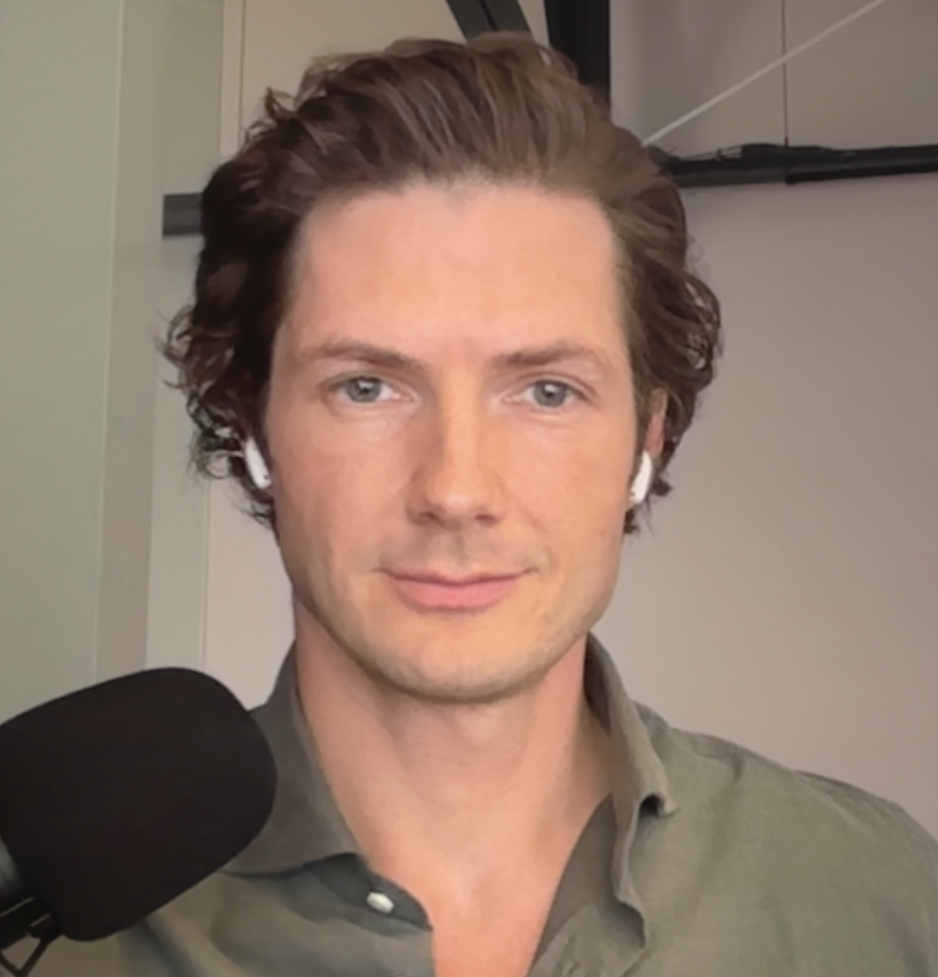 Gary Garofalo · LoudCrowd
A consultant's instinct, pointed at influencer marketing
Gary Garofalo runs LoudCrowd, a software company in East Austin built around a plain question that had gone unanswered for years: what is a brand's influencer actually worth? For most of the last decade, the honest reply was a shrug. Marketers tracked likes, reach and impressions, then hoped the spending paid off. Garofalo, the company's CEO and co-founder, built a business on the belief that the guessing had to stop.
Today LoudCrowd sits at the intersection of e-commerce and creator marketing. Its core idea is the "creator storefront" - a shoppable page built directly on a brand's own website, stocked with a specific creator's content and products. When a shopper follows an influencer's link, they land somewhere that still feels like that person's world, not a generic catalog. "When you send somebody to the website, you are still shopping for that person," Garofalo has said. "You see all of that person's content automatically on their storefront."
The commercial argument follows from the measurement. Once a brand can trace real revenue back to individual creators, the whole relationship changes. "Now that we're measuring a lot more revenue, we're looking at influencers like there are profit centers," Garofalo told NetInfluencer. That reframing - creators as revenue drivers rather than line items on a marketing budget - is the thread running through everything LoudCrowd does.
Garofalo did not arrive at this from the creative side of advertising. He came at it from analytics. He earned an honors degree in economics from Wesleyan University, then spent his early career at Deloitte Consulting in strategy and operations, work built on measuring how organizations actually perform. Before founding LoudCrowd he co-founded an earlier startup in higher-education analytics, an unglamorous domain that nonetheless revealed his pattern: find a place where important decisions were being made on gut feel, and replace the feel with numbers.
That analytical bent is why he tends to describe himself as a marketing-focused technologist rather than a marketer. LoudCrowd, in his telling, is less an agency and more an instrument - a way to make the fuzzy economics of creator partnerships legible. The company's work with brands like Gymshark, Boohoo, Kyte Baby and Dolce Vita has become the proving ground for that thesis.
We need to start attributing revenue to all the spending in the influencer marketing world.
The Boohoo partnership is the clearest example. LoudCrowd helped the fast-fashion brand launch the Boohoo Collective, a program Garofalo describes as "100% focused on how we drive as much revenue from all of our creators as possible." Rather than treating influencers as a broadcast channel, the collective treats them as a distributed salesforce, each with a storefront, each measurable. The incentives are structured to keep creators producing: post enough content and the brand seeds product or issues site credit, tying rewards to output and, ultimately, to sales.
Garofalo is candid that he is competing with entrenched players. Third-party creator storefronts like LTK and TikTok Shop already own the behavior he wants to redirect. His ambition is to move that behavior onto brands' own turf. "Our goal is to make our social commerce model on the native e-commerce as mainstream as using a third-party creator storefront like LTK or TikTok Shop," he has said. It is a direct challenge to some of the most established names in the space, and he says it without hedging.
The strategic logic is ownership. When a brand rents its creator relationships through an outside platform, it also rents the data and cedes a cut of every transaction. LoudCrowd's pitch is that brands should own the storefront, the content and the customer relationship outright. In an industry that has long paid creators on faith, owning the proof of what they drive is the more durable position.
None of this is loud in the way his company's name suggests. Garofalo's public appearances - on the eCommerce Fastlane podcast, on Ranksey's show about creator-led commerce - tend toward the practical: attribution models, storefront conversion, the mechanics of paying creators fairly. He is building infrastructure, and infrastructure rewards patience over noise. LoudCrowd raised a $5 million Series A in 2022, with total reported funding around $9.7 million, and has grown to a team of roughly two dozen without the theatrics that often accompany startup fundraising.
Where this goes depends on whether the rest of the industry adopts his premise. If brands keep buying reach, LoudCrowd remains a clever tool for the analytically minded. If they start demanding attributable revenue as the price of every creator dollar - the outcome Garofalo is betting his company on - then the creator-as-profit-center model he has spent years refining becomes the default. For now, he keeps counting, brand by brand, storefront by storefront, building the case that in creator marketing, the numbers can finally add up.
How he got here
On measurement, storefronts and creators
"Now that we're measuring a lot more revenue, we're looking at influencers like there are profit centers."
"When you send somebody to the website, you are still shopping for that person."
"Our goal is to make our social commerce model on native e-commerce as mainstream as using LTK or TikTok Shop."
"The Boohoo collective is 100% focused on how we drive as much revenue from all of our creators as possible."
Quirks & footnotes
- Self-descriptionCalls himself a marketing-focused technologist, not a marketer.
- HandleHis LinkedIn is "garyugc" - a nod to user-generated content, his raw material.
- Home baseRuns LoudCrowd from East Austin on Webberville Road.
- First ventureEarlier co-founded a startup in higher-education analytics.
- PatternKeeps finding fields run on gut feel and replacing the feel with numbers.
- Client rosterGymshark, Boohoo, Kyte Baby and Dolce Vita among the brands.