The first version of Obviously operated from a three-bedroom apartment in New York. There was no established creator-marketing department to imitate, no reliable menu of industry prices, and no tidy division between strategy and shipping boxes. Mae Karwowski did all of it. The founder could move from a campaign idea to client service to product logistics because, in a category still acquiring its vocabulary, the work was whatever the work needed to be.
Karwowski had arrived there by following a change most organizations could feel but few knew how to organize. After graduating from the University of North Carolina at Chapel Hill in 2008 with a degree in philosophy, she entered social media just as brands were learning to speak in feeds. At 360i, her accounts included Coca-Cola and Bravo programs such as The Real Housewives and Top Chef. She later directed social media for Gilt City. Culture was starting to happen online in public, participatory fragments. Her employers had front-row seats. Karwowski saw room for a new kind of company.
Her insight was not simply that popular people could sell things. Celebrity endorsement was old. The new opportunity was distributed: hundreds or thousands of creators, each with a specific audience and a native feel for the medium, could collectively produce attention and content at a scale that a conventional shoot could not. The hard part was making all those independent relationships work as a coherent system.
“Treat social influencers as people, not ad units.”Mae Karwowski's operating principle
A philosophy degree meets the Facebook page
Karwowski likes strategy. She has described the pleasure of studying large ideas, frameworks, writing and debate in college, then finding those same muscles useful in business. Influencer marketing rewarded that combination. It required an argument about where attention was going, a framework for matching brands with creators, and a daily willingness to revise both when a platform changed its rules.
It also required nerve. Her most repeated career advice is short: “ask for it.” Pitch the idea. Ask for the raise. Volunteer for the unusual project. Early in her career, she paired that directness with an unusually deliberate networking habit. For roughly five years, she tried to meet someone for coffee two or three times a week. The point was not transactional accumulation. Those relationships became part of a community she could keep learning from as the field took shape.
Consulting was the bridge. Karwowski picked up clients including Uniqlo, BBC and AOL, while keeping a rolling six-month plan. She knew a practice made of her own hours would eventually hit a ceiling. The answer was a repeatable model: an agency layered over technology, able to find highly specific creators, manage campaigns and report what happened. Official company accounts date Obviously's founding to 2014. Its first office, less grandly, was home.
The compounding decade
UNC philosophy graduate enters social media, working on Bravo and Coca-Cola accounts.
Obviously launches, turning a consulting thesis into a technology-backed agency.
Adweek ranks it the No. 2 fastest-growing influencer agency in the United States.
WPP acquires Obviously; the team joins VMLY&R and Karwowski remains CEO.
Karwowski presses brands to connect creator work to measurable business outcomes.
Control was part of the product
Karwowski bootstrapped the company. At the time, that choice was not a slogan about founder purity. It gave her permission to experiment in a market where the right answer could expire with the next product update. She wanted to make mistakes on her own dime. Without a group of investors to persuade, Obviously could pivot toward what creators and clients were actually asking for.
The constraint sharpened the model. Service alone could not coordinate the scale she imagined; software alone could not handle the judgment that relationships demanded. Obviously combined both. Its platform brought order to identification, workflow, reporting and analysis. Its people handled strategy, creative decisions and the connective tissue that keeps a creator from feeling like an inventory number.
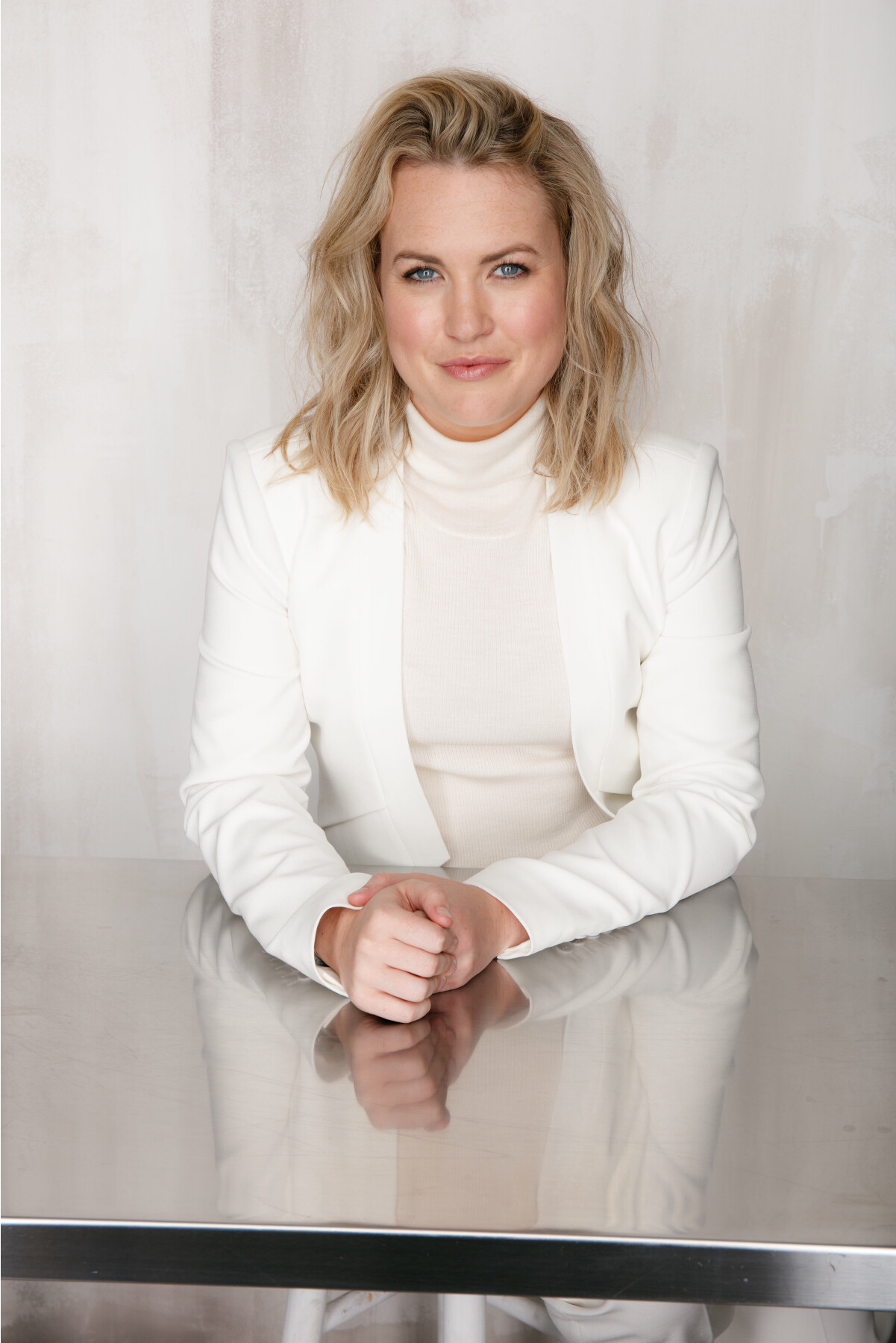
An early activation made the promise tangible. Karwowski took 25 Instagram creators to San Francisco for a product launch. What stayed with her was the energy and the multiplication of perspective - one weekend, refracted through 25 distinct sets of eyes. A brand did not merely receive reach. It received a body of creative work that no single photographer or central studio would have produced in quite the same way.
Obviously then pushed that logic much further. The agency opened in San Francisco and Paris as well as New York. Its client list grew to include Google, Amazon, Ford, Ulta Beauty, Coca-Cola and other global brands. By the time WPP announced its acquisition in March 2023, the team numbered nearly 100. What had begun as a founder personally handling shipments had become infrastructure for complex, multilingual campaigns.
The exit that did not end the story
A founder selling a company is often narrated as a clean finish. Karwowski's version was a change of scale. WPP bought Obviously and placed it with VMLY&R, which later became part of VML. The agency kept its name, team and focus, while gaining access to a far larger client network. Karwowski stayed in the chief executive's seat.
Her announcement carried the emotion of someone handing over ownership without abandoning the thesis. She credited co-founder and CTO Maxime Domain with believing in the vision and building the technical foundation from the beginning. Their partnership was itself unusual: the business and technical halves had built trust while working remotely. The WPP deal, in her telling, offered resources to grow the team and technology rather than an excuse to dismantle them.
That distinction matters. Obviously was attractive because it was a technology-enabled agency, not because it could be squeezed into the fashionable shape of a pure software company. The messy human layer was not technical debt. It was part of the advantage. The software made thousands of collaborations manageable; the service made them meaningful.
“You need to spend more on scale to drive results, then continue to take a fraction of the budget and keep experimenting.”Karwowski on balancing proven work and new bets, 2026
From sidecar to core skill
By 2026, the industry Karwowski entered as a curiosity had become a serious budget line. Her argument had also evolved. It was no longer enough for a brand to bolt a small influencer team onto a larger account group. Anyone shaping the brand needed to understand creator strategy from the inside out, because creators could now move through events, commerce, advertising, product pages, television and billboards.
Measurement followed the same expansion. A successful program might sell out a product, lift revenue, drive traffic or produce creator footage that outperforms conventional ad creative. The useful metric depends on the job. Karwowski's pitch is not that creator work floats above the old demands of business. It is that it can answer them, often while producing more varied assets at a lower creative cost.
Her argument for enough signal
Conceptual scale, not a performance claim. Karwowski has contrasted working with 15 creators against the thousands a large brand may need for measurable results.
Yet scale has not made her less interested in smallness. She is watching creators who go extremely deep on narrow subjects: the person who dissects luxury handbags to explain their construction, or the crocheter who pairs craft with life lessons. Specific expertise creates community. The audience may gather around a small door, but it enters with intent.
That is the quiet consistency in Karwowski's career. In the apartment, the job was finding value in many distinct voices. Inside WPP, the job is still finding value in distinct voices - while connecting them to a global operating system. Platforms change. Labels change. The creator once called an influencer may become a merchant, a production studio or a media business. The relationship remains the unit that makes the machinery worth running.
Karwowski's story can sound like a tale of seeing the future early. The more transferable lesson is less cinematic. She noticed where attention was moving, then spent years building the plumbing: the client process, creator trust, software, reporting, hiring and pricing that could turn a cultural shift into a durable business. She asked for the opportunity, kept enough control to learn in public, and sold only when a larger home could carry the original idea further.
The feed rewards novelty by the second. Obviously was built on a slower advantage - relationships and systems that compound. Karwowski has now lived with that bet through an apartment, three offices, an acquisition and another phase of growth. The next platform will arrive with its own vocabulary. Her question will probably be the same one that started the company: where are people already creating value that the market has not learned to organize yet?