The odd thing about an influencer campaign is how little of it looks like work. A woman opens a box. A man puts on a sandal. Someone lifts a pink drink toward the late-afternoon sun. The clip runs for nineteen seconds and gives the impression that the whole affair occurred naturally, somewhere between lunch and a Pilates class.
Behind those nineteen seconds sits a small bureaucracy: casting, audience checks, contracts, creative briefs, usage rights, shipping, event production, paid-media permissions, invoices and a report explaining what happened. For years, brands bought those jobs from separate shops. The creator had a manager. The brand hired an agency. A production crew made the assets. A media buyer amplified them. An events company booked the room. Everyone possessed a different spreadsheet.
The Digital Dept. has built its proposition around that spreadsheet problem. The New York-based company, with offices in Los Angeles, Miami and Nashville, represents creators and runs campaigns for brands. It develops strategy, casts talent, produces user-generated content, negotiates contracts, hosts experiences, buys media, tracks results and, since 2025, helps creators improve affiliate revenue. Its stated enemy is not another agency. It is the expensive pause between agencies.
Two halves of the same post
The company arrived in September 2023 when Dolphin Entertainment combined two businesses it already owned. Be Social, founded by Ali Grant in 2012, had grown around digital publicity, talent management, product mailers and events. Socialyte had campaign strategy and paid-media muscle. Both understood talent. They simply approached the market from different sides of the post.

Grant and Sarah Boyd became co-CEOs, with Grant overseeing marketing and Boyd revenue. The arrangement makes intuitive sense once you see the pieces: Be Social knew how to stage the moment; Socialyte knew how to distribute and measure it. The public brand launched in 2023, and Dolphin's filings record the legal merger as effective January 1, 2024.
Those figures are the cost of assembling the ingredients, not a disclosed valuation for The Digital Dept. Be Social's deal included cash, shares and possible contingent consideration. Socialyte's included cash, stock and a note, plus the possibility of a further $5 million earnout. The targets for that earnout were not met. Later, Dolphin sued Socialyte's seller and principals over alleged breaches and fraud connected with the transaction. The defendants' response is not laid out in the filing. The tidy merger story, in other words, came with untidy accounting and litigation.
What changed management's mind about keeping the agencies distinct was not a failure of influencer marketing. It was the multiplication of it. As creators spread from Instagram into TikTok, YouTube, affiliate storefronts, live experiences and paid advertising, clients needed more specialties and suffered more handoffs. The two agencies' overlap became less interesting than their complementarity.
“To help brands scale creative, influence, and performance under one unified system.”The Digital Dept.'s stated mission02 / The proof
A showroom with a media plan attached
The clearest expression of the model is BRANDEdit, a traveling creator experience that is part showroom, part content studio and part extremely photogenic trade fair. Brands can supply products, teach creators how those products work or build custom installations. The Digital Dept. handles the room, the invitations, the production and the report afterward.
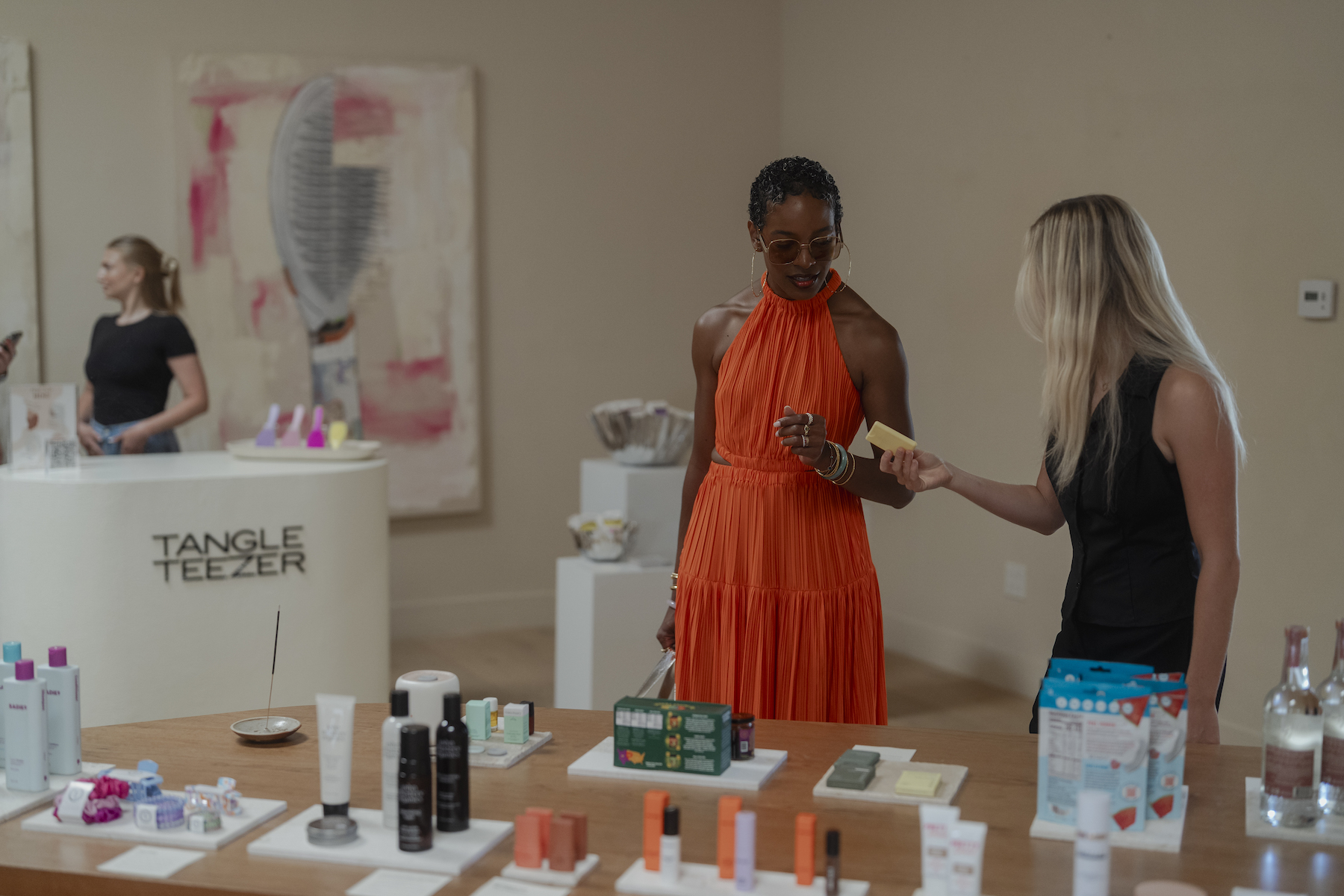
In 2024, five BRANDEdit experiences across three cities drew 820 creator attendees and produced a reported 169.9 million unique impressions. The clever feature is shared infrastructure. A young skincare brand can enter the same room as an established fashion label without producing an entire event alone. Creators get appointments rather than a crowded free-for-all. Brands get education time, content and a chance at relationships that last beyond the gift bag.
The same choreography appears in custom work. For Crocs, the agency combined a Hollywood Hills brunch, charitable integration, personalized travel-themed mailers, organic seeding and a social campaign involving more than twenty creators. The reported result was 6.7 million organic impressions, more than 330,000 engagements and over $12 million in earned media value.
The bars are deliberately not to a common mathematical scale; 169.9 million would flatten the others into decorative lint. They are a reminder that agency case studies report different things under different conditions. Eyebuydirect's nine-creator desert trip generated a reported 7.5 million impressions. Magnolia Pictures used more than sixty creators around screenings of Thelma and reported more than one million. These are company-reported outcomes, useful as evidence of execution but not a substitute for a client's sales ledger.
03 / The businessIt sells coordination, then takes a seat on both sides
The Digital Dept. has two customer groups. Brands buy strategy and execution. Creators buy, or more often share revenue for, management and commercial opportunity. Dolphin describes the broader agency economics as retainers, project fees and percentages of contracts. The Digital Dept. publishes no rate card, which is normal for work whose price can change with the number of creators, production days, paid-media budget, usage rights and hotel rooms.
Scale makes the matching business more plausible. The company reports more than 350 exclusively managed creators, over 13,000 opted-in members of its broader network and 375 million combined followers across the exclusive roster. That does not make every match good. It does mean the casting team can search beyond the same famous faces, check audience quality and assemble a group by niche, geography or demographic.
Affiliate services deepen the model. A sponsored post is a transaction; an affiliate link can become a recurring storefront. Helping a creator choose products, improve content and read conversion data moves the agency closer to commerce. The 2025 partnership with sister agency The Door did something similar for culinary and lifestyle figures, combining talent management with publicity under Dolphin Tastemakers.
This is where The Digital Dept. differs from software platforms that sell discovery tools and dashboards. Its product remains people doing work: managers negotiating, producers building, strategists choosing and account teams explaining. Technology assists the decisions, but nobody should mistake this for SaaS. The alternative is either another full-service creator agency or a brand assembling specialists itself.
04 / The useful lessonCopy the handoff audit, not the headcount
The portable idea is wonderfully unglamorous. Write down every point at which a campaign changes hands. Where does the brief get reinterpreted? Where is audience information lost? Who owns the usage rights? Can the event footage become paid creative without another negotiation? Integration is valuable only where those seams create delay, duplicate cost or contradictory decisions.
A playbook worth borrowing
- Combine adjacent capabilities around one customer job, not around a fashionable category.
- Build a shared format, like BRANDEdit, so smaller clients can buy into reusable infrastructure.
- Keep organic creation, paid distribution and measurement connected from the first brief.
- Use a broad network for discovery, then narrow by audience quality and genuine brand fit.
There are conditions under which the model is a poor fit. A company with a strong in-house creator team may not need a full-service partner. A narrow campaign may be cheaper with one specialist. Talent representation and brand service can also create tensions that require clear disclosure and careful contracting. And no amount of integration rescues a weak product, a forced creator match or a measurement plan that confuses impressions with purchases.
Still, the central observation holds. The creator economy did not become simpler as it matured. It acquired agents, affiliate links, paid amplification, live events, union questions, content rights and a fondness for custom mailers. The Digital Dept. is a bet that complexity can itself become the product, provided somebody accepts responsibility for the whole thing. The effortless nineteen-second clip is the visible end. The business lives in everything required to make it feel effortless.