An office building in Bloomington, Minnesota, has a useful way of explaining its tenant’s business. OATI’s Microgrid Technology Center combines an office and data center with its own energy resources. The building is a workplace, a customer of its own ideas, and a demonstration you can walk into. For a company selling software that helps electricity systems behave, that is a rather good sales prop.
- OATI connects energy trading, grid operations and distributed resources.
- Its customers include utilities, grid operators, cooperatives and tribal projects.
- The useful question: can your equipment, operators and market systems work together?
The office is the demonstration
The facility entered production in 2017. A California Energy Commission case study put its microgrid-specific cost at $1.5 million, excluding the diesel generator. That number belongs to a particular installation and period. Its appeal was business continuity: the energy system supported a mission-critical data center while showing prospective customers what coordinated resources could do.
Think about what a data center sells. Its customers expect availability. Now put the supplier’s own software inside the power arrangement supporting that expectation. The demonstration acquires a consequence. OATI has given visitors something more interesting than a screen full of green status lights: a place where the controls have work to do.
The value is in the handoff
OATI stands for Open Access Technology International. Its founder, power systems engineer Sasan Mokhtari, started the company in 1995. Today its work stretches across several jobs that an electricity customer rarely sees: arranging power transactions, coordinating transmission schedules, accounting for energy, and managing the resources scattered across a distribution network.
Here is the small complication behind the big energy transition. A solar array produces when conditions permit. A battery has limits. A thermostat belongs to someone with preferences. A utility operator has obligations to everybody else on the circuit. Each resource can be useful individually; coordinating their behavior creates another problem entirely.
Physical equipment at one end. Commercial obligations at the other. The handoffs matter.
OATI DERMS, its distributed energy resource management system, handles the wider portfolio. GridMind handles microgrid and asset controls, including switching between connected and islanded operation. The company’s trading tools cover bids, positions, risk and settlements. Its transmission software supports scheduling, tagging and outage coordination. Together, these products address the awkward boundaries between departments and machines.
That breadth shapes its position in the market. Verdantix’s 2025 DERMS buyer guide places OATI alongside vendors including GE Vernova, Siemens, Schneider Electric and Smarter Grid Solutions. Buyers have choices. OATI’s case is the connection between local resources and upstream operations, supported by its own private hosting infrastructure and round-the-clock support.
The business model follows those buyers. OATI supplies hosted enterprise software, integration and operational support. These are relationships built around working utility systems and their changing requirements. A prospective customer needs to scope the devices, applications and workflows involved before comparing proposals. The significant unit is the functioning system.
Twenty-six co-ops. One coordination problem.
Consider North Carolina Electric Membership Corporation, which works with 26 locally owned distribution cooperatives. It already uses OATI DERMS and GridMind for resources including solar, storage, demand response and islandable microgrids. In February 2026, the partners announced a further enhancement for real-time coordination using current conditions alongside forecasts and plans.
Twenty-six cooperatives make the coordination problem wonderfully concrete. A common operational picture has to coexist with local equipment and local responsibilities. The software must help people see available resources, call on them, communicate with participants and establish what actually happened. A virtual power plant needs a credible administrative life as well as a dispatch button.
A NCEMC and Duke Energy pilot report supplies a useful wrinkle. One community solar site had to be curtailed manually while its data link was being installed. The control ambition had reached farther than the communications connection. Anyone buying automation can copy the lesson: trace the path all the way to the equipment.
“operators will retain final decision authority and AI suggestions will remain advisory.”California ISO, describing its Genie prototype
Solar gets the photograph
In Northern California, the Paskenta Band of Nomlaki Indians is building a microgrid with 4.5 MW of solar and two battery systems coordinated by GridMind. OATI’s October 2026 update shows construction under way. The panels make an excellent photograph. The controller’s job is harder to picture: coordinating resources, deciding which loads can be carried, and managing separation from the surrounding grid.
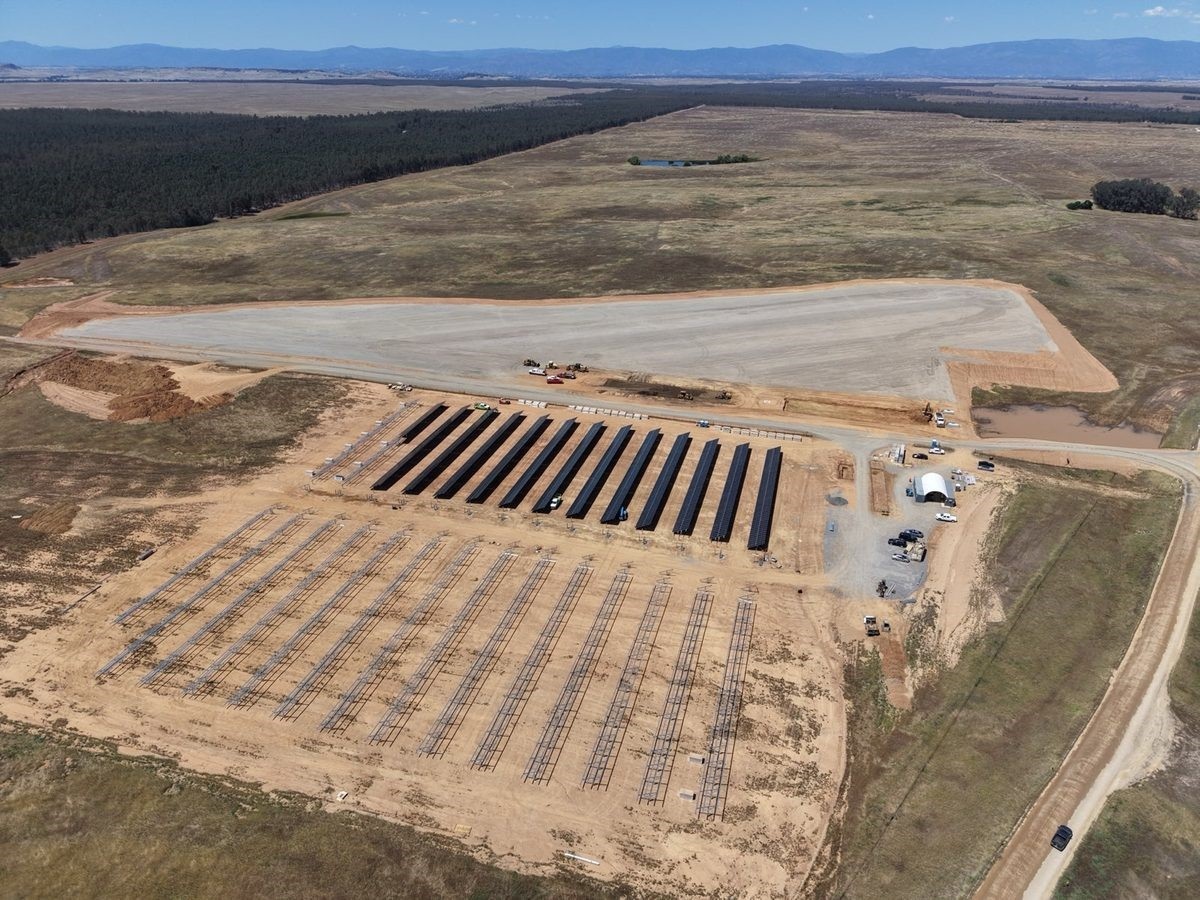
A second project tests another combination. At the University of Minnesota Morris, a planned 1 MW, 6 MWh Eos zinc battery system will use GridMind to coordinate charging and discharging for Otter Tail Power. Commissioning is expected in 2027. Its six-hour duration describes a design capability; operating results will come after installation and use.
Give the machine a bounded job
OATI’s newer AI work brings the same coordination question into the control room. California ISO described a Genie prototype for reviewing maintenance requests: finding anomalies, retrieving relevant information and suggesting next steps. Its architecture grounds responses in records and procedures. The operator keeps final authority. That boundary gives an ambitious technology a specific assignment.
OATI’s own account of its culture emphasizes engineering and security. It remains privately owned and reports more than 2,300 customers. The interesting thread through its products is continuity: familiar operational obligations persist even as new devices, programs and interfaces arrive. Someone still has to reconcile the transaction and answer the alarm.
For a buyer, the practical starting point is a handoff that hurts. Connect an isolated battery. Coordinate a demand response program. Reduce repetitive outage-review work. Then verify the communications, authority and measurement needed to make the result dependable. Market access and interconnection rules still govern what can earn money. Software has its best chance when the operating arrangements are as carefully designed as the equipment.