energy-software
(12)
ENSEK followed the missing money. British Gas followed ENSEK.
The Nottingham software company built its business around the unglamorous problem of making energy bills add up. Then British Gas’s parent paid £91 million to own it.

Lindsey Paschal Learned to Market Complexity - Then Took On the Energy Grid
After two decades spent turning specialist software into clear commercial stories, the former teacher and SaaS growth leader has arrived at Energy Exemplar - where the product models systems measured in seconds, decades and continents.
Nate Richards Put the Messy Middle of Energy Sales on Speaking Terms
A childhood programmer found his durable business in the least glamorous corner of competitive energy: the handoffs, spreadsheets and commission files between buyers, brokers and suppliers.

Christopher Kemper Built a Clean-Energy Company. Now He’s Sharing the Scar Tissue.
From baseball cards at eight to billions in clean-energy financing, Palmetto’s founder has spent 15 years turning climate conviction into infrastructure - and keeping unusually candid notes on the cost.

The Company Turning Your Roof Into a Subscription
Palmetto owns the solar panels. You get the power. Inside the Charlotte software company betting that clean energy should work like a subscription - and raising billions to prove it.

Seyed Madaeni
Seyed Madaeni is the co-founder and CEO of Verse, a San Francisco energy-software company that uses AI to help large enterprises and AI data centers buy, plan, and dispatch clean power. A systems engineer with a PhD from Ohio State, he spent a decade building grid-scale market software at PG&E, SolarCity, Tesla, AMS, and Fluence before starting Verse, which raised a $54M Series B led by Bessemer in June 2026 with backing from NVIDIA and GV.

CruxOCM
CruxOCM is a Calgary-based industrial automation company building software that gives energy control rooms an 'adaptive cruise control' for their pipelines. Its robotic industrial process automation (RIPA) platform runs on top of existing SCADA and DCS systems to automate complex, procedure-heavy operations - starting and stopping pumps, holding steady flow, reducing drag - so operators can run the same assets with more throughput, lower operating costs, and improved safety, all while keeping a human in the loop.

Shwan Lamei
Shwan Lamei is co-founder and CEO of Emulate Energy, a Lund- and Boston-based software company that turns everyday household devices - heat pumps, EV chargers, home batteries, solar inverters - into a coordinated 'virtual battery' that utilities can dispatch on flexibility and balancing markets. Trained as an industrial engineer at Lund University, he spent 15 years in industrial B2B sales and corporate development at SWEP and Dover before starting Emulate in 2020 with a childhood friend whose MIT postdoctoral research became the technical seed of the company. In April 2025 Emulate closed a EUR 5M Series A led by Helen Ventures to scale its DER orchestration platform across Scandinavia, the DACH region and the United States.
ResFrac Corporation
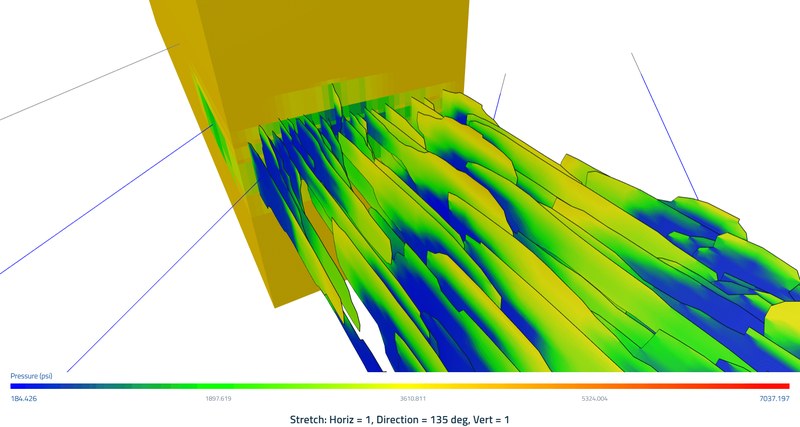
ResFrac Corporation builds the industry's only fully coupled hydraulic fracturing and reservoir simulator, letting energy engineers model the full life of a well - from the first crack in the rock to years of production - in one continuous physics-based simulation. Founded in 2015 by Stanford-trained engineer Mark McClure, the Palo Alto company is used by over 35 operators and 50 institutions worldwide across shale, conventional and enhanced geothermal plays.

Rahul Kar
Rahul Kar is the founder and CEO of Hammerhead AI, a Redwood City startup that uses reinforcement-learning control agents to squeeze stranded power out of AI data centers. After helping build and scale AutoGrid - the distributed-energy software pioneer acquired by Schneider Electric - Kar launched Hammerhead in November 2025 with a $10M seed round led by Buoyant Ventures. His thesis is blunt: the real bottleneck for AI is not chips or models, it is power, and most data centers run at 30-50% of their allocated capacity. Hammerhead's ORCA platform orchestrates power, cooling, and compute in real time to unlock roughly 30% more usable capacity without touching the grid.

Splight
Splight is a grid-technology company that uses machine learning to squeeze more capacity out of the power lines that already exist. Its flagship product, Dynamic Congestion Management (DCM), reads real-time conditions on transmission lines and turns fast-responding assets like batteries and data centers into grid-stabilizing tools, unlocking up to twice the usable capacity without building a single new tower. Founded in 2020 and headquartered in San Francisco, the company targets utilities, grid operators, and the AI data centers straining the grid - it now manages more than 3 gigawatts of grid assets and has raised about $24.4M to expand across North America and Europe.

Bryan Bennett
Bryan Bennett is the CEO and founder of Cortex (formerly Cortex Building Intelligence, now Cortex Sustainability Intelligence), a New York-based software company that uses machine learning to cut energy use, costs, and carbon emissions in commercial buildings. Raised in a family that worked commercial real estate for four decades and trained as a management consultant advising utilities on smart-grid technology, Bennett built Cortex around a simple observation: buildings generate thousands of data points every minute, and almost no one was turning that data into action. His software-only platform now optimizes more than 50 million square feet, including the Empire State Building.