An energy bill is a small document carrying a large burden of trust. Somewhere behind that total, a supplier must connect a meter reading to a tariff, a payment, a wholesale cost and an account a customer can understand. ENSEK made a business out of the places where those connections came loose. In September 2024, Centrica bought the company for £91 million in cash.
That makes ENSEK an unusually revealing software story. Its buyer was already a customer. British Gas had been moving domestic accounts onto ENSEK’s Ignition platform under a strategic partnership announced in August 2021. The acquisition put the software behind those accounts inside the group that depended on it. Centrica subsequently described the benefits as eliminating third-party fees and gaining greater control over operations and integration with its own systems.
Consumers generally encounter the result through their energy supplier. ENSEK sells the machinery to utilities: software for acquiring customers, managing accounts, producing bills, collecting payments and handling the industry messages that keep supply records straight. The electricity does not pass through Ignition. The commercial life of the customer does.
Centrica’s cash consideration for ENSEK.
A customer relationship became an acquisition.
First, persuade the finance director
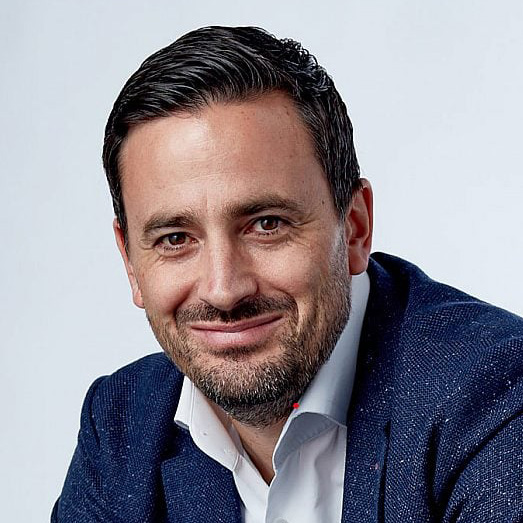
Founder and chief executive Jon Slade traces the business, launched in 2010, to a mismatch between energy retailers’ operational and financial records. In his account, some finance directors had become accustomed to losing 2–3% of revenue annually. Persuading them that this deserved fixing was an early obstacle. Acceptance of bad numbers had become part of the operating routine.
ENSEK initially simulated what billing systems should have calculated, using industry data to create a comparison. Slade says early customers’ results validated the approach. Ignition later grew around that same gross-margin engine. The sequence matters: financial reconciliation supplied the foundation for a broader customer platform.
This is a useful lesson for anyone selling operational software. A replacement system asks buyers to imagine a better future; a demonstrable discrepancy gives them a problem they can inspect today. ENSEK’s entry point was unusually concrete. Show the difference between what should have happened and what did, then give someone responsibility for closing it.
A meter reading has a long commute
Ignition’s scope stretches from a quotation to the next customer-service conversation. Its cloud software links onboarding, billing, debt management, financial reporting and market communications. ENSEK describes an event-driven architecture: changes can trigger processing as they arrive, rather than every activity waiting for a batch. Interfaces allow suppliers to connect other systems to that shared operating base.
For a billing team, the practical detail is more interesting than the architecture vocabulary. Ignition supports domestic accounts, smaller businesses and industrial or commercial portfolios. It can consolidate multiple business sites, configure time-of-use tariffs and handle smart, traditional and prepayment meters. Prepayment has its own operating mode, including balance, emergency-credit and debt functions.
The software also applies checks before billing and a further review stage. Exceptions can be routed for attention, while a billing tracker gives managers visibility across a portfolio. Think of it as a sorting office for troublesome accounts. Automation is useful when it sends routine work through and makes the awkward cases easier to find.
Market communications are another part of that plumbing. Ignition provides an industry interface and Smart DCC adapter, linking customer operations with smart-meter infrastructure. Its portfolio tools preserve detailed data and allow teams to investigate specific problems. A customer-service screen is only as useful as the records feeding it; ENSEK’s proposition reaches further back into that chain.
The customer list spans British Gas Energy, British Gas Business, Utility Warehouse, United Gas & Power, Holborn Energy and Metis. That mix places ENSEK in specialist enterprise software for energy retail, serving companies with household or business customers. Its commercial model is business-to-business SaaS, sold through a supplier sales and demonstration process.
The finance department gets a microscope
Energy revenue is not simply the sum of invoices already sent. Suppliers need to understand unbilled consumption, settlement costs and the profitability of individual accounts. Ignition’s financial tools bring ledgers, gross-margin modelling and revenue assurance together. Its model calculates wholesale, imbalance and network costs at meter level, helping teams inspect the economics beneath a portfolio total.
That detail has a practical consequence: an operational exception can acquire a financial priority. A missing reading and an incorrect tariff date might both need attention, but they need not carry the same exposure. Integrated records let finance and operations discuss the same underlying account instead of reconciling competing spreadsheets before the investigation even begins.
In February 2026, revenue-assurance head Helen Corkill described weekly controls that detect anomalies, estimate their financial impact and coordinate repairs. She said the reporting model supported more than seven million customer accounts. Financial Assurance is delivered within Ignition, rather than sold as a standalone product.
Corkill also recounted analysing an unnamed supplier whose pricing was unsustainable. ENSEK raised the alarm; the supplier did not act and subsequently went out of business, she wrote. It is the company’s account of an unnamed case, but it illustrates a hard limit: detecting a commercial problem cannot compel management to change the price.
“It doesn’t have to be this way.”JON SLADE / RECALLING EARLY CFO CONVERSATIONS
The customer bought the supplier
Private equity helped ENSEK expand before the Centrica transaction. LDC backed a management buyout with a minority investment in 2017, supporting product development and analytics. During that partnership ENSEK also acquired Benelux consultancy and data-analytics business NrgFin. LDC’s exit followed in 2024, ending a relationship that had taken the software company through considerable energy-market change.
The £91 million is the acquisition’s cash consideration, not the price of installing Ignition. Centrica’s 2024 accounts specify that the transaction completed on September 20. The distinction matters for a prospective customer: buying the company and adopting its product are different economic decisions.
By December 2024, Centrica said more than 6.5 million British Gas Energy customers had migrated to Ignition. Its 2025 annual report subsequently described the completion of customer migration and reported a UK Home Energy Supply touchpoint Net Promoter Score of 33, against 29 in 2024. It linked the platform to improved performance alongside broader operational work.
Those figures support a story of large-scale adoption and improving service. They do not isolate how much improvement the software caused. Staffing, processes and other changes also affect a customer’s experience. For business customers, the work continued: Centrica reported that 44% of SME customers had migrated by the end of 2025.
British Gas’s score moved upward
Open doors, with a large owner behind them
ENSEK competes in a market containing Kraken, Kaluza, Gentrack, Oracle Utilities and SAP. A 2023 Frost & Sullivan assessment placed these businesses in the same customer-care and engagement field. It distinguished ENSEK’s partner-network approach from competitors that build more of the surrounding functionality themselves.
The company’s partner list makes that approach tangible. AWS supplies the cloud foundation. Salesforce connects customer-relationship management. Equifax and Experian provide credit-related services; GoCardless supports Direct Debit. NET2GRID contributes residential energy insights and predictions. Suppliers can assemble customer propositions around the central platform without developing every supporting service themselves.
The trade-off is an implementation question. Connected products still need clear ownership of interfaces, data quality and exceptions. Buyers should examine how their actual tariffs, payment arrangements and service workflows behave across the proposed combination. A diagram with connected boxes is the beginning of that conversation.
Centrica ownership adds a further consideration for suppliers evaluating ENSEK. The platform continues to serve other retailers, while belonging to a major energy group. That makes contractual treatment of customer data, product priorities and support a sensible part of procurement. The ownership story is both a substantial reference customer and a relationship buyers need to understand.
From the account to the appliance
ENSEK widened its ambitions in September 2024 by acquiring Zoa, a home-energy-management technology business formed after Bulb entered administration. More than 45 Zoa employees joined, taking ENSEK’s stated workforce to 550 at the time. Zoa brought capabilities intended to help energy companies manage the spread of connected, low-carbon devices.
Today ENSEK markets Flex for connecting and coordinating assets such as EV chargers, batteries, solar systems and building controls. The proposed commercial uses include smart charging, shifting demand and participation in flexibility markets. This moves the company closer to decisions about when energy is used, extending its established role in accounting for that use.
There is an important distinction in ENSEK’s own language. Its homepage describes a developing orchestration layer, and the Flex technology FAQ says integration with Ignition is being worked on. The billing platform has documented deployments at national scale; the wider connected offering has a roadmap. A supplier assessing it should ask which integrations are available for its devices and intended programme.
New chief product officer Sharon Doyle outlined the direction in January 2026: improve Ignition’s automation while expanding connections to consumers’ energy devices. She also described using product-usage information to guide development. Chief of staff Grace Rothery separately identified a shift toward product-led delivery as a priority, intended to get improvements to customers faster.
Ignition: deployed customer billing and operations.
Flex + Ignition: broader integration in development, according to ENSEK’s product FAQ.
The next migration is inside ENSEK
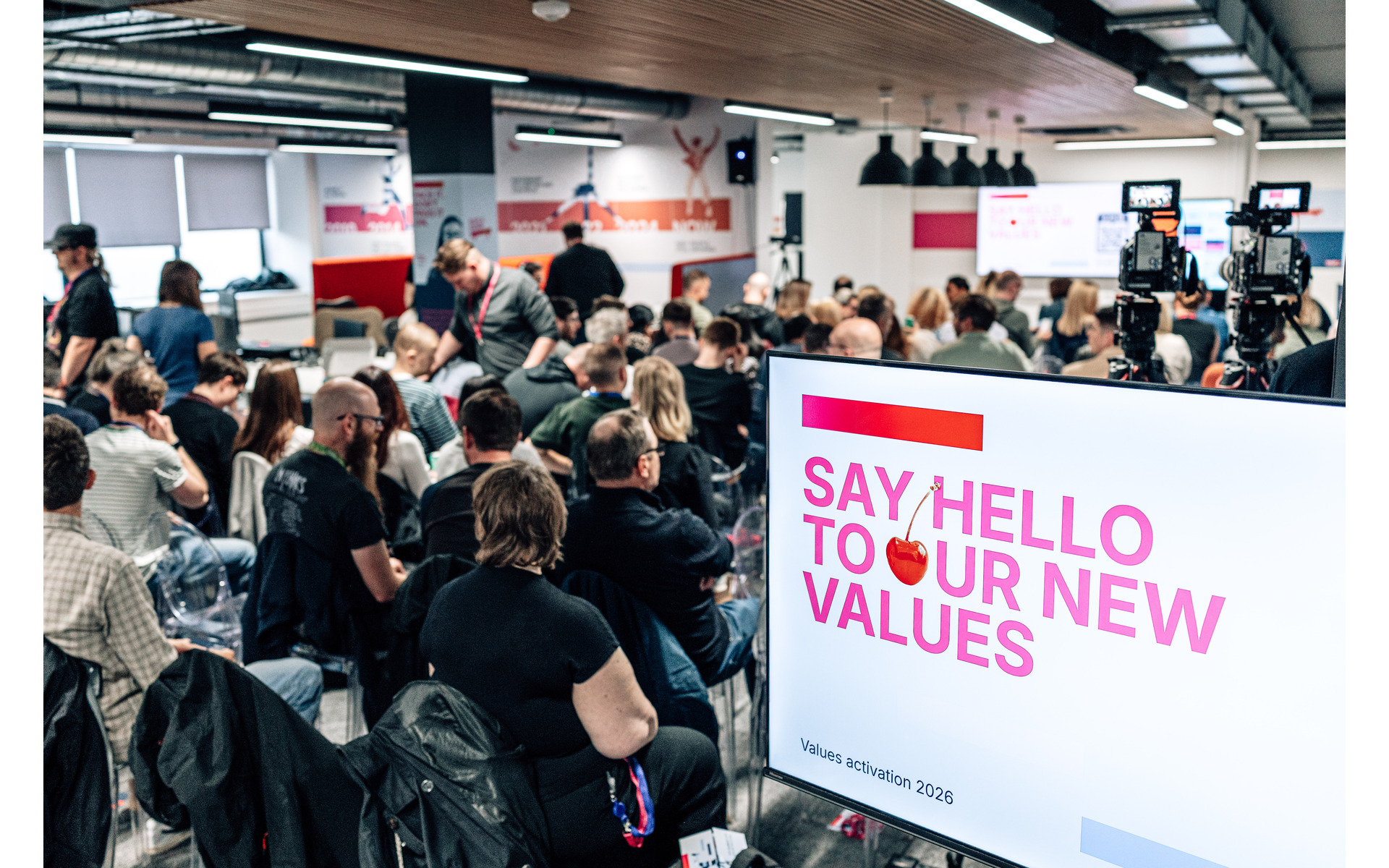
The company has been adjusting its organisation as well as its products. In June 2026 it launched revised company values across Nottingham, London and online. The announcement acknowledged employee scepticism about such exercises. Slade said the values needed to show up in decisions, colleague support and customer delivery. That is a test employees can observe without reading a manifesto.
In July, ENSEK introduced Simon Orosz as chief revenue officer, with international expansion central to his brief. The combination of new commercial leadership and changing product-development practices suggests the next challenge: turning experience gained with large British deployments into an offering that can travel. Each market still brings its own operating requirements.
For a supplier considering ENSEK, the most useful starting point is a stubborn account problem: an unexplained balance, a slow billing exception or a margin nobody can defend. Trace it through the proposed system. Check the records, the review process and who must act. Then judge whether the same process can handle the rest of the portfolio.
ENSEK’s appeal lies in that connection between the ordinary bill and the business behind it. Its newer ambitions reach toward batteries and chargers, but the original discipline remains a good one: make the numbers explainable. An energy transition still has to survive the monthly statement.
Meet the software. Hear the people.
Explore ENSEK, Ignition and Flex; visit the newsroom and company blog.
Watch Jon Slade discuss investment and growth or browse ENSEK’s YouTube channel.