Three months is a peculiar amount of time to spend becoming a customer. It is long enough for a business problem to acquire a second business problem. In Perennial Systems’ account of its work for Validus, the Singapore invoice-financing company, corporate onboarding took that long. The obstacle was ordinary work: checking invoices, gathering information, moving a borrower through a process that still depended heavily on people.
That queue makes a useful introduction to Perennial. A software company can promise an attractive screen. An engineering partner has to explain why the person behind it is still waiting. Perennial’s public projects repeatedly return to this less photogenic territory: the connections between an invoice and a loan, a wallet and a bank, a seller and several marketplaces.
- Perennial builds custom software and supplies engineering teams to startups and enterprises.
- Its lending work for Validus reportedly shortened corporate onboarding to four weeks.
- It also owns compliance software: GSTHero, launched in 2017, and the broader COVORO brand.
- The useful lesson is to measure the handoffs before commissioning more features.
01 / THE QUEUEFour weeks, instead of three months
Validus’s earlier technology used Cloud Lending, a subscription-based lending platform. According to the case study, invoice verification and credit decisions remained manual, and the platform’s available features did not adequately support its invoice-discounting workflow. Growth therefore meant more pressure on the operations team. The setup needed to accommodate the particular business, rather than ask the business to accommodate it.
Perennial describes building a custom loan-management system, connecting corporate ERP systems to bring in invoice data, and adding machine-learning-based optical character recognition for verification. Other connections handled business identity and bank statements. Configurable loan modules let the lender offer different products. The company reports onboarding falling from three months to four weeks, while the share of invoices requiring manual intervention fell from all invoices to 20%.
The remaining fifth matters. A system that takes routine checks away from people still needs somewhere to send the unruly cases. For a buyer, that suggests a sharper brief: identify the checks that repeat, decide which can be automated, and preserve an explicit route for exceptions. The queue is a design input.
02 / THE CONNECTIONSThe useful work happens between systems
Consider Perennial’s prepaid-card and wallet project. A consumer sees an app. Behind it, the engineering team connected card issuance and payment processing through DBS Bank, First Data, and Visa, with additional services for identity verification and risk screening. Perennial supplied backend, frontend, mobile, and quality engineers. These are documented integrations; they do not imply that every provider became a commercial partner of Perennial.
The platform used a shared codebase with tenant-specific configuration and separate tenant databases. The company dates its launch to August 2019 and reports more than 42 tenants in the case account. A configurable, white-label app allowed different businesses to present their own services. Reusing the underlying machinery made customization possible without treating every customer as an entirely new construction project.
An Indonesian commerce project applied similar thinking to a different irritation. Sellers were managing stores through separate portals for Bukalapak, Tokopedia, and Shopee. Perennial describes scattered product and pricing updates, misplaced orders, and delivery problems. Its answer was a central web-based ERP interface for products, orders, payments, and logistics, plus an operations dashboard and integration middleware.
These projects suggest where Perennial fits in a crowded services market. Its pitch becomes more concrete when the problem involves several systems and a business workflow that standard software only partly serves. Other engineering firms can build integrations, too. The distinguishing evidence here is the combination of configurable financial infrastructure and operational software, rather than a claim to an exclusive technique.
03 / THE OWNED PRODUCTThe builder has a product of its own
Perennial also knows the software business from the owner’s chair. Its GSTHero history dates the company’s founding to 2006 and the product’s launch to 2017. GSTHero connects Indian tax-compliance work with ERP and accounting systems. Its origins put an unusually persistent customer problem inside a business otherwise known for building other people’s products: invoices keep arriving, and compliance keeps changing.
Today, COVORO describes itself as formerly GSTHero, while its international website continues to link Indian solutions to GSTHero. The broader proposition includes e-invoicing, reconciliation, tax filing, litigation workflows, and export-import automation. Its product website reports more than 10,000 companies and over 135 million e-invoices processed annually. Those are product-brand claims, separate from Perennial’s engineering-client count.
The commercial logic is different on each side. Custom engineering sells a team’s work on a client’s problem. Compliance software sells repeated use of a maintained system. Together, they offer a plausible advantage: the builder has experience supporting its own continuing product obligations. That is an interpretation of the business mix, rather than proof that every services engagement benefits equally.
04 / THE CONTRACTTwo ways to buy a team
A prospective customer has a choice about responsibility. In a talent partnership, Perennial’s engineers enter the client’s processes, tools, and reporting structure. This suits a company that already knows how to direct engineering but needs additional capability. It also leaves the client with an active management job. Extra hands do not settle an unresolved product decision.
Its dedicated-team model covers a broader delivery process: discovery workshops, functional and technical documentation, two-week development sprints, reviews, testing, and ongoing support. Product owners, designers, architects, developers, and quality specialists are among the roles offered. The published process includes stakeholder sign-off and user acceptance testing, making the buyer a participant throughout.
The cost question should follow that division of labor. A meaningful buying brief separates discovery, implementation, third-party services, hosting, support, and handover. It should specify who pays when an external API changes and who owns the resulting maintenance. These are editorial buying considerations, not Perennial price quotations. They make proposals comparable without pretending that a mobile interface and a regulated payments workflow are the same purchase.
“Perennial teams want to be contributors more than just workers.”
Greg Humphrey, Comcate’s Director of Engineering
Customer testimonial published by Perennial
That testimonial expresses the intended relationship well. The alternative might be an internal team, independent developers, another engineering firm, or an existing software platform. Perennial’s case is strongest when a buyer needs sustained work across several disciplines. A simple, already-solved requirement offers less reason to commission custom architecture.
05 / THE AI QUESTIONAn answer is only useful if somebody can get it
One financial-reporting case concerns an unnamed Fortune 500 enterprise whose analytics engine already made accurate predictions. The problem was access: reporting lacked flexibility, and the interface made large amounts of financial data difficult for its CFO to interpret. Perennial describes adding Azure OpenAI and natural-language queries for dynamic reporting, alongside architecture changes for real-time analysis. That is a more precise AI assignment than asking for an impressive chatbot.
Its enterprise AI process begins with readiness assessment, strategy, and data preparation before model development and integration. Monitoring and training follow deployment. The sequence carries an implication for buyers: inaccessible or poorly governed data will constrain the work, however fluent the interface. Define the information, permissions, and desired decisions first.
An August 2026 company update brings that concern into agentic AI. It recounts CTO Nilesh Bafna’s iGnite ’26 talk about continuous trust: checking an agent’s actions, with rules, traceability, and real-time control. The same update reports demonstrations of 22 client AI agents and membership in FinTech Alliance.PH. The direction is recognizable from the earlier payments work: permissions and monitoring belong inside the system.
06 / THE PEOPLEThe people who remember why it was built
Perennial’s leadership page identifies Paresh Bafna as CEO and co-founder, and Nilesh Bafna as CTO and co-founder. Their business spans product engineering, enterprise systems, and data and AI. The breadth makes continuity valuable: a client can need a prototype today, integrations next quarter, and a team that understands yesterday’s decisions when the next requirement arrives.


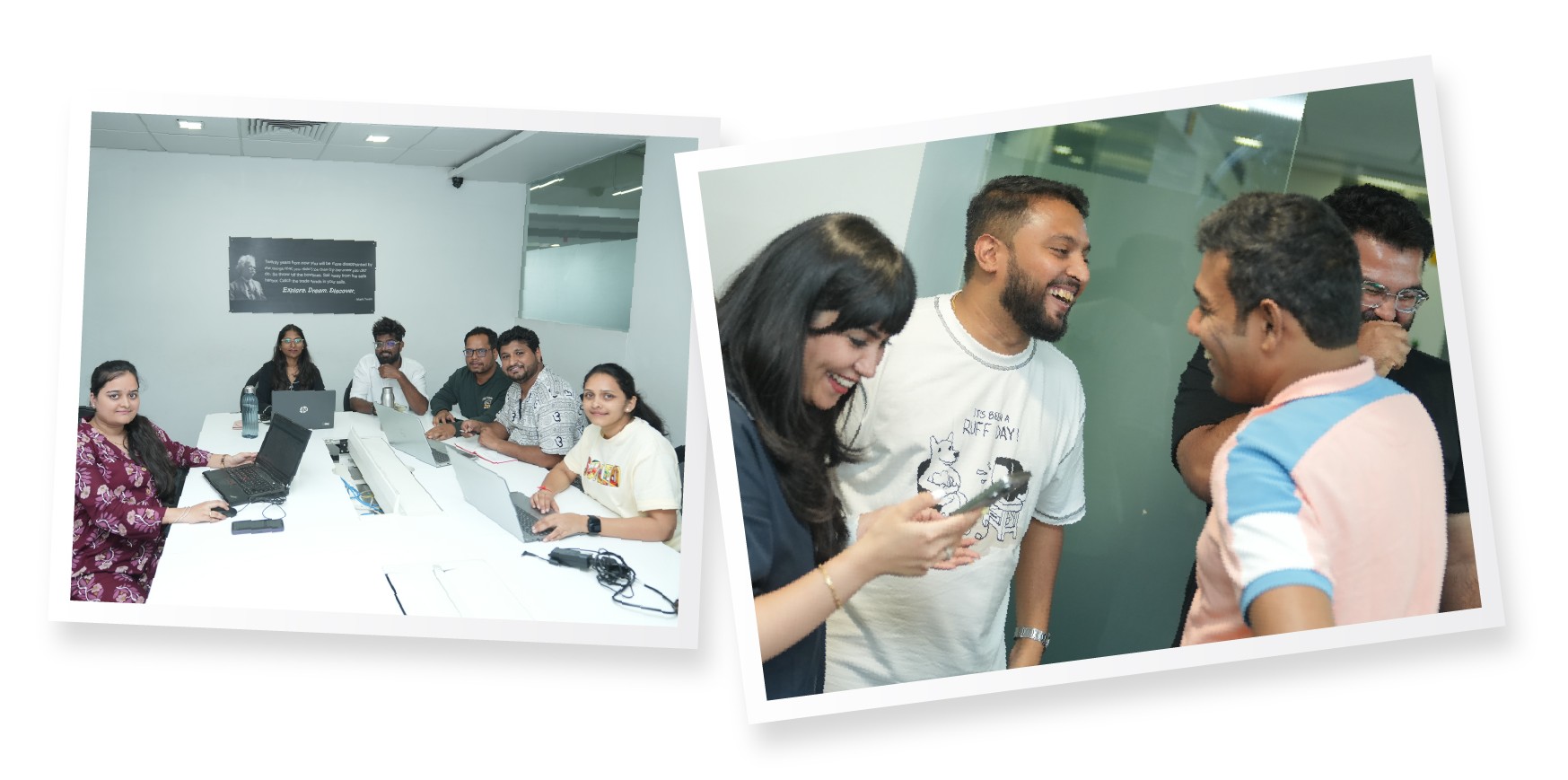
Its July 21-26, 2025 Stack Week makes the culture story pleasantly specific. Remote colleagues came together; one day invited work-from-home clothes, another brought formal photographs and open conversation. There were peer-appreciation notes and personalized postcards with handwritten messages. An engineering organization’s memory resides partly in documents and partly in people comfortable enough to ask each other why something works that way.
The lesson a reader can borrow is modest and demanding. Find the point where work waits. Trace which systems, people, and decisions keep it there. Then build around that route, leaving room for the exceptions. At Validus, Perennial says that approach helped turn three months into four weeks. For the next buyer, the interesting number will be the one in their own queue.