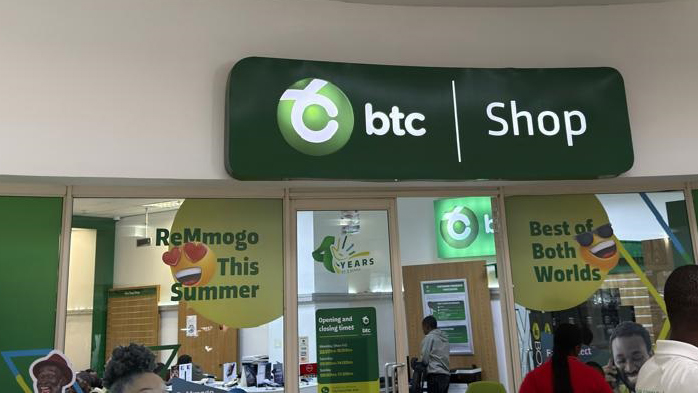
Inside Botswana Telecommunications Corporation’s flagship shop at Game City Mall in Gaborone, customers had a peculiar problem: they could not reliably make calls or load data. The place selling connectivity needed some of its own. A June 2026 report described the remedy: DataNet engineers installed a single Nybsys NanoLink base station, restoring voice and data coverage within hours.
- Build your own coverage. Private LTE/5G and small cells.
- Connect the pieces. Radios, core, security and management.
- Keep useful compute close. Voice, IoT and edge AI.
That little shop is a useful introduction to Nybsys. The company makes the hardware and software that let operators fill coverage gaps and enterprises build private LTE and 5G networks. Its customers are buying control over a specific place: the shop floor, the warehouse, the campus, the patch of ground where ordinary connectivity disappoints.
02Emergency calls came before enterprise AI
Founder and CEO Moshtaq Ahmed’s route into cellular equipment ran through large infrastructure projects in Africa. Nybsys’s own history identifies a national fire and emergency IP-telephony deployment in 2009 as its first major implementation. Dispatch software followed, connecting telephone and radio networks through work involving Cisco systems.
The sequence explains the company’s instincts. Emergency communications force an unglamorous question: can the person with one device reach the person carrying another? More bandwidth helps only if the surrounding system works. Nybsys later developed its own military-grade LTE implementation in 2018 and opened a Silicon Valley office in 2020 to pursue the US market.
Its stated mission includes linking narrowband and broadband push-to-talk, enabling industrial automation, and applying machine learning to safety and security. Today’s sprawling catalogue makes more sense against that background. Radios, dispatch, sensors and AI are different ways of addressing the same coordination problem.
The shop floor. The warehouse. The place where ordinary connectivity disappoints.THE PROBLEM NYBSYS IS SELLING AGAINST
03A cellular network, with the pieces included
Private 5G Express packages the network as an integrated deployment. Nybsys supplies radio equipment, core functions, security and management components. NanoLink handles indoor small-cell coverage; MicroLink addresses outdoor installations; EdgeLink provides a cloud-RAN platform using Intel FlexRAN and Xeon technology. Aegis protects network boundaries, while Nexus manages provisioning, faults and performance.
The distinction matters for a factory manager. Buying a radio does not, by itself, connect a fleet of machines. Devices need authentication, traffic needs routing, and somebody must notice when service degrades. Nexus includes load balancing, transmit-power optimization and mobility tuning. These are the chores behind the attractive demonstration of a moving robot.
The target buyers include manufacturers, logistics operators, utilities, public-safety organizations and telecom carriers. Nybsys offers planning, deployment, maintenance and technical support alongside equipment. Its business is therefore a combination of products and implementation services, sold into organizations with operational problems to solve. The Gaborone installation illustrates the carrier side; industrial private networks address a different buyer with related technology.

04The price is bigger than the box
Nybsys markets Private 5G Express with “zero monthly fees.” Treat that as a statement about the offer, rather than a complete project budget. A useful purchasing exercise still includes equipment, installation, spectrum arrangements, compatible devices, backhaul and ongoing operations. A network has a life after its first successful connection.
The company provides a smaller way to explore the technology. Its PCN100 starter kit includes an n78 small cell, five preprogrammed SIMs and two test devices, using a cloud-hosted packet core. The accompanying documentation includes three months of administration-console access. That is a practical evaluation route for education, research or a proof of concept.
The lesson a buyer can copy is to shrink the first question. Pick a troublesome location and a defined workload. Test coverage, mobility, device compatibility and recovery there before extrapolating across an entire estate. The five-minute boot time advertised in Advantech’s 2025 launch announcement describes system startup; a working deployment also requires its surroundings to be ready.
Cloud-hosted core • Three months of console access included
05The intelligence is moving closer to the radio
Nybsys’s partner choices show how it assembles that system. The February 2025 Private 5G Express announcement joined its networking software with Advantech edge servers and Wind River’s eLxr Pro enterprise Linux. Lanner supplies platforms for small-cell aggregation, cloud RAN, security and management. This is an equipment-and-software ecosystem, with Nybsys stitching the parts into an offer.
Sentra extends the idea to conversations. Its push-to-talk software connects workers and different device types; its generative-AI offering adds voice and text interaction with enterprise information. Intel’s MWC 2025 demonstration material listed Nybsys’s retail AI alongside other applications running on Xeon-based Dell XR8000 servers.
There is a revealing detail in the hardware story. Nybsys promotes CPU-based, GPU-free Sentra inference, but Lanner’s May 2025 showcase also offered Sentra on an NVIDIA L40S-equipped platform. The choice depends on the workload. Local AI is a deployment approach, not a promise that every model belongs on the same machine.
The portfolio continued expanding in 2026. A March partnership announcement with Cloudly described an open-source private-5G stack combining Nybsys small cells with CloudlyNet. By August, Intel’s partner catalogue listed OmniSee, Nybsys’s video-analysis platform, with searchable events and human-readable activity summaries. Connectivity gives those applications somewhere to run and something to observe.
06Start with the bottleneck
Nybsys competes in a market where Nokia offers industrial private wireless and Celona packages enterprise cellular networking. Integration alone is not an exclusive advantage. Nybsys’s particular combination is small cells, private-network components, radio interoperability and edge applications, backed by implementation experience that extends beyond the US enterprise campus.
Its own engineering writing supplies a sensible test for that proposition. A September 2026 guide warns that a gateway’s port speed does not establish encrypted throughput. Packet sizes, tunnel counts, rekeying and failover can change the result. An impressive headline specification can conceal the constraint that actually matters to a buyer.
A private network also needs usable spectrum, suitable devices and an operating team. Where existing Wi-Fi already meets the workload, a cellular project needs a clear economic justification. Where those requirements fit, Nybsys offers a route from a stubborn coverage gap to a controlled communications system. Start where the calls stop working. Make that place work. Expand from there.