A phone can work perfectly on the pavement and lose its usefulness a few steps inside a building. The carrier has a network. The customer has a handset. Between them sits a wall, a pane of coated glass, or a concrete stairwell. That small interruption explains a surprisingly large part of ANS Advanced Network Services.
The company works on the physical arrangements that make connectivity possible. Its crews and engineers deal with antennas, towers, cabling, batteries, and equipment rooms. The useful question is what happens to a signal after the obvious infrastructure has done its part.
THE QUICK READ / 30 SECONDS
- Build it: ANS engineers and installs towers, indoor wireless, network infrastructure, and critical power.
- Prove it: Field testing checks whether coverage reaches the places that need it.
- Keep it working: Monitoring and maintenance extend the relationship beyond installation.
The building is part of the problem
ANS’s cellular distributed antenna systems, or DAS, move supported carrier signals through a building using distributed equipment and antennas. A hospital, hotel, stadium, or university campus can need that additional infrastructure even when the surrounding neighborhood has service. Coverage and capacity are separate questions: reaching a room does not automatically mean serving everyone in it.
Public safety introduces another distinction. A firefighter’s two-way radio and a visitor’s mobile phone serve different purposes. ANS designs public safety DAS, also called emergency responder communication enhancement systems, alongside its cellular work. The public safety system has its own radio environment, testing, and local approval requirements. Buying cellular coverage does not settle the emergency radio question.
Conceptual service map. Separate systems, separate acceptance requirements.
Three swings at the tower business
ANS traces its origins to Telecommunications Analysis Group in 1991, when enterprise and higher-education telephone networks were the focus. The company says the Telecommunications Act of 1996 opened work with telephone companies and equipment manufacturers. Its history follows successive demands for physical network deployment.
The expansion was uneven. In a 2021 interview, then-leader Paul Fettuccia recalled entering tower services as 3G deployment was ending and work was drying up. An attempt ahead of 4G found better timing. His account put the number of attempts at three.
“It took us three tries or swings.”
Paul Fettuccia / 2021 interview
There is a practical lesson here for contractors: demand has a calendar. Skills and equipment do not produce orders when a carrier’s deployment cycle has paused. ANS’s eventual tower offering includes construction, maintenance, inspections, and structural modifications, giving it several kinds of work around the same asset.
Buying fewer handoffs
The company describes its model with three letters: EF&I, for engineering, furnishing, and installation. A customer can bring ANS into the survey and design stage, then continue through procurement, construction, testing, and support. That combination puts coordination inside the supplier’s remit.
Its place in the market is between the equipment maker, the carrier, and the building owner. Buyers could assemble separate RF engineers, installers, power contractors, and maintenance providers. ANS offers those capabilities together. The commercial proposition is fewer handoffs to manage, especially when an indoor coverage issue also involves cabling routes, electrical work, or carrier coordination.
Aggregate consideration for the 2021 acquisition of ANS, reported in Charge’s 2022 annual report. A historical purchase price for the business.
Charge acquired ANS in May 2021. Its later filing recorded $19.8 million in aggregate consideration, including roughly $6.9 million settled through preferred shares. Customer work operates on a different scale and basis: projects and services, including generally multi-year master or other service agreements. A deployment budget needs a defined building, system, and scope.
The network after installation
Power is a useful test of that scope. ANS’s DC power services include battery capacity testing, alarm verification, connection inspection, thermal analysis, and replacement. These are specific jobs with a shared purpose: checking whether the supporting electrical system can perform when required.
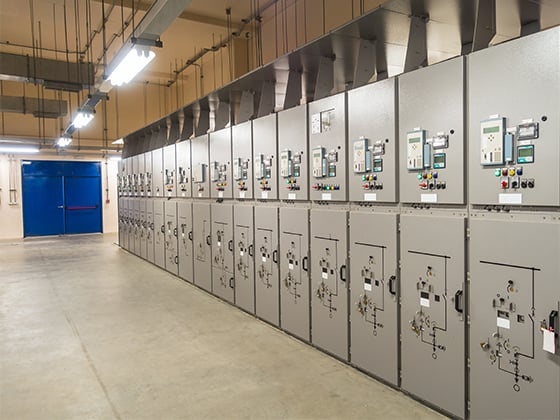
Its monitoring service brings alarms, tickets, performance information, and equipment locations into a dashboard, backed by an in-house network operations center. Maintenance can include RF surveys and preventative visits. That creates an ongoing service relationship around an installed system. It also acknowledges something ordinary about buildings: equipment ages, layouts change, and yesterday’s acceptance test cannot describe every future condition.
Someone has to learn the work
In July 2022, ANS described a Queensborough Community College partnership offering internships through New York City’s Train & Earn program. Fettuccia and a recruiter visited the 5G Mobile Technician classroom. The program combined classroom learning with practical preparation for entry-level wireless work.
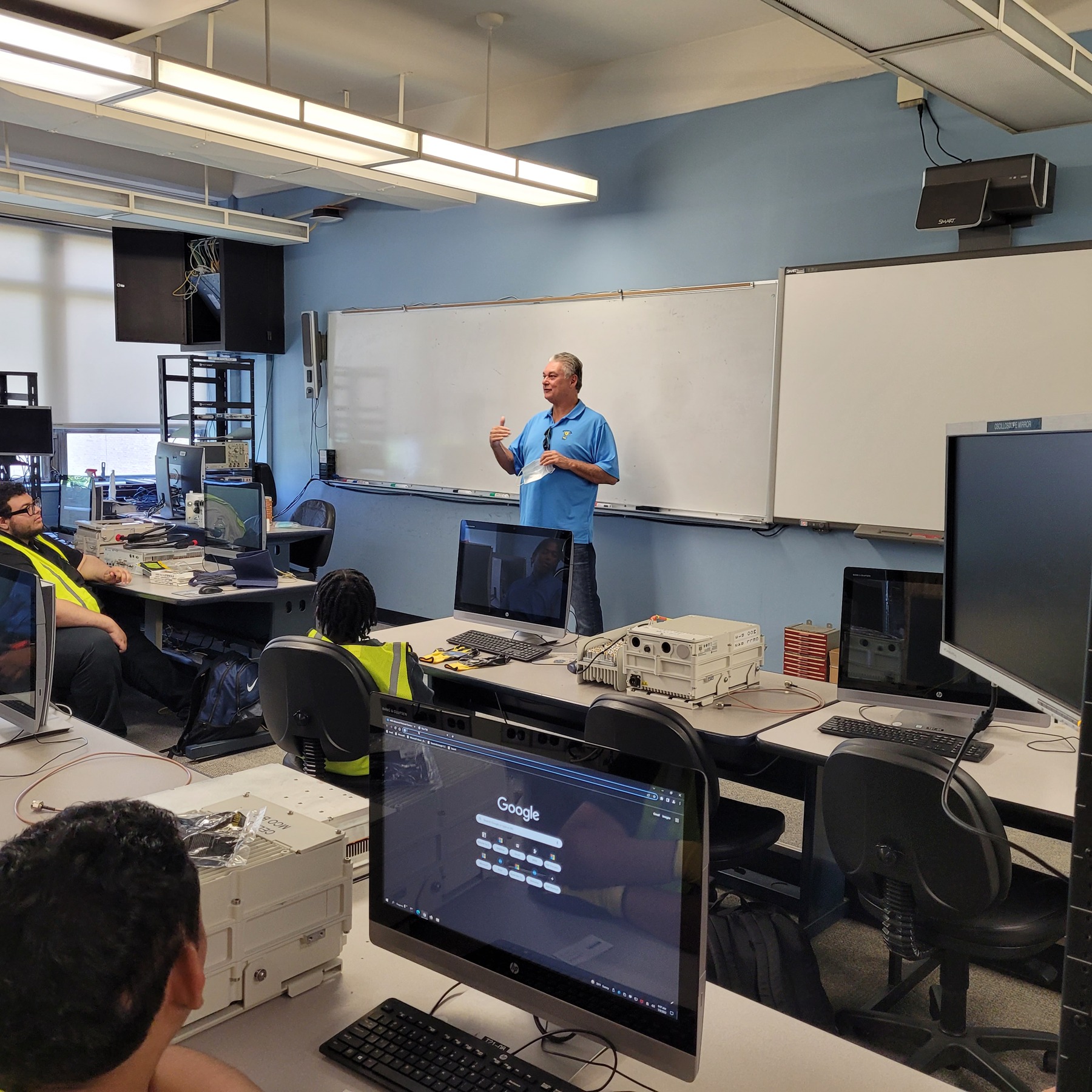
That month, ANS also announced participation in the Telecommunications Industry Registered Apprenticeship Program. These initiatives give its workforce story a concrete form. Infrastructure depends on people who can interpret a test result, complete an installation, and work safely around equipment.
Measure the room before buying the promise
ANS announced Nick Eremita as general manager in June 2025. Its September 2026 guidance returns to a useful discipline: measure the actual building. For healthcare facilities, it recommends gathering floor plans, coverage complaints, renovation drawings, existing surveys, and access restrictions before assessment.
Readers can copy that sequence. Define which users and radios need service. Establish a measured baseline. Agree on acceptance criteria and responsibility for maintenance. The approach becomes harder when carrier coordination, local approval requirements, or building access remain unresolved. Monitoring can identify a problem; correcting it still requires a response.
The appeal of ANS is this continuity of work, from design to the next inspection. For the person standing in a stairwell with an unusable phone or radio, all that infrastructure eventually has to answer one small question: does it work here?