Consider the stroller. The engineering is visible: wheels, suspension, a frame that folds while a parent negotiates with gravity. The engineering behind buying it is harder to admire. A price must match a market. A payment must clear. A product page must agree with the systems behind it. At UPPAbaby, international expansion had produced 29 localized websites. That number is the entrance to NULogic’s world.
- NULogic connects commerce platforms, cloud systems and retail operations.
- Its UPPAbaby project consolidated 29 localized sites into seven sales channels.
- Its business continues after launch through engineering and managed support.
A systems integrator occupies an awkward place in the technology story. The software vendor gets a product launch. The retailer gets a storefront. The integrator gets the question of whether everything will work together on Monday morning. NULogic makes its living in that gap, implementing commerce technology and keeping the connections useful.
01 / The arithmetic of fewer sites
UPPAbaby’s old WooCommerce and WordPress setup required growing amounts of customization. International data was difficult to work with; payments needed more flexibility. In NULogic’s account, Neil Gole puts the frustration plainly: “WooCommerce was never going to take us where we wanted to go.”
The replacement was Shopware. NULogic handled implementation, with the case studies describing an eight-month delivery and a consolidation into seven global sales channels. Existing PHP skills helped the internal developers adapt. Platform choice was partly a decision about who would maintain the thing afterward.
The revealing detail is what the team valued: payment choice, control and manageable costs. A migration can look like a shopping list of new capabilities. Here, its appeal included reducing the daily accommodations required by the old setup. The practical lesson is to examine workarounds before comparing feature lists.
02 / The shoe has to show up
Road Runner Sports presents a smaller, familiar irritation. A shopper applies a filter. The search slows down, times out or returns the wrong things. The shoes may exist in the catalog, but the retailer has made them unnecessarily difficult to buy.
NULogic integrated Bloomreach Discovery, migrated product data, configured search and personalization, and tested the connections. Its case study reports a 9% increase in revenue per visitor and up to 60% less time spent on merchandising tasks. Those are company-reported results, rather than a forecast for the next retailer.
This is a useful example of improving one stubborn part of a store. Catalog migration, integration tests and load tests are easy to overlook in an AI discussion. They determine whether better search survives contact with the rest of the business.
03 / Keep the checkout. Change the perimeter.
At Brooks Brothers, the trouble was malicious bot traffic. NULogic’s case study describes infrastructure load and costs rising while the existing delivery arrangement provided insufficient protection for the retailer’s needs. The storefront ran on Salesforce Commerce Cloud.
NULogic placed Cloudflare in front of Salesforce’s native content delivery network and retired Akamai from that arrangement. Bot management, rate limits and a web application firewall filtered traffic before it reached the commerce system. Edge logic handled changes such as redirects without requiring a storefront code release.
- ShopperRequest begins
- CloudflareSecurity + edge logic
- Salesforce CDNContent delivery
- Commerce originStorefront system
The less glamorous detail was keeping caches synchronized. A promotion cannot depend on which copy of a page a shopper happens to receive. NULogic reports stronger security and improved performance. The architecture shows the actual work: retain the commerce core, change the perimeter, and make the layers agree.
04 / A business built after the launch
Founded in 2008 by CEO Mani Vadivel, NULogic works across commerce implementation, cloud infrastructure, enterprise integration, data and AI, experience design and managed services. Its named customers include Express, Eddie Bauer, Sephora and Pokémon. These are organizations with existing systems and customers to serve while the plumbing changes.
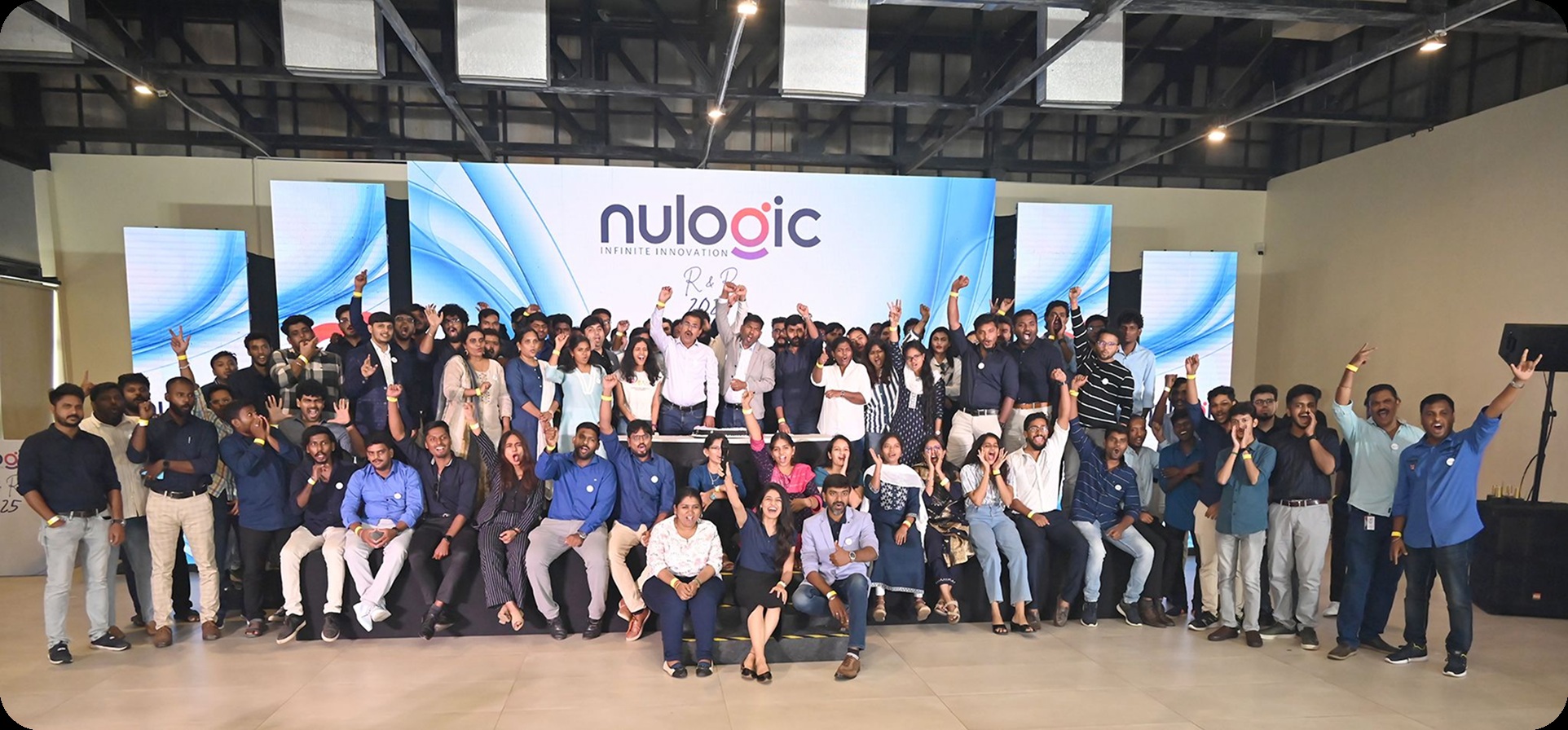
The delivery model blends onshore, nearshore and offshore expertise with continuous support. Commercially, that means implementation work can continue into maintenance and managed-service retainers. A retailer buys engineering capacity as well as a launch. An internal team, a commerce agency or a broader consultancy can offer alternative ways to organize that work.
A retailer buys engineering capacity as well as a launch.
For buyers, the terminology can obscure the choice. In a headless store, the customer-facing experience is separated from the commerce backend. That creates room to change one without replacing the other, but someone must maintain their conversation. NULogic’s expertise sits in that continuing work: APIs, deployments, tests and monitoring. The added flexibility earns its keep when the business actually needs it.
Express illustrates the range: NULogic describes moving infrastructure from AWS to Google Cloud, automating provisioning with Terraform, changing deployment workflows and introducing Vertex AI search. The company reports a migration without downtime. Different layers required different tools.

05 / Now the integrator has an agent
NULogic also offers Cartivo, an AI shopping agent with public demonstrations of discovery, comparisons, checkout and order help. Payments in its demo are simulated. That distinction matters when evaluating what a demonstration proves.
As checked in October 2026, installed pricing lists a standard $5,000 monthly subscription and a $2,500 early offer covering up to 25,000 conversations. Cloud costs are separate. The offer waives a $25,000 setup fee and the first three months’ NULogic fees. A hosted version has custom pricing.
For a prospective customer, the broader question remains operational: which constraint needs fixing, and who will own the result? A simple store with modest requirements may need less engineering. More modular systems demand people who can manage the connections. NULogic’s projects suggest a useful discipline: preserve skills that still work, replace the troublesome parts, and plan for the morning after launch.