The consultant had a problem familiar to its customers. BIAS was growing, but its own applications were struggling to keep up. Individual departments could defend their systems. Someone still had to make the whole arrangement work. In a 2020 Oracle-sponsored account, applications executive Pam Fisher described the hidden labor as “all the mice that were running around in the background.” Enterprise computing rarely gets a better mascot.
- Oracle expertise, from the database to the finance department.
- Projects followed by ongoing care for the systems customers depended on.
- A specialist business acquired by Deloitte Consulting in March 2022.
The back office gets its turn
BIAS introduced Oracle cloud applications for finance, people, projects and planning. Fisher reported that its monthly financial close fell from ten days to three. Project managers gained a combined view of hours, expenses and budgets. Those were improvements a client could understand without attending a cloud conference.
The lesson is an editorial inference, but a useful one: inspect the work between applications. A system can be popular with its users while the business spends too much effort joining its outputs to everything else. That gives a technology adviser a more concrete starting point than a demand to “go digital.”
Founded in 2000, BIAS concentrated on Oracle’s ecosystem. Its expertise covered databases, business applications, middleware, analytics and the equipment underneath them. Oracle named it global OCI Partner of the Year in 2019. The niche was substantial: organizations with established Oracle systems and consequential decisions about what to preserve, replace or move.
A restaurant company buys back its time
Consider Arby’s. Following its acquisition by Roark Capital Group, the restaurant business needed a separate computing environment on a compressed schedule. BIAS implemented the Oracle applications and infrastructure. The standalone E-Business Suite environment went live on November 21, 2011, on schedule according to the subsequent announcement.
Arby’s also selected BIAS for continuing application management. Its technology chief wanted his own people working on restaurant operations and franchisee profitability. Maintaining the back office competed for that attention. Hiring a specialist created a way to keep the necessary work covered while directing internal effort toward the restaurant business.
That arrangement explains the commercial model. BIAS sold expertise through implementation and integration engagements, continuing managed services and Oracle technology resale. A migration could open the relationship; operating the result could extend it. For a buyer, the useful procurement question becomes: who owns the problem after the project team finishes?
“With BIAS as our partner, my team can stay laser focused on brand enhancing strategies.”
John Lukas, Arby’s CIO · 2012 announcement
Upgrade first. Decide the rest later.
Dartmouth’s 2021 selection of BIAS illustrates another kind of restraint. The university wanted to upgrade its Oracle financial systems from E-Business Suite 12.1 to 12.2 and simplify single sign-on. It chose BIAS through a two-step selection process, citing preparation, experience and responsiveness.
The announcement also emphasized training staff and leaving Dartmouth able to modernize at its own pace. An upgrade can therefore be a decision about preserving options. Moving infrastructure to a cloud and replacing an application are distinct choices; treating them as a single compulsory purchase can obscure what an organization actually needs.
AFL took a different route. Its work with BIAS moved E-Business Suite, Oracle business intelligence and third-party applications to OCI. The stated objectives included faster implementation and avoiding continuing data-center operating expenses. BIAS described its Accelerate migration methodology in that engagement. The applications already doing the work remained central to the plan.
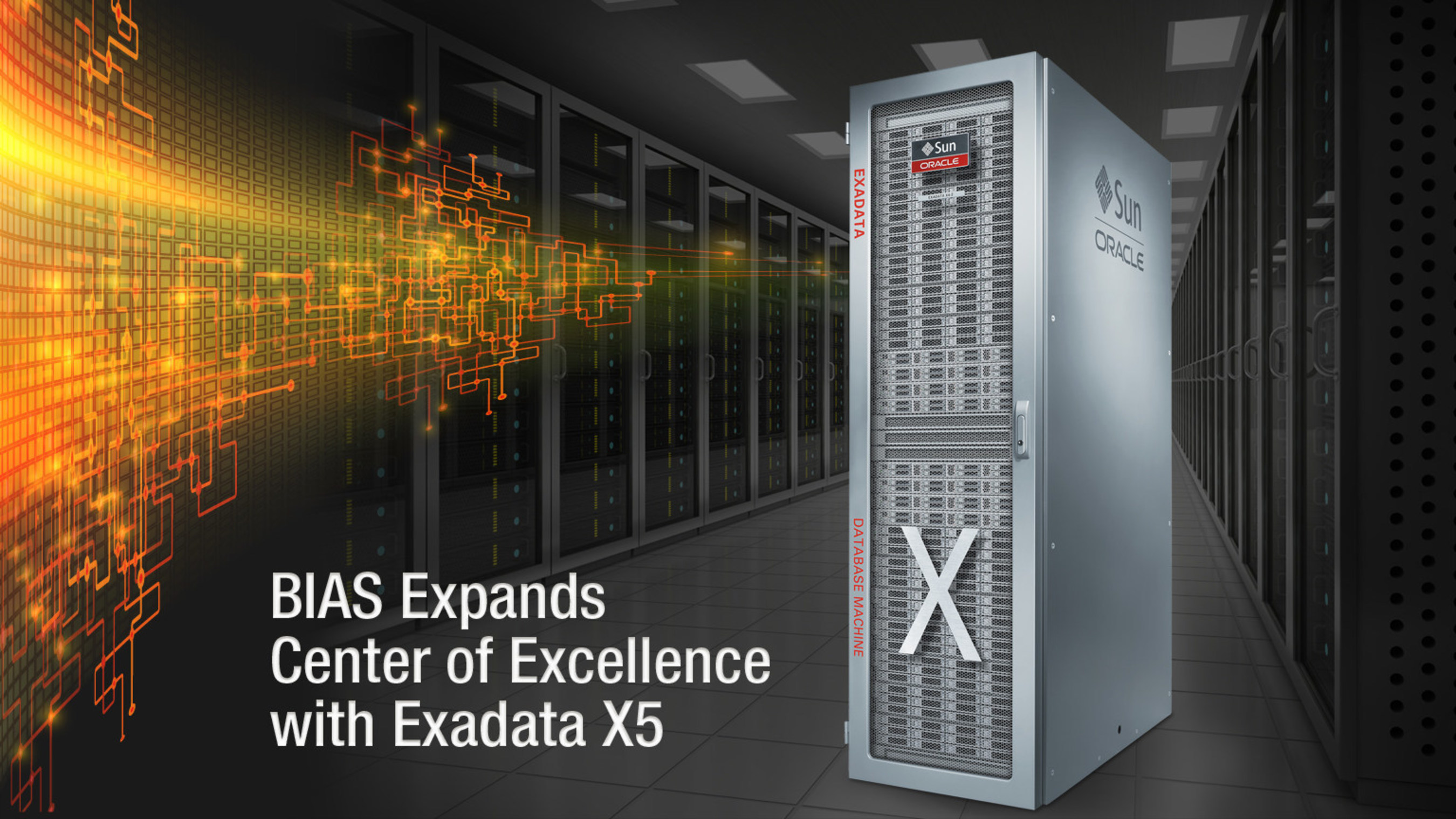
BIAS had also invested in a place to test the machinery. Its Center of Excellence offered configuration validation, proof-of-concept work, benchmarking and training. Adding an Exadata X5-2 in 2015 made that work tangible. For an enterprise buyer, a workload demonstration can answer questions that a polished architecture slide leaves hanging.
The cloud meets a cable cutter
One unnamed global customer provides the sharpest example. Oracle documented a BIAS migration prompted by aging hardware, reliability worries and growth costs. The design used Ashburn as the primary region and Phoenix for disaster recovery, with two FastConnect connections and VPN backup.
Then an accidental underground cable cut disabled both FastConnect links. The VPN connection prevented an outage. Two connections had still proved vulnerable to one event. The backup earned its place by surviving that event, a distinction worth remembering when someone counts redundant components on a diagram.
A separate RackWare partner case study puts scale around the migration work. FedEx’s first targeted data center contained more than 500 servers; preserving IP addresses was a requirement. The account reported 50 servers migrated in the first two weeks. That is an early project result, rather than evidence that every workload moves at the same speed.
The people, the process, the buyer
Some evidence of BIAS’s working habits sits outside its technology catalog. Its delivery center announced a CMMI Level 3 appraisal in 2018. A wellness program launched in 2013 later included a fitness challenge across the United States and India, with activities from boot camps to yoga. The database specialists occasionally left their desks.
Deloitte completed its purchase of substantially all BIAS assets on March 7, 2022. The team joined Deloitte’s cloud engineering practice, with co-founders Jeff Harvey and John Ezzell and CTO Krishnan Balasubramanian taking leadership roles. The transaction terms were confidential.
What can a reader copy? Start with a named business constraint, test representative workloads, train the people staying behind and arrange support before go-live. Price the application, integration effort, network and recovery capacity together. That approach needs modification when Oracle is a minor part of the estate or the goal is to retire the application entirely. The enduring BIAS question is practical: what must keep working while everything around it changes?