Nolan Walsh gave himself an unusual recurring appointment. On the last Saturday of the month, he would sit down with the negative feedback his company had received. Plenty of founders say they listen to customers. Walsh described putting the unhappy ones on the calendar. It is a small administrative detail with a certain comic severity: congratulations on starting a footwear company; here is your monthly collection of grievances.
The habit helps explain a career that began with a complaint of his own. Before he was Thursday Boot Company’s co-founder, CEO and Creative Director, Walsh was someone trying to buy boots. He wanted an everyday pair with a restrained shape, enough durability for New York, and a price he could accept. The search became a company. The willingness to be dissatisfied remained useful long afterward.
A surf trip with an unexpected dress code
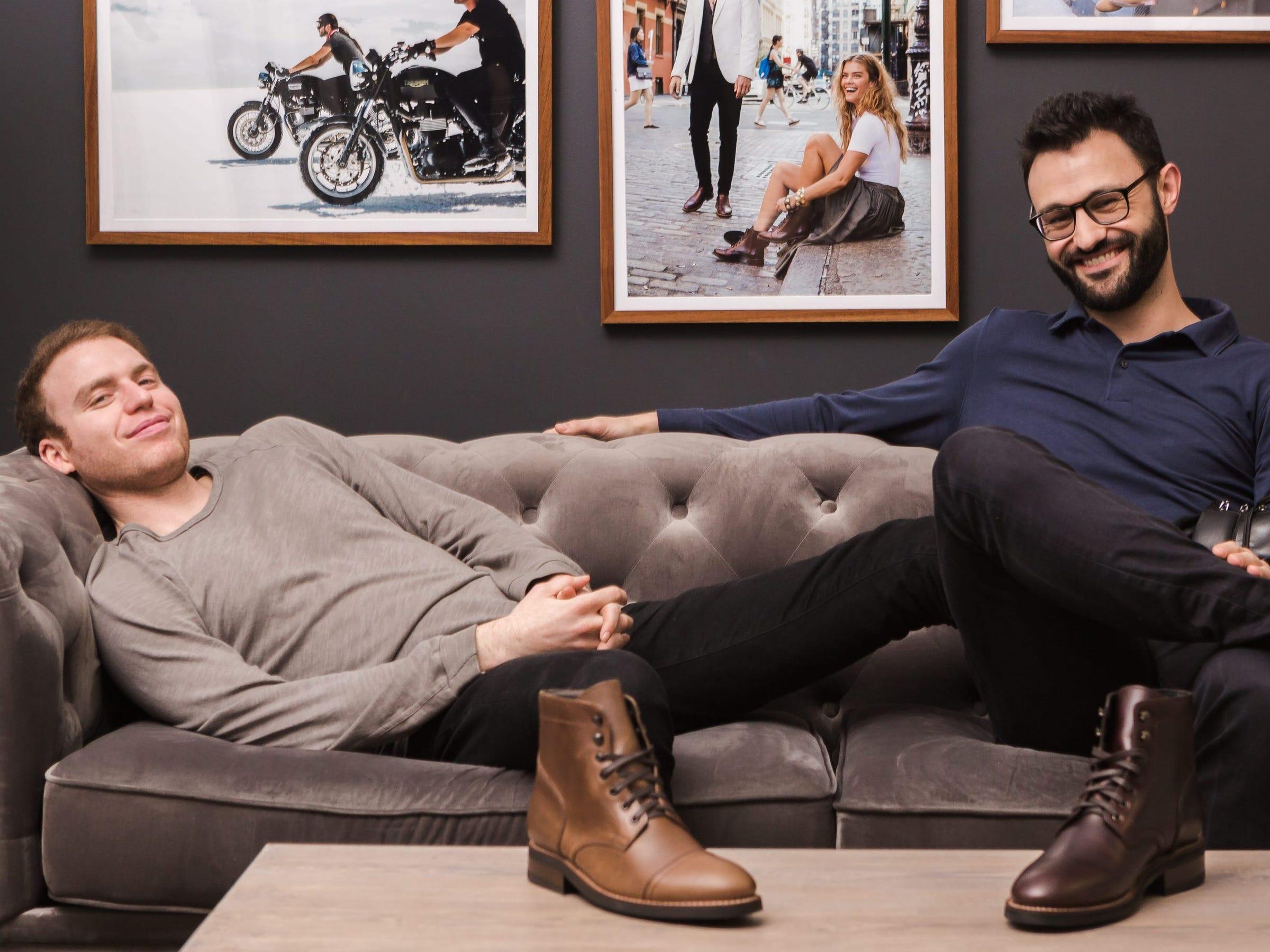
Walsh and Connor Wilson met on their first day at Columbia Business School in 2013. Friendship came before footwear. They worked on projects, spent time together, and discovered a shared interest in starting something. Wilson remembers that only four people raised their hands when a professor asked who wanted to become an entrepreneur. Coffee followed. A company would take a little longer.
Then came Nicaragua. During a spring-break surf trip, they spotted someone wearing the sort of boots they had been looking for: clean lines, an unobtrusive toe, no outside logo shouting for attention. Walsh asked where they came from. The answer pointed toward Guatemala, and eventually to Pastores, a town of bootmakers. A holiday had acquired homework. Somewhere between the beach and the footwear inquiry, Walsh found another reason to travel.
He went to Pastores in April 2014. Early samples and an Etsy experiment suggested there might be customers beyond the founders themselves. The attraction was initially personal: learning a craft, getting something they wanted to wear, perhaps covering the cost of the trip. That modest ambition makes the origin more revealing. They began with an object they could describe, then had to learn how to make it properly.
The education after business school
Walsh’s route had already taken him from Las Vegas, where he was born, to Washington University in St. Louis and then New York. He studied international business, finance and management, spent three years in investment banking at Barclays Capital, and became involved with InSITE and Dorm Room Fund during business school. There was plenty of business in the biography. Footwear required its own education.
The founders sought advice from suppliers, including leather maker Horween and sole specialist Vibram. Even packaging became something to learn about. A boot company needs a box as well as a boot, an elementary observation that becomes less elementary when you must buy thousands of them. Walsh’s descriptions of those early relationships give considerable credit to people willing to answer newcomers’ questions.
The factory search brought them to León, Mexico, with its established footwear industry. In those early years, Walsh said, one founder or the other spent a week in every six at their production facility. They also hired a local production manager. The practical apprenticeship involved showing up, examining materials, and returning. A spreadsheet might organise the decisions. It could hardly teach them how the finished boot felt on a foot.
1,203 people join the experiment
Thursday launched in October 2014. Its public brief was recognisable immediately: footwear with the appearance of a fashion boot and the usefulness of a work boot, intended to move between professional and social life. Early company announcements described leather linings, cork midsoles and low-profile rubber outsoles. The customer was being offered a fairly specific compromise, assembled from a fairly specific list of parts.
The Kickstarter campaign had a $30,000 goal. It finished with $276,610 pledged by 1,203 backers. Those figures are worth keeping separate. The dollars helped finance production; the people represented a first community with expectations. Crowdfunding let the founders sell before the boots were made and bridge the interval between paying to manufacture something and receiving money for it.
9.2 times the goal. Campaign pledges, not revenue or profit.
Success also made the experiment less private. A sample can disappoint its maker quietly. An order creates someone waiting at the other end. Walsh’s subsequent attention to criticism belongs in that context. The company had invited people into the project. Listening to what happened when they wore the boots was part of continuing the conversation.
A complaint has to go somewhere
In 2019, Walsh explained that he still read negative customer comments at month’s end. He also described himself as the resident men’s fit tester, wearing development pairs for several days before marking them with notes and returning them for corrections. His footwear could be six to twelve months ahead of launch. Having access to tomorrow’s collection sounds glamorous until you remember the assignment is to find what is wrong with it.
Walsh describes a preference for methodical testing. That preference gives his creative work a particular rhythm. Wear, consider, mark, return. A clean silhouette may be the visible result, but the working method accepts repeated revision. His mother’s early contribution, packaging shoelaces and accessories, supplies an equally useful corrective to the polished founder biography. Somebody still has to get the laces into the parcel.
“For me, it’s less about inspiration and more about continual testing.”Nolan Walsh, 2019
There is an important distinction between collecting feedback and giving it a route into production. Thursday’s small-batch approach gave the team opportunities to make adjustments. Walsh described one outsole-compound revision that involved nine months of testing. The customer might notice only the result. Behind it sat a decision to spend time on a component that would never receive its own glamorous campaign photograph.
The boot begins before the leather
A published visit to the design team in León shows how Walsh’s work joins aesthetic choices to manufacturing. Ideas can begin with customers or people who enjoy wearing boots. Mock-ups follow. Walsh says project leadership often goes to the person most enthusiastic about the idea, with colleagues invited to contribute. The process gives a personal preference somewhere to become a shared technical problem.
One crucial object is the last, the foot-shaped form around which footwear is built. It affects both appearance and fit. Thursday’s last maker Pedro describes sculpting a wooden form, checking measurements, then digitising it for production versions. The shape that a shopper recognises as elegant or awkward begins here, before the leather becomes a finished upper. A boot has an architecture, even if its future owner never uses that word.
- 01Ask about useWho will wear it, and where?
- 02Draw & shapeMock-ups and the last
- 03Sample & reviseMaterials, fit and construction
- 04Make & inspectThe design meets production
Manufacturing adds another layer of accountability. Production director Tony Thomas describes checking materials and inspecting the output of factory lots. Walsh’s role reaches into that process rather than ending with a sketch. Decisions about the look of the object have to survive decisions about making it repeatedly. The attractive sample is the beginning of that negotiation.
Plastic bottles, without a costume change
Walsh took his interest in materials into another venture, Nothing New, launched in June 2019. The sneaker brand used recycled inputs, including canvas made with recycled plastic. Its opening assortment offered high-tops and low-tops with simple lines. The ambition extended beyond what the material contained to how the shoe would look in an ordinary wardrobe.
“Why does eco-friendly need to look eco-friendly?” he asked. He wanted the materials to carry an environmental intention without requiring the wearer to adopt a particular visual identity. His accompanying joke involved not needing to carry granola. It was a characteristically concrete way to describe an aesthetic problem: make something people want to wear, then do the difficult work inside it.
Nothing New also introduced a take-back programme, with a credit toward another purchase. The arrangement addressed what happened after a sneaker’s useful life, alongside decisions made before it was manufactured. Those were the brand’s stated commitments at launch. For Walsh, the venture widened a familiar inquiry into the relationship between a product’s appearance, its ingredients, and the choices surrounding its production.
A longer stay in León
By December 2025, Thursday had opened an in-house manufacturing facility in León. In a conversation with Walsh, the discussion ranged from the company’s beginnings to lasts, quality control, and keeping its core boot at $199 more than a decade after launch. The factory had become a destination Walsh continued to choose. The early detour had developed into a working address.
Wilson’s later account of the partnership emphasises patience: improving the product, controlling costs and growing at a pace the business can sustain. He describes Walsh as particularly persistent. The description fits the career’s recurring activity. Find the thing that feels wrong. Ask someone who knows more. Try another version. Repeat long enough that the questions become more precise.
Walsh has also argued for direct communication and clear responsibility inside a team. His preferred language is to treat colleagues as partners. That principle matters in a business where a founder cannot personally perform every operation. The person noticing the problem, the person deciding what to change, and the person making the next pair need to understand one another.
The personal shopping complaint has travelled a considerable distance. Yet its original standard remains pleasantly ordinary: would someone want to wear these boots through their day? Walsh’s career keeps returning to the work required to answer. A launch can be dated. A campaign can be counted. A boot, inconveniently for anyone hoping to declare the job finished, can always be tried on again.