Open a closet and the corporate boundaries disappear. The sneakers for school, the heels for a wedding, the leather shoes worth repairing: each seems to belong to a different world. Caleres has made a business of standing behind several of those worlds at once. Its name is less familiar than the names it owns. That is a useful place to start.
- Two routes to the customer: Famous Footwear stores and a portfolio of footwear brands.
- Different reasons to buy: fashion, family shopping, comfort and craftsmanship.
- The hard part: sharing the machinery while keeping each label distinctive.
The parent of Sam Edelman, Naturalizer, Vionic and Allen Edmonds also operates Famous Footwear, where families buy brands including Nike, adidas and Crocs. Those outside labels are suppliers, not possessions. Caleres therefore participates in two decisions: which shoe someone wants, and where that person goes to find it. The two decisions overlap without becoming identical.
The store and the name on the box
Famous Footwear solves a practical household problem. Several people need shoes; their sizes, tastes and budgets differ. A multi-brand store makes that errand manageable. The brand portfolio solves a different problem: giving a shopper a reason to ask for one particular shoe among many plausible alternatives.
Naturalizer, born in 1927, builds its proposition around the contours of a woman’s foot and offers extended sizes and widths. Sam Edelman sells fashion with a recognizable design point of view. Vionic brings a background in orthotics and biomechanics. Allen Edmonds offers leather footwear with a repair proposition. A single customer might move between them as the occasion changes.

The economics run through retail, ecommerce and wholesale. A department store can stock a portfolio brand; a customer can order directly from that brand’s website. Caleres earns product revenue through those channels rather than charging a software subscription or running a neutral marketplace. Its expertise is the less visible work of design, sourcing, distribution and marketing.
Compared with a standalone shoe label, this arrangement offers shared capabilities. Compared with a multi-brand retailer such as DSW, it adds responsibility for developing products and sustaining their identities. Neither advantage arrives automatically. Common suppliers can reduce duplication; common thinking can also make different labels feel interchangeable.
A new name, an old appetite
The company traces its beginnings to George Warren Brown’s footwear business in 1878. For generations it was known as Brown Shoe. In 2015, shareholders approved Caleres, a name drawn from the Latin calere, associated with glowing with passion or intensity. The corporate vocabulary changed. A familiar symbol stayed.
The Star-Five-Star mark had been in use since 1885. Keeping it made the rebrand an exercise in selection: discard a name that no longer described the portfolio well enough, preserve a piece of visual memory. There is a practical lesson here for an established business. A new identity need not require pretending the old company never existed.
“Inspire people to feel great...feet first.”Caleres’ stated mission
That mission has to accommodate very different purchases. In August 2025, Caleres added Stuart Weitzman, buying the luxury footwear business from Tapestry. At closing, the disclosed price was $120.2 million, including $11.5 million of cash received. The net price was $108.7 million; a later annual filing put it at $108.9 million, subject to final working-capital adjustments.
Borrowings under the revolving credit agreement funded the acquisition. The bet was explicit: broaden the brand portfolio’s global and direct consumer reach. A familiar luxury name brings recognition, but also stores, inventory and operating obligations. Buying awareness is the beginning of the calculation. Making the acquired business earn its place takes longer.
The machinery can trip the shoes
The least glamorous episode may be the most useful. During a 2024 enterprise software rollout, ecommerce and drop-ship platforms were offline or still ramping up. Important operational reports arrived late. Caleres said the disruption hurt wholesale sales. The sequence matters: trouble taking and moving orders was followed by trouble seeing the business clearly.
For anyone copying the shared-services model, this is the condition to watch. Central systems need reliable ordering, inventory visibility and reporting. When those fail, separate brand names offer little protection. A beautifully differentiated collection still has to reach the right customer, with the right information attached.
Year-over-year changes. Different segment measures, shown separately.
Demand creates another limit. In September 2026, management described weaker lifestyle-athletic demand and a later back-to-school season at Famous Footwear. It was adjusting the assortment toward fashion. The lesson is modest and valuable: a portfolio offers choices, but somebody still has to change the buying decisions when customers change theirs.
The people doing that work sit across design, stores, manufacturing and distribution. Caleres describes its culture through five values: passion, curiosity, creativity, caring and accountability. Those are management’s stated intentions. Their practical test is whether people with different jobs can coordinate the ordinary details that a customer expects never to notice: a size available, an order correct, a delivery on time.

The customer who comes back with old shoes
Allen Edmonds gives the story a different rhythm. Its welted construction allows eligible shoes to be recrafted. The customer returns with something already owned. That makes durability an operating service, with craftspeople and repair processes behind the promise. A repairable product needs an organization willing to receive it again.
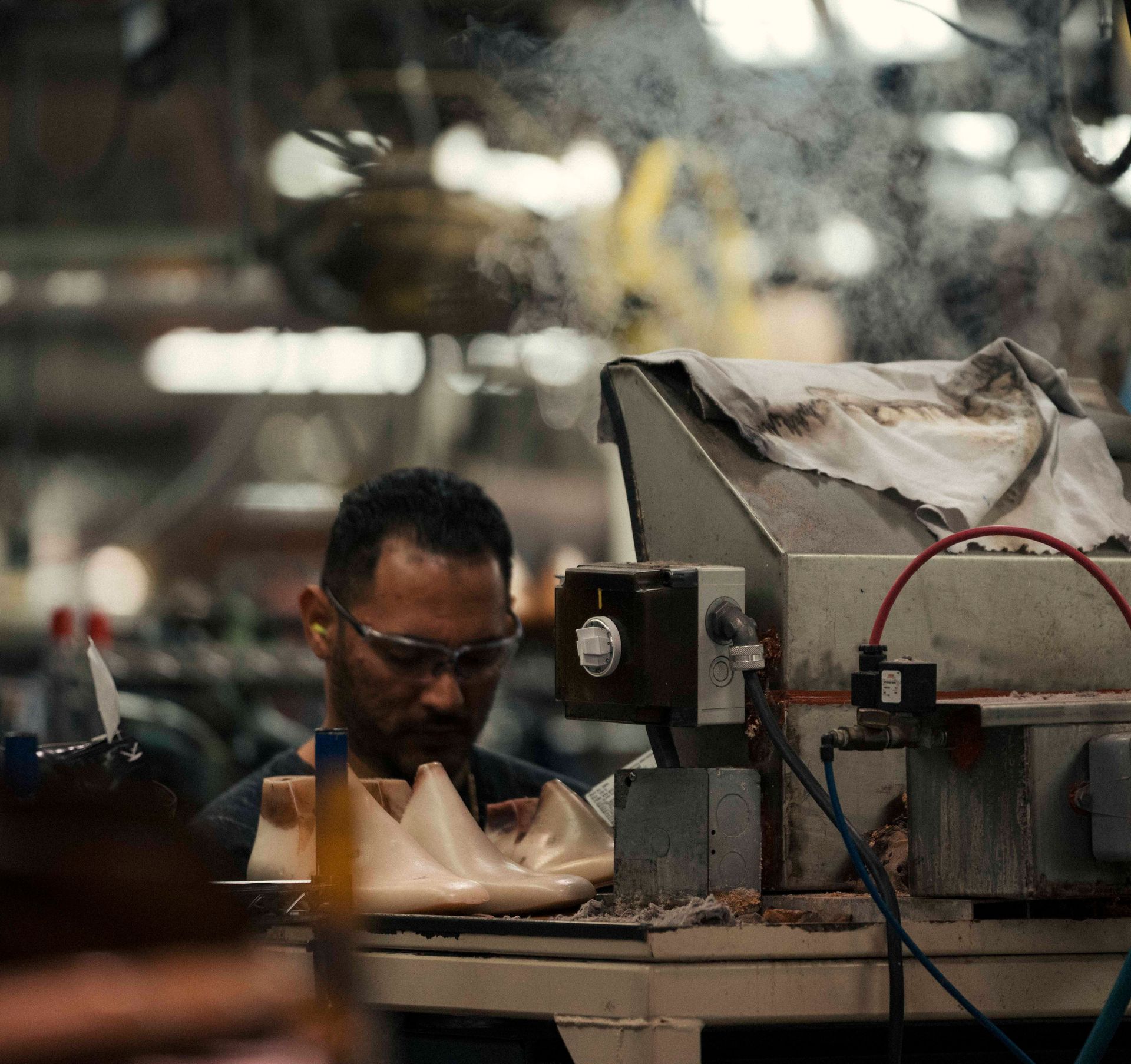
Caleres’ One Planet Standard also scores shoes across materials, packaging, samples, supplier practices, philanthropy and end-of-life options. It is the company’s own designation. The useful detail is the attention to what happens around a product, including after purchase. The label alone should not be mistaken for an independent verdict on every environmental trade-off.
The newest example looks forward rather than backward. On October 20, 2026, Vionic introduced Hummingbird, an approximately seven-ounce walking shoe with VioFeather technology. Its design premise was specific: walking deserves its own engineering brief. That is Caleres at its most legible. Different feet, different occasions, different products; shared machinery underneath. The portfolio works when those differences give people a reason to choose.