Money can travel around the world rather more easily than useful information can travel across a desk. A balance sheet arrives in one format, a promising young company in another, and a banker is expected to make sense of both before lunch. Nitin Nath’s career has repeatedly taken him into this awkward space between having information and being able to act on it.
The Alphastream co-founder came to financial technology through finance itself. His earlier work included senior investment-banking roles and an operation at Deutsche Bank designed to serve smaller, underserved clients through technology and process engineering. Later came investing, wealth management and a platform for assessing startups. The recurring subject was access: who receives attention, how decisions are made, and what gets lost along the way.
On September 3, 2020, that career acquired a particularly clear marker. CreditSights announced a minority investment in Singapore-based Alphastream, identifying Nath as its co-founder and CEO. A credit-research business was backing a company working on the machinery through which financial information becomes usable. In a profession fond of grand forecasts, this was a wager on the plumbing.
A banker takes an interest in the smaller account
Nath studied at St. Stephen’s College in Delhi, graduating with a B.Sc. in 1995, before completing a management degree at IIM Calcutta in 1998. Those dates place his formal education before the startup platforms and machine-learning products that would later become part of his working life. His route into this world ran through established financial institutions.
His banking responsibilities covered listed products, institutional sales, structured products and private-banking coverage. That is a useful range for someone who would eventually work on financial information: different customers ask different questions of the same market. An institution considering a security and a private client considering a portfolio may both need analysis, but the service around that analysis matters too.
At Deutsche Bank in India, Nath established a captive operation focused on smaller and underserved clients. Technology and process engineering were central to its design. The detail deserves attention because it gives the later chapters some continuity. Long before Alphastream’s document-processing work, his career already included an attempt to change the economics of reaching clients who could otherwise receive too little attention.
A small account presents a large institution with an unromantic question: how much work can it afford to do? Better processes can change the answer. Seen through that lens, Nath’s move towards platforms looks less like an abrupt conversion to technology than an extension of a practical banking problem. Attention is expensive; organizing it badly makes it more expensive still.
IIM Calcutta
Mount Nathan Advisors
launches
Alphastream
From the institution to the investment
In 2010, Nath co-founded Mount Nathan Advisors in Singapore. Its focus was Asian special situations and emerging regional financial enterprises. The move placed him on the investment side of businesses operating in markets he had already encountered through financial services. Singapore would remain a recurring location in his entrepreneurial work.
Another branch of that work was Sanctum Wealth. Nath co-founded the company with Shiv Gupta; in April 2016, Sanctum acquired the RBS Group’s private-banking business in India. That transaction gave the new firm an existing base of client relationships. It was a different kind of company-building exercise from starting a software product: an established business was moving into a newly formed organization.
Nath remains listed on Sanctum’s board, where his association with Mount Nathan Advisors is also identified. The combination of founding and governance roles matters. His career cannot be reduced neatly to the familiar banker-leaves-bank-and-builds-app plot. Wealth management, principal investing, startup assessment and data technology occupy different corners of finance, with different obligations to the people using them.
The connections are therefore more interesting than a list of titles. Gupta brings the wealth-management chapter into view; Anuj Jain becomes central to the startup chapter; CreditSights supplies an institutional connection to Alphastream. Each partnership puts Nath alongside people and organizations with experience in the market a business is trying to serve.
Ten weeks, rather than another introduction
Startup-O, which Nath co-founded with Jain, launched in 2016. It addressed an inconvenience familiar to entrepreneurs: finding investors can become an occupation in itself. Introductions lead to meetings, meetings lead to more introductions, and the business that supposedly justifies all this activity must somehow continue operating in the intervals.
The platform combined assessment, investment and help with expansion. Its stated ambition was to give deserving founders fair access to capital and networks, wherever they were based. Such an ambition becomes interesting only when attached to a method. Startup-O used online participation, expert evaluation and algorithms, bringing a defined process to a field in which personal networks often carry considerable weight.
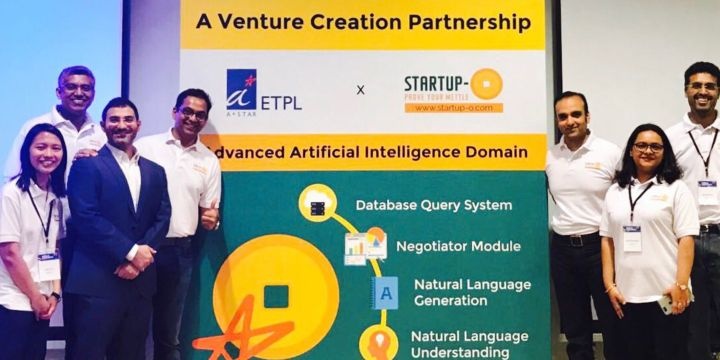
In its 2018 model, companies went through a ten-week online assessment. The structure allowed participation without requiring every founder to be in the same place. Jain described a process involving expert assessments, financial modelling, technology diligence and investment analysis. Those were stages in a selection process, rather than a promise that every participant would receive funding.
Nath’s role was co-founder and managing partner for ventures. In May 2018, he and Jain appeared together on Asia VC Cast to discuss Startup-O. The episode brought both founders into the same conversation about the platform. It is also a useful reminder that a business described through frameworks and evaluation still depends on people explaining what they are trying to build.
The ten-week format also gave the idea a unit of time. Venture building can sound like an indefinitely renewable promise; a programme has to arrange its work into a sequence. For the young businesses entering that sequence, assessment meant opening the company to scrutiny as well as seeking money. The combination of advice and evaluation made the platform more involved than a directory of investors. It placed a structured examination of the business between the initial introduction and any investment decision, giving the relationship something concrete to revolve around.
The model supplies a revealing comparison with his earlier banking work. In one setting, a process helped reach smaller clients. In another, a process helped assess young companies. The customers and transactions differed, but both activities involved organizing attention. That is an editorial reading of the career, rather than a claim that Nath announced a single master plan for it.
Alphastream and the unruly document
Alphastream brought the information problem closer to the document itself. The company’s work involved extracting and standardizing data from varied financial reports, combining financial-services knowledge with natural-language processing and machine learning. The task sounds modest until one considers how much professional analysis depends on finding the right detail and putting it into a usable form.
A report may contain information without making comparison convenient. An analyst still has to locate, interpret and organize it. Alphastream’s business was aimed at that intervening work. The appeal of the idea lies in its specificity: financial professionals need information delivered in a form that supports their decisions, and the route from document to analysis can consume considerable effort.
CreditSights’ 2020 investment also brought a board appointment. Its chief product and technology officer, Bala Subramanian, was to join Alphastream’s board. For Nath, the partnership offered an experienced financial-markets organization as an input into product development. His announcement language was conventional, but the substance was concrete: domain knowledge would help shape what the technology produced.
“valuable input into the design and development of our next generation solutions”Nitin Nath on CreditSights’ financial-markets expertise, September 2020
The restraint of that ambition is appealing. A financial-data product has to work within the habits and demands of the people who use it. The partnership linked software development to an organization already engaged in credit research. Expertise would have a place beside the algorithms, with a seat on the board as well.
The next desk is still in finance
As of October 2026, Singapore’s Monetary Authority lists Nath as chief executive officer of SV Alternatives, a capital-markets-services licensee for venture-capital fund management. This is a current role to place alongside the dated Alphastream milestone. A career involving several organizations is best read with the calendar close at hand.
There is also a teaching connection. St. Stephen’s College’s incubation-centre report lists Nath for a session on startup assessments, investments and venture building. The subjects brought him back to the entrepreneurial questions visible in Startup-O: how a business creates value, engages its market and prepares to operate. His college appears at both the beginning of his education and in a later setting for sharing practical experience.
What makes Nath’s working life distinctive is the variety of ways he has approached a fairly durable problem. Smaller banking clients, early-stage founders and financial analysts all need someone to organize the passage between opportunity and decision. His ventures address different portions of that passage. Finance supplies the setting; process keeps returning as part of the answer.
There is little theatrical glamour in making information easier to assess. It rarely receives the applause reserved for the decision made at the end. Yet Nath’s path through banking, investment and Alphastream gives the intermediate work its due. Before capital can be allocated with any care, someone has to make the evidence intelligible. Even money, with all its privileges, benefits from a decent introduction.