Leaving a company you helped build is an awkward kind of achievement. The public knows how to applaud a listing. A handover offers fewer theatrical possibilities. In December 2014, Teruhide Sato stepped down as chief executive of BEENOS, the Japanese e-commerce business he had co-founded. He had already taken it public. He could have kept a career organized around that success. Instead, he made room for a successor and began building a different kind of working life.
In 2015, he established BEENEXT in Singapore. The move put him alongside entrepreneurs in India, Southeast Asia and Japan, with the experience of an operator and the responsibilities of an investor. His explanation of the relationship was unusually domestic: “BEENOS is like my first son and BEENEXT is like my second son.” A venture fund seldom sounds so much like a household with another school run to arrange.
The family resemblance matters. Across the two businesses, Sato has kept returning to the same question: how do you help people create something that can eventually stand on its own? First he faced it as a company builder. Then he faced it as a backer. His latest proposal applies it to the people doing the backing.
Before the fund, the checkout
Sato’s route into technology began with the machinery that makes internet commerce possible. In 1997, he helped launch CyberCash Japan, a venture with SoftBank connected to the American online-payments company. It later became known as VeriTrans. Before a marketplace can become an impressive business, somebody has to make sure the payment works. The checkout is a modest place to begin a story about ambition, which is one reason it is useful.
He had arrived there by an international route. He studied at United World College of the Adriatic in Italy, graduating in 1993, then attended Keio University in Japan. His policy-management studies ended in 1997. The sequence puts a school in Italy and a university in Japan before the investment maps and overseas founder meetings. Crossing borders was already part of his education.
Netprice followed in 1999. Sato became president and CEO in April 2000, and led the company to a listing on the Tokyo Stock Exchange’s Mothers market in 2004. The company would later take the BEENOS name. These are compact entries on a biography; in practice, they mark a progression from assembling a young business to accepting the continuing obligations of a public one.
CyberCash Japan
Netprice listing
BEENEXT begins
Network proposed
A January 2005 company announcement supplies a small detail that makes the chronology feel less remote. Sato was 29 when netprice announced its application to join Keidanren, Japan’s business federation. The release also recorded his Italian school and university graduation. Even in the formal language of a corporate announcement, the distance traveled was visible: a young internet-company chief entering an established business institution.
The point of giving up the chair
His later decision to leave daily management had a practical problem behind it. BEENOS had operating businesses that accumulated profits through the work of their teams. Investing those profits in overseas startups exposed them to another kind of risk. The opportunities could be attractive while the arrangement remained uncomfortable. A good opportunity for an investor does not automatically fit the obligations of the company supplying the money.
In explaining the decision in 2019, Sato described a period of deliberation before handing management to Shota Naoi. Separating the investment work created a way to pursue it without asking the operating business to carry the same burden. The handover deserves attention because it complicates the usual story of a founder relentlessly expanding his domain. Here, a change in boundaries made the next venture possible.
There was a personal history behind his wish to support others. Sato credited the help of his own mentor, Yoshitaka Kitao, in his early career. Experience, in that telling, came with an obligation to become useful to the next person. It also came with a limit: he could not personally build every business that interested him. Investing offered a way to participate while leaving the founder’s work with the founder.
“I am a founder first and an investor second.”
Teruhide Sato, 2015
He had already been involved in building support for younger companies. In 2010, he co-launched Open Network Lab. The program brought together Digital Garage, netprice.com and Kakaku.com, offering promising internet projects facilities, servers and mentoring. Sato was among its mentors in 2012. Supporting a company could mean making the early work easier before it meant writing the next investment cheque.
A working map of Asia
When BEENEXT began, its limited partners included entrepreneurs from several countries. Sato invested his own money at launch, while BEENOS also committed capital. The structure gave his idea of an entrepreneurial community a financial expression. People who had built businesses were helping supply the resources for another set of builders. The ambition was to make those relationships available across the portfolio.
India occupied a substantial place in his thinking from the start. He spoke about technology reaching individuals and small businesses, and about the opportunity in business software. His earlier operating experience in commerce and payments gave him familiar problems to investigate in unfamiliar settings. A different country does not make a familiar business identical; it gives an experienced visitor a better set of opening questions.
The names associated with his investing span several kinds of everyday transaction: Citrus Pay, NoBroker, Droom, Ralali and Shiprocket, among others. His investments in Tokopedia, Midtrans and Iyzico came before BEENEXT. That distinction keeps the personal career separate from the younger firm’s history. A founder’s accumulated relationships can help a new organization without making every earlier investment part of its portfolio.
Turkey belongs on that wider map, too. Sato first visited in 2012 and invested in companies including Akakce and Iyzico. The pattern is geographical, but it is also occupational: payments, marketplaces and the systems that let businesses transact. A career can acquire a global reach through repeated attention to fairly practical questions. Who is trying to buy? Who is trying to sell? What is getting in the way?
His working circle includes people with their own histories of building. Nao Ito co-founded BEENOS with him and later joined BEENEXT. Hiro Maeda leads the Japan-focused ALL STAR SAAS FUND. Dirk Van Quaquebeke and Hero Choudhary are managing partners. These relationships give the word “network” some human scale. Behind an impressive-looking web of connections are particular people whose experience has to be useful in a particular conversation.
A rainy vote in the mountains
One small episode brings the question of authority down to earth. A BEENEXT team trek to Benog Tibba, near Mussoorie, gathered 26 people from different countries and age groups. Sato’s goals included time together, contact with nature and a sense of accomplishment. Rain made the outing less agreeable than the itinerary might have suggested. Team members eventually differed over whether to stay at camp or return to their hotel.
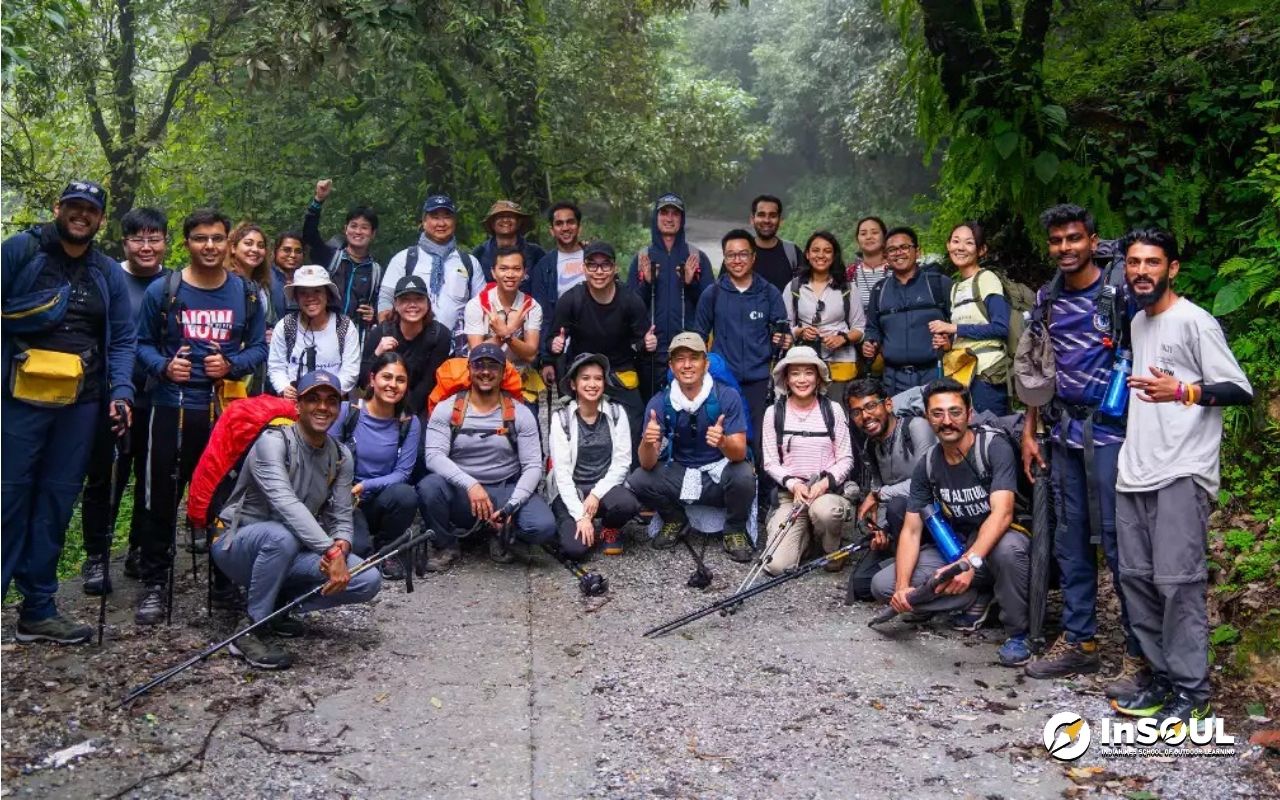
Sato asked the group to discuss the choice and reach a consensus. They decided to return. In reflecting on the experience, he said: “We rebuilt the plan if we needed to rebuild.” It is a modest sentence, with very little appetite for a heroic ending. The original arrangement could change. The people affected could participate in changing it.
A walk cannot prove an investment philosophy. It can show a decision. Here was a leader allowing the group’s judgment to alter the plan, with an ordinary hotel waiting at the end. The detail is useful precisely because it is ordinary. Responsibility often reveals itself in the moment when an agenda meets the people expected to follow it.
Who gets to build the next version?
In December 2025, Sato marked BEENEXT’s tenth anniversary by proposing another change in the distribution of responsibility. He reported that the firm had managed about US$1 billion over the decade and invested in more than 300 startups. Those figures describe the scale he reported across the period. They also set up the next question: what structure would suit the work ahead?
His proposal was to develop autonomous regional and sector-focused VC teams in India, Southeast Asia and the United States, beginning in 2026. They would operate independently while staying connected through shared values and trust. This was an announced direction. Its attraction is clear enough: people closer to a market can have room to act. Its difficulty is equally clear: connection has to survive the distance between independent decisions.
By May 2026, his public roles still placed him among institutions concerned with exchange across borders. His roles included work with Silicon Valley Japan Platform, International House of Japan, Asia Leaders Fellowship and Endeavor Japan. Selected as a World Economic Forum Young Global Leader in 2008, he was also listed for a 2026 discussion of investors’ views on Japan. The school in Italy, the business in Japan and the fund in Singapore now belong to a much longer pattern of moving between circles.
There is a pleasing continuity in his willingness to revisit who should be in charge. At BEENOS, he made space for a successor. At BEENEXT, he set out to support founders making their own companies. His next proposal asks other investment teams to take more responsibility for their work. The titles change; the practical question persists. What can you help someone else do, and when should you leave them room to do it?