Before Niraj Jagwani had a chief executive’s responsibilities, he and Priyank had a college student’s objection to the available future. They could go to work for a multinational. They would rather build one. It is a pleasingly economical career plan: dispense with the employer and create the organization. The difficulty, of course, arrives with the second verb.
TRooTech began in 2014. Mobile application development was the initial vehicle for that ambition. Jagwani’s account of the decision has the energy of people who want to make something of their own, before an organization chart has had time to become complicated. The company would be their way of putting a shared interest in technology to work.
Years later, the revealing part of his story is the distance between that large ambition and the small, repeated obligations of running a software business. A customer needs an explanation. A team needs a clear responsibility. A proposed product needs a decision about what to build first. Monday tends to have questions that the founding dream did not include.
The job they decided to create
Jagwani’s education at R. K. College of Engineering & Technology ran from 2010 to 2014. His student projects included a cloud-powered digital notice board, developed in collaboration with EduKinect. It was a project about getting information across devices, a modest early example of technology connecting people to something they needed to know.
The ambition he shared with Priyank took a more commercial shape. They wanted to make a company, and they began in a market where customers were already commissioning software. There was demand. There was also frustration. Jagwani has described seeing projects abandoned and schedules extended far beyond expectations. An idea could attract enthusiasm and still leave its buyer waiting.
That observation gave the new business a particular responsibility. Its founders were asking customers to believe another development firm. Anyone who has waited for a promised delivery will appreciate the sales difficulty. A new company arrives with the language of possibility; the customer may arrive with a memory of the last invoice.
The customer had already heard a promise
Jagwani’s explanation of TRooTech’s origins centers on restoring trust. He described wanting to reduce the friction between clients and the firms developing their products. The problem was recognizable without a technical vocabulary: somebody had agreed to make something, and the arrangement had become difficult to rely on.
There is a useful severity to that starting point. It asks a software business to consider completion as part of its identity. What happens after the customer agrees matters as much as the presentation that won the work. The business has to understand what it is accepting responsibility for, then remain available while the work becomes complicated.
TRooTech’s early account of its approach emphasized examining requirements before confirming a project. That puts some of the work before the reassuring answer. Asking another question can feel less impressive than immediately promising a date. Yet the question may be precisely what prevents a client and a development team from spending weeks confidently solving different problems.
Jagwani also described an in-house development and research team. His reasoning attached responsibility to the people doing the work. For a customer, that relationship has a practical appeal: the organization making the commitment can explain how it intends to keep it. Trust acquires names, tasks and someone to call back.
the work→Assign
responsibility→Keep the
client involved
An engineer at the negotiating table
His role expanded beyond engineering into the conversations that hold a company together. Jagwani has described communicating the firm’s direction to employees, clients, prospects and business partners, while leading its executive team. The audiences differ, which makes the translation part of the job. A strategic intention must become something another person can act on.
The engineering background is relevant here because a technology business sells decisions as well as development time. A customer may recognize the experience they want without knowing the technical implications. The executive who can discuss both sides has a chance to make the agreement more useful before work begins.
Jagwani has said he personally helps clients understand technical aspects of their projects. Teaching, in this setting, becomes part of the commercial relationship. An informed customer can respond to a question with more than approval or alarm. Both sides have a better chance of discovering what they mean by the same apparently simple request.
His public writing has also ventured into negotiation and human-to-human business relationships. Those subjects belong naturally beside software delivery. The code may eventually do exactly what it is told. Getting people to agree on what to tell it is a separate occupation, with fewer helpful error messages.
“We accept CHANGE.”Niraj Jagwani, on keeping up with technology
A larger company needs more owners
Today, Jagwani is based in Ahmedabad and identified by TRooTech as its CEO and co-founder. His responsibilities also extend to TRooInbound, where he serves as a board member. Its leadership account places his work around business strategy, long-term growth, systems and client value. The scope reaches beyond the individual application that once supplied the founding opportunity.
The board role changes the scale of the question. A project asks what a particular customer needs. A business also has to ask which capabilities deserve investment, how teams will work together and whether an approach can keep functioning as responsibilities multiply. A founder cannot personally answer every question forever without becoming a rather expensive queue.
TRooInbound describes an emphasis on connecting strategy, technology and execution in Jagwani’s contribution. The words are familiar business vocabulary; their usefulness depends on the connection. Strategy needs a working consequence. Technology needs a business purpose. Execution needs people who know which decisions they are allowed to make.
His leadership circle includes executives with responsibilities across operations, enterprise platforms and delivery. That distribution is part of the company-building story. The student ambition required a company to exist. The continuing ambition requires other people to have room to run it.
The next desk belongs to a lawyer
Legalspace.ai adds a different setting to Jagwani’s career. The company identifies him as a co-founder alongside founder Priyank Patel and co-founder Deep Karia. Its focus is the working day of legal professionals in India: researching, drafting documents and organizing matters. The customer’s difficulty takes a professional form, with its own vocabulary and expectations.
This is a product with a defined audience, rather than an open invitation to commission any kind of software. The distinction matters to the story. A reusable workspace asks its makers to find the tasks that recur across customers, decide what belongs together and keep improving the same environment as people use it.
In June 2025, Legalspace.ai announced that it had crossed 500 registered users, including adoption by 37 law firms. Those are company-reported figures from that announcement, a dated marker of activity rather than a claim about today’s scale. They show the venture progressing beyond an idea into something people had registered to use.
Jagwani’s association with the product brings the earlier questions into a new room. What does the customer need to accomplish? Which steps consume effort? Can a tool make the work easier to organize? Software has entered a lawyer’s office, where a persuasive demonstration still has to survive actual documents.
A machine that can take the next step
His recent writing follows enterprise technology into platforms and AI. An April 2026 article under his name considers how enterprise platforms connect teams, data and processes. The subject is broader than a single application: organizations need the pieces of their working environment to cooperate across departments and locations.
In an August 2026 article, he turns to agentic AI, describing systems that can pursue objectives and take actions using enterprise tools. The shift raises a business question alongside the technical one. Once software can do more of the next step, somebody must be clear about which next step is wanted.
An earlier essay on application modernization makes a related argument about the constraints imposed by aging systems. Jagwani links business responsiveness to software that can change. The interest is consistent with a career spent between engineering and commercial decisions: the underlying system affects what an organization can realistically attempt.
These are subjects he writes about and businesses he helps lead. They give his current work a direction without requiring every technological possibility to become a personal accomplishment. The thread is the relationship between a tool and the work people expect it to do.
A city, a meal, another Monday
Outside that working life, Jagwani has described enjoying short visits to nearby cities with cultural heritage and authentic food experiences. It is a welcome detail in a career usually expressed through platforms, services and plans. The trip has a destination, and, with luck, lunch does too.
Food cultures, offbeat films and sports also appear among his stated interests. They offer glimpses of someone with reasons to look away from the company for a while. There is no need to turn every meal into a management lesson. An interesting meal is already an adequate achievement for an afternoon.
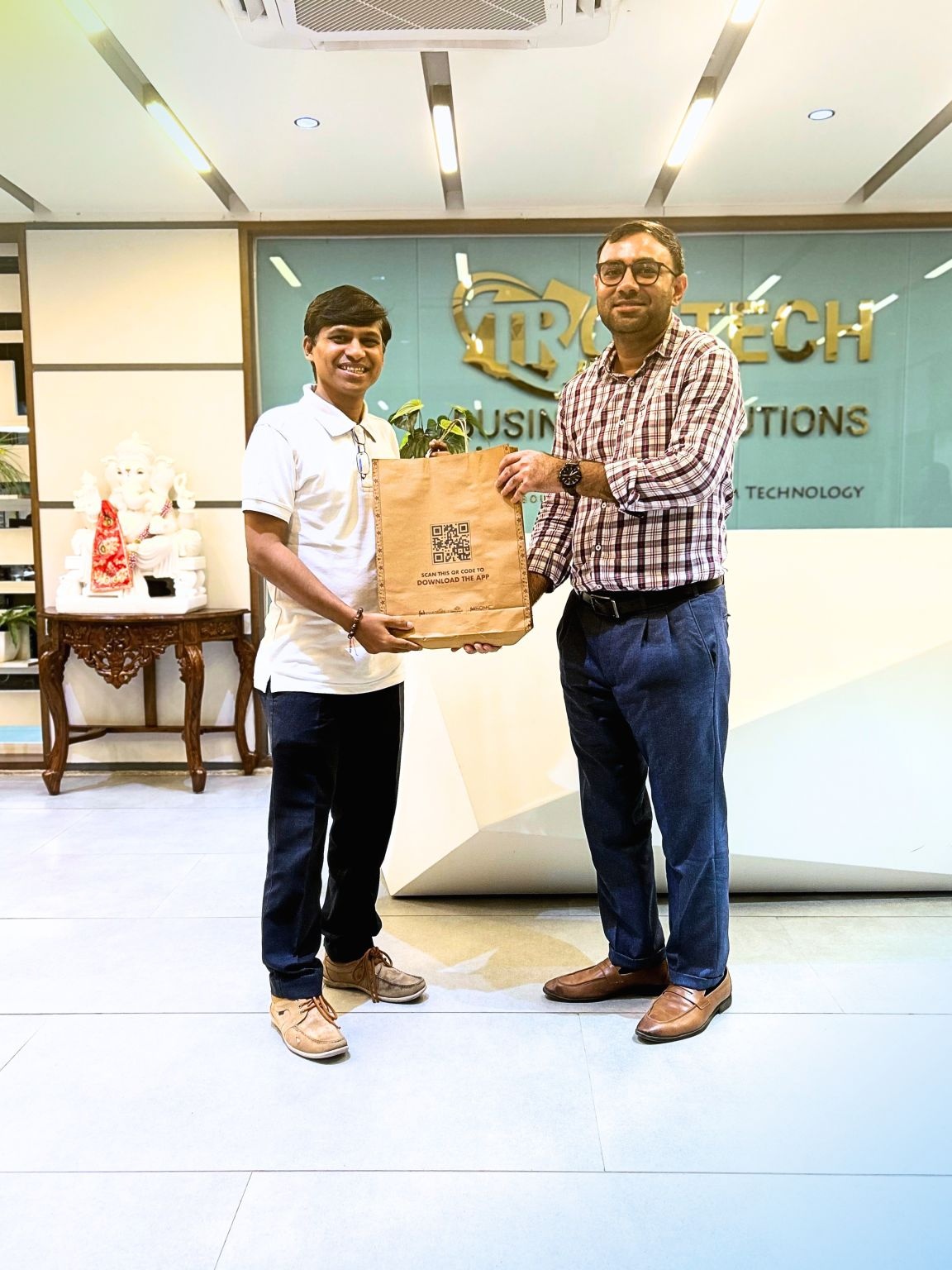
The ambition remains substantial: building organizations with reach beyond their starting point, while taking on work in new settings. A public photograph from his meeting with Kirloskar Oil Engines captures one such conversation. He described exploring opportunities for collaboration. The conversation is a beginning, with the work of agreement still ahead.
That is where Jagwani’s story keeps returning. Two students could decide they wanted a multinational. A company could be founded in 2014. The continuing task is to make that ambition usable by the next person: a colleague taking responsibility, a lawyer opening a workspace, a customer waiting to see what happens on Monday.
Continue the conversation
Explore Jagwani’s work and public writing.
- TRooTech leadership profile
- Niraj Jagwani on LinkedIn
- The founding interview
- The client-trust interview
- Legalspace.ai’s founding team
- TRooInbound’s board and leadership
- Writing on application modernization
- Writing on enterprise platforms
- Writing on agentic AI
- The Kirloskar meeting post
- TRooTech’s YouTube channel