A classroom can be difficult to enter long before anyone asks you a question. First comes the search: which school, which evening, which price, which course with a title that means what you hope it means. Nihal Parthasarathi built a company around this preliminary obstacle. The people who wanted to learn something were already there. So were the people prepared to teach them. The introduction needed work.
There is a pleasing modesty to that starting point. Education invites enormous declarations. CourseHorse began with the sort of irritation a person can recognize at a kitchen table. You have decided to take a class. Somehow, deciding what to take has become a class in itself, with an unreasonable amount of homework.
A city full of classrooms, a search full of dead ends
Parthasarathi grew up in Connecticut and went to NYU Stern, graduating in 2008. His studies combined finance and marketing with a minor in creative writing. That is a useful collection of interests for someone who would eventually need to understand a transaction, attract a customer and explain why either should bother.
At Capgemini, he worked on education technology for a test-prep provider. His experience included helping overhaul a website through which students found and bought classes, alongside work on a learning management system. He was seeing the machinery behind an educational business, including the practical business of getting a student into the right course.
The initial opportunity he spotted was narrower than CourseHorse became: a way to compare test-prep options. He took the idea to Katie Kapler. She suggested extending it to all kinds of classes in New York. Their conversation joined his experience of education systems with her broader view of what the marketplace could contain. A question about test preparation acquired room for painting and cooking.
Kapler was a consequential partner in that change of scale. Her background included building an online marketplace at Biz2Credit, where she had worked on product development and marketing. These were two founders with experience of connecting people to complicated choices. Between a learner and a classroom sat a set of decisions that software could help organize.
CourseHorse was founded in 2010 and launched publicly in April 2011. It began in New York, concentrating on one city rather than distributing its attention across the map. By July, early coverage counted 150 schools and more than 4,000 classes. Students could filter the choices and enroll through the site. Schools could list without an upfront charge; the company earned a commission when someone booked.
Those figures describe the early catalog, rather than the company today. They also show the particular labor of a marketplace. A blank search box is easy to draw. Giving it enough useful answers requires relationships, information and a way to complete the purchase. The product begins to matter when someone can stop comparing and make a plan.
The prize and the work after it
In 2011, CourseHorse won a $75,000 prize at NYU Stern’s New Venture Competition. The university’s magazine pictured Parthasarathi and Kapler with William R. Berkley. There they are, dressed for an occasion, with the tidy appearance of a business story that has reached a satisfying ending.
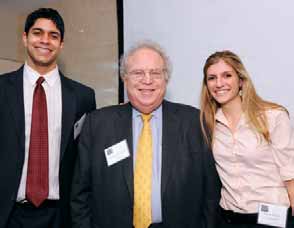
For the founders, the prize was closer to an opening. Money gave them some time. Recognition made the young company easier to explain. Neither could book a class on a student’s behalf, or persuade a school that a new distribution channel deserved its attention. A marketplace has two groups to satisfy, and both are entitled to ask what happens next.
The company also worked from NYU’s Poly Varick Street Incubator. Parthasarathi had considered finance or banking before entering consulting; his professional education took a less orderly direction once he became a founder. The environment required him to learn while doing. A business-school credential could be useful without supplying a script for the next morning.
His responsibilities as CEO included fundraising, business development and school relationships. It is a revealing combination. One conversation concerns the company’s future. Another concerns whether a particular provider wants to work with it. The same founder has to move between the broad promise and the small arrangements that might make the promise credible.
- FindBring scattered local classes into one catalog.
- CompareMake time, location and price easier to assess.
- BookLet the learner register and the school fill a seat.
The founder takes a class in being wrong
By February 2014, Parthasarathi was discussing the company’s beginnings on the Novice No Longer podcast. The episode explored what founders should do before hiring a developer, how to talk to potential users and how to spend the period while a website is being built. These are questions from the unglamorous end of entrepreneurship, where enthusiasm meets a calendar and a budget.
That June, he spoke to NYU’s Summer Launchpad founders. Asked about the biggest early mistakes at CourseHorse, he described moving beyond what the founders understood. They had committed time and resources before adequately testing their plans. His advice was to take small risks that could teach them something before making a larger commitment.
There is a personal cost to saying this in a room full of new founders. The invited speaker arrives with a company and a history. It would be comfortable to present the history as evidence that the plan had been sound all along. Parthasarathi instead offered a warning about how easy it is to believe a plan because you made it.
The distinction matters in his particular business. A founder might find a subject fascinating, while a prospective student needs a course near work on a Tuesday. A school might love the idea of more customers but dislike the practical terms. Small tests allow those differences to appear while there is still time to respond. Curiosity becomes useful when it includes the possibility of an unwelcome answer.
Six people become twelve
Inside CourseHorse, growth introduced another education. When the team expanded from six people to twelve, Parthasarathi reconsidered his approach to management. He wanted a workplace where people could solve problems with some freedom. He and Kapler discussed the issue with employees and advisers, then made autonomy and responsibility central to how the team worked.
“Managers default to telling other people what to do.”
Nihal Parthasarathi, on management
Employees could decide how to work toward their goals. Performance measures were visible, and missed targets prompted a conversation with the founders about adjusting the goal. That combination gives the arrangement some substance. People had room to choose, alongside a way to see how those choices were going. A founder who wants other people’s judgment has to make some space for it.
He also had a more recreational method of building relationships. In 2015, he described weekly team gatherings in Washington Square Park or Central Park. The activities included bocce, KanJam, Cards Against Humanity and Settlers of Catan. It was an eclectic syllabus. Anyone looking for a single theory of team entertainment would have had to accommodate both lawn games and trading settlements.
The purpose was to let colleagues connect as people. Games supply a shared task with stakes small enough to enjoy. They also make titles temporarily less interesting: being CEO offers limited assistance with the next throw. The detail suits a founder whose company made room for people to learn together outside the formal channels of school and work.
In NYU’s 2017 entrepreneurship annual report, his advice on teams came down to the founder’s example. The people you assemble will reflect your values. Read beside the park games and the management changes, that thought has a practical edge. Culture appears in what a leader repeatedly makes time for, and in the decisions that other people are allowed to make.
An instinct that has done its homework
By February 2016, CourseHorse was operating in New York, Los Angeles and Chicago, and had announced a $4 million Series B. Parthasarathi’s explanation of the opportunity emphasized people’s interest in classroom learning, practical skills and local experiences. He wanted to expand into more cities while investing in marketing, engineering and the product experience.
He was attentive to the school’s side of the relationship too. More providers meant more choices, and he saw possibilities in analytics and ways to demonstrate acquired skills. His ambition extended beyond assembling listings. The marketplace occupied a position between people making educational choices and organizations trying to reach them.
When he returned to NYU founders in 2018, the advice included a short instruction: “When in doubt, trust your gut.” Advisers could disagree. The person responsible for the company still had to make a decision. His earlier emphasis on testing gives that advice a useful companion. Instinct has opportunities to improve when its owner keeps paying attention to the results.
Public professional directories now list Parthasarathi as a CourseHorse co-founder and board member. The company he helped establish has continued to change. Its current catalog spans 14 US cities and online classes; it also arranges group experiences. In December 2025, CourseHorse acquired CreativeLive, keeping that creative-learning platform open after a planned closure.
Those later developments belong to the company’s continuing history. Parthasarathi’s founding chapter remains grounded in a smaller observation: people could want an education and still get lost trying to arrange one. He helped turn that observation into a service, then carried the experience back to rooms full of people attempting companies of their own.
There is a fitting circularity here. He started by making it easier to find a class. Along the way, he acquired enough lessons to have something useful to teach.
Keep following the thread
Explore CourseHorse, connect on LinkedIn or find Nihal on Twitter/X.