The Times Square billboard is the sort of image that eats the rest of a career. There is the Nasdaq logo, there is MINIM in capital letters, and there is the implied fairy tale: startup enters, ticker symbol comes out. Nicole Zheng keeps the photograph on her website, but the more revealing detail is what she puts beside it. Not triumph. A journey. Seed stage to publicly listed company is a road, not a pose, and the distance between those two points is mostly made of decisions too small for a billboard.
Zheng helped make those decisions as a cofounder of the original Minim, then as chief marketing officer and chief product officer, and finally as president and CMO of the combined public company. The business moved from zero to $55 million in net annual revenue. Along the way came a merger with Zoom Telephonics, a corporate rebrand, a Nasdaq uplist, and a public offering. Four transformations, each capable of becoming a company's entire plot, arrived in close formation.
She had been training for ambiguity long before the ticker. At Carnegie Mellon, Zheng studied materials science and engineering alongside engineering and public policy, then added a minor in technical writing. It is a wonderfully revealing bundle. One discipline asks how structures behave under stress. Another asks how technical choices collide with institutions. The third asks whether anybody can understand what you mean.
An engineer learns to sell the invisible
Her early professional work included product engineering at Pittsburgh Corning. By 2010 she was CMO of OnSIP, a cloud communications company. The leap looks dramatic only if marketing is mistaken for decoration. Selling cloud telephony means translating an invisible technical system into a reason to change how a business works. It requires product fluency, commercial empathy, and an appetite for explaining the same complicated truth at several altitudes.
Zheng stayed at OnSIP for seven years, a long apprenticeship in an industry infatuated with quick exits. She then spent a year as CMO of health-technology company Antidote before cofounding Minim in 2018. In each case, the category differed while the intellectual chore remained familiar: make the mechanism intelligible, make the promise credible, and make the organization capable of keeping it.
“Brand neglect is a silent killer, inflating customer acquisition costs, decreasing customer retention, and obliterating customer referrals.”
The sentence has the gratifying severity of someone who has inspected the damage. Brand neglect rarely announces itself as brand neglect. It appears on an invoice as rising acquisition cost. It arrives in a renewal meeting disguised as indifference. It asks salespeople to explain the company from scratch, one prospect at a time. Zheng's version of marketing is closer to infrastructure: unnoticed when it works, expensive when it does not.
At Minim, the infrastructure had to serve two audiences at once. Its software used artificial intelligence to manage Wi-Fi and connected-device security, while the merged company also sold consumer networking hardware under the Motorola brand. The name itself, borrowed from the musical half note, was designed to work in both business and consumer settings. A tidy word had to carry software, devices, security, subscriptions, retail shelves, service providers, and the expectations of public investors. The rebrand was less a fresh coat of paint than a new map of the house.
The operating line
Cloud communications
Founder, product, marketing
President and CMO
Casie, Elev18, fractional work
Four corporate events and one ordinary Tuesday
In December 2020, the original Minim merged with Zoom Telephonics. By July 2021, the combined business was trading on Nasdaq under the MINM ticker. Zheng was elevated to president while keeping the CMO role, with a broader brief across company management, product, and customer experience. At 37, she was one of three named executive officers in the company's proxy statement.
The public events are easy to enumerate. The lived experience is messier. A merger joins organizations that carry different memories, habits, customers, and vocabularies. A rebrand asks employees to stop reaching for familiar language. An uplist introduces a new rhythm of reporting. A public offering converts a plan into a promise watched by strangers. Meanwhile, somebody still has to approve the campaign, speak to a customer, settle the product question, and show up for the Tuesday meeting.
Her public voice during this period mixed analysis with a flash of mischief. Discussing the move toward hybrid work, she argued that companies needed to rethink connectivity and security. Then came the kicker: “If you need to be convinced, just ask Alexa when she's listening into your next confidential conference call from home.” It is a useful specimen of technical communication. State the strategic issue. Make the risk concrete. Leave the audience with a joke sharp enough to remember the warning.
Recognition followed. Zheng appeared among female founders highlighted in 2020. Awards records placed her in Female Executive of the Year and Most Innovative Woman of the Year in Technology categories. Parks Associates named her a Top Leader in Technology. The more consequential endorsement may be the role that arrived next. In September 2022, Pontera hired her as its first CMO.
The bridge from product to consequence
Pontera's software lets financial advisers manage retirement accounts such as 401(k)s that sit outside their usual custody platforms. The product's technical function matters, but its human consequence is the point: whether a saver's largest pool of invested money participates in a coherent financial plan. Zheng's assignment was to build the team and scalable programs that would make the platform legible to advisers.
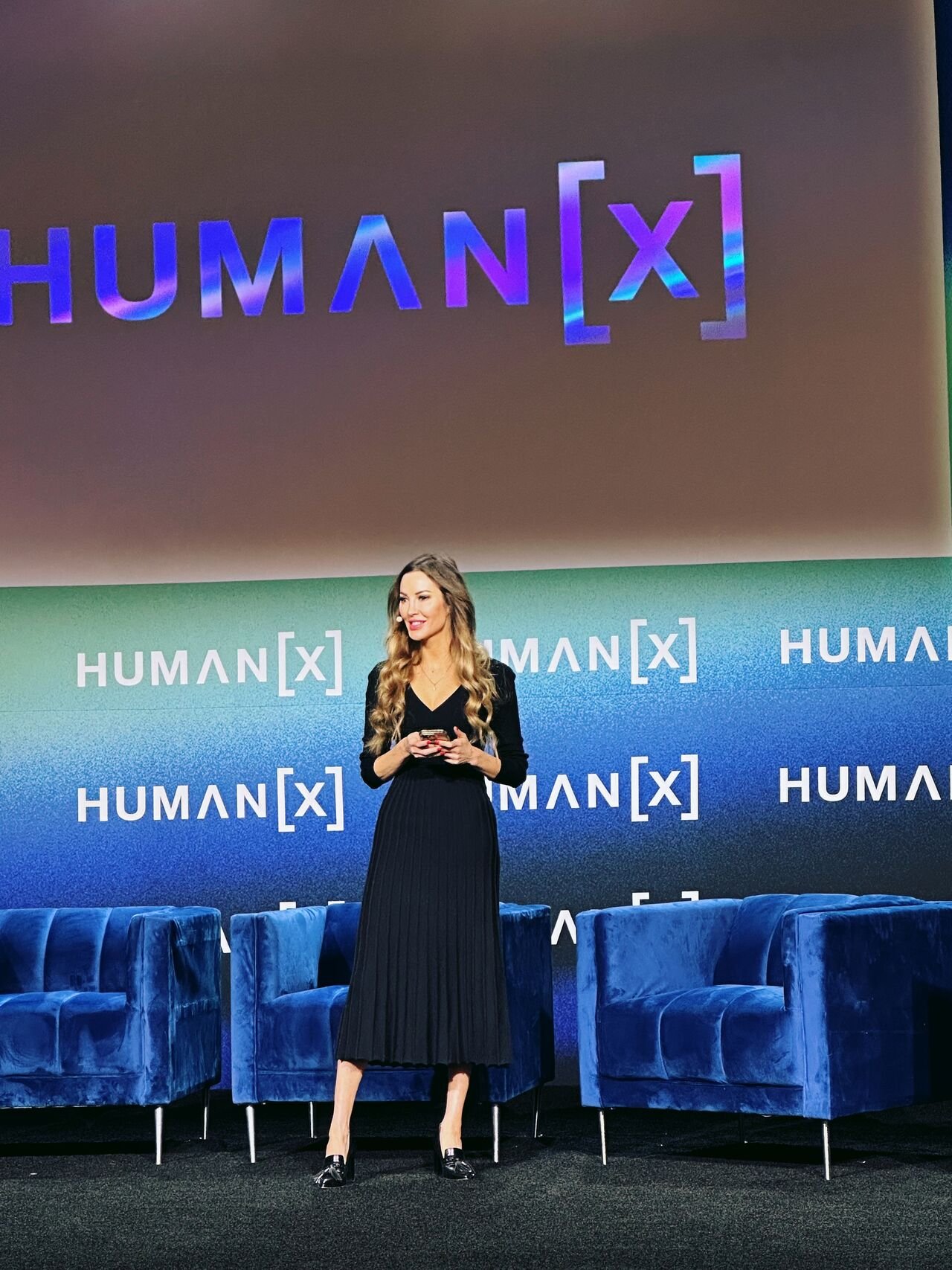
The move expanded a career already spanning unified communications, health tech, internet infrastructure, and the smart home. Later came fractional marketing roles in AI and tax technology, followed by chief business officer work at A.Team, a network that assembles specialist technology talent. At HumanX in 2025, she led a session on what was actually working in AI automation and agents. The phrasing matters: actually working. Technology conferences produce an ample supply of futures. Operators must still report for duty in the present.
Her argument for AI-era teams uses a T-shaped model: a core of full-time engineers provides deep knowledge of the company, while independent specialists bring wide experience from fast-moving implementations. The diagram is simple because the organizational problem is not.
Zheng also began building again. Casie AI reunited her with Alec Rooney, Minim's former CTO. The company describes an AI agent that turns scattered support documentation and community conversations into an accessible knowledge system. Once more, the product concerns translation: information exists, but it is stranded in too many places to be useful at the moment of need.
The product is judgment
Elev18, Zheng's coaching and advisory practice, moves still closer to the source of company behavior. Its premise grew from a pattern she had watched repeatedly: companies can be funded faster than their leaders develop. Capital accelerates the organization. It does not automatically enlarge a founder's capacity to delegate, reorganize, confront, or decide.
The practice is built for hinge moments: the fire a leader is avoiding, the reorganization everyone senses, the responsibility that has not quite been handed over. These are not branding problems, although they eventually become visible in the brand. They are not merely people problems, although people absorb the consequences. They are questions of judgment, and judgment is the most stubbornly human item on an AI company's roadmap.
Her current work reflects that breadth. Zheng runs Elev18, is identified by Casie AI as its cofounder and CEO, and serves as a fractional CMO at procurement technology company Fairmarkit. In 2026 she has written about AI exposing cracks in traditional learning and development, while helping Fairmarkit prepare its SOAR gathering around agentic sourcing, negotiation, and procurement transformation. The sectors continue to rotate. The work remains the joining of product, story, and organization.
There is a civic thread, too. Zheng spent eleven years as a New York Cares team leader, served on the board of Alliance of Channel Women, and has supported women in technology and inclusive company cultures. More recently, she has fostered rescue dogs. She lives in New York with her husband and two rescue dogs, Mabel and Winifred. A career about systems still leaves room for creatures who refuse to respect them.
The Times Square photograph remains excellent. It deserves its place. But a billboard can only show that something happened, not why it held together or what the people inside it learned. Zheng's more interesting work begins just outside the frame, after the celebration, when the lights are ordinary again and a leader has to decide what comes next.