Nicolas Faquet had already helped build one online insurer when he decided to start another. DirectAsia had launched in Singapore, expanded into Hong Kong and Thailand, and been sold to Hiscox in 2014. After the sale, he considered returning to corporate life. Instead, he began again. A decade later, his second venture would buy the Thai business of his first.
That circular journey is an unusually tidy plot for an industry devoted to untidy events. It also makes Faquet's career easy to misunderstand. The acquisitions and financing rounds supply the punctuation. The sentence underneath concerns a more ordinary ambition: let people buy insurance without spending quite so much of their lives buying insurance.
Roojai, which began serving Thai customers in January 2016, became his means of testing that ambition. He brought actuarial training, years inside established insurers and the experience of running a direct insurance operation. His entrepreneurial wager came with a considerable amount of homework.
The mathematics of starting over
Faquet grew up in Brittany, in northwestern France. Mathematics appealed to him before insurance did. He enjoyed the discipline of solving a problem within constraints and the satisfaction of an answer that could be proved. Insurance supplied those problems in commercial form. There was also the rather practical attraction of helping people get on with their lives.
His education took him through ESSEC and actuarial studies in Paris. In 1997, he moved to Singapore with AXA, becoming its chief actuary there and later taking responsibility for product lines. His subsequent European jobs included internal audit at AXA France, motor insurance at AIG Europe and the leadership of Axeria IARD.
These were jobs close to the machinery: pricing, claims, distribution and the awkward relationship between what a policy costs today and what it may cost its seller tomorrow. An insurer collects money before the final bill arrives. A founder who understands that arrangement has good reason to be wary of popularity purchased too cheaply.
In 2009, Faquet joined the founding team of DirectAsia. As group chief operating officer, his responsibilities included products, pricing, claims, the call centre and reinsurance. He also led the Hong Kong operation. The breadth matters. His later venture would require all those functions to cooperate, preferably before the customer had finished wondering why they were waiting.
A Thai name, and a patient beginning
A personal trip to Thailand in August 2014 preceded the work of setting up Roojai that December. Systems had to be prepared before customers could arrive. The public launch followed in January 2016. The distinction between beginning a company and opening its doors is useful here: there was more than a year's work between the decision and the first operating chapter.
Faquet knew Thailand from DirectAsia's expansion. He saw a population comfortable with digital services and an insurance market where buying directly online still had room to develop. His choice was specific. He had experience across countries, but Roojai's first task was to work in one.
Even the name made that commitment visible. Roojai carries the Thai idea of understanding someone's heart or needs. For a French founder building a business in Thailand, the local identity was deliberate. The kangaroo gave the idea a visual companion. Actuarial tables may persuade an underwriter; a recognisable animal has certain advantages on television.
Trust took longer than a name. An unfamiliar business was asking drivers to place an important annual purchase in its hands. The early relationship with Krungthai Panich Insurance gave Roojai an established insurance partner. Faquet described a progression from roughly 5,000 customers in its first year to 15,000 in 2017 and 30,000 in 2018. The early story was built in increments.
The customer gets to move the numbers
Faquet's explanation of Roojai starts with choices a buyer can actually make. In an early interview, he described a market where customers were rarely offered a deductible, the amount they agree to pay towards a claim. Roojai let people adjust product features and see the effect. At the time of that interview, he said customers explored an average of 12 options before choosing.
He also reported that 70 percent chose a deductible. Those are historical observations, rather than a description of every customer today. Their interest lies in what they suggest about his approach: give a person a working set of controls, and the resulting policy may look different from the one somebody would have selected on their behalf.
The same interview set out an expense target. Faquet wanted a larger share of the premium available for claims and a smaller share consumed by acquiring and serving the customer. The website was one part of that arithmetic. So were automated pricing and video inspections. Convenience and cost were being worked on together.
By 2018, Roojai could inspect a car through a live video call in about 10 to 15 minutes. A conventional physical appointment could involve waiting days. The app also used GPS to help a surveyor locate an incident. These are modest technological ideas with a useful property: the customer can understand the benefit without attending a technology conference.
“Ultimately, safer drivers pay lower premiums with Roojai.”Nicolas Faquet, in an early interview
There were people behind the screens. In 2018, the company had about 100 staff, with roughly 60 to 70 working in the call centre and claims. Most buyers at that stage still completed their purchases through call-centre staff. An online business could accommodate a human conversation. Faquet's operating model had to make room for how customers actually behaved.
Growth has a bill attached
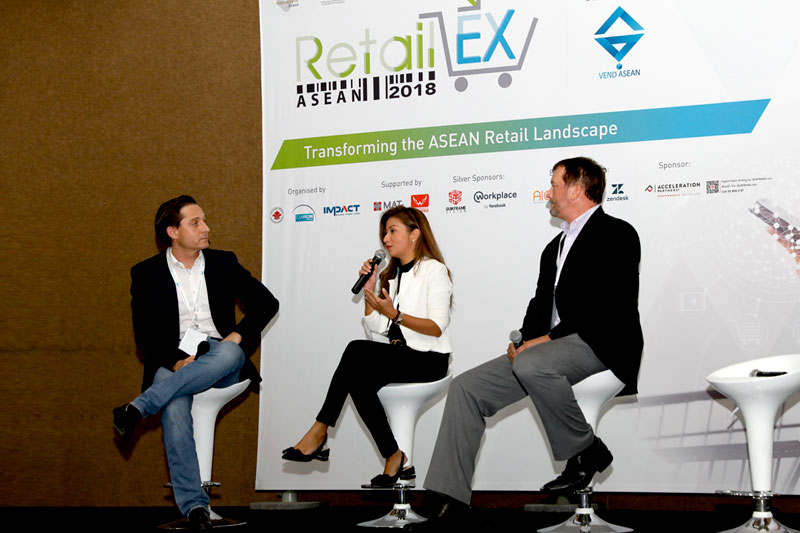
When Faquet discussed insurance startups on a panel in May 2022, he offered a brisk illustration of a bad business: collect 100 from a customer and give back 150. That proposition is easy to sell. The problem appears on the other side of the ledger. It was his way of bringing a fashionable industry conversation back to the cost of the promise.
He explained that direct distribution requires money upfront to win customers. Retaining them allows the company to spread that expense over a longer relationship. The investment is therefore tied to service: a customer who leaves early changes the economics. Advertising can introduce an insurer. It cannot perform every subsequent renewal on the insurer's behalf.
His declared horizon was 20 or 30 years. That gives the story a different pace from a funding announcement. A long-lived insurance business needs pricing, expenses and customer retention to remain compatible after the celebration photographs have been filed away.
Roojai entered Indonesia in 2022, working with Sompo Indonesia. The expansion came six years after its Thai launch. By 2023, Faquet was speaking publicly about acquisitions as a route to a broader regional business. Thailand had supplied the operating base; Indonesia provided another market in which to apply and adapt it.
Buying the machinery behind the promise
In July 2023, Roojai acquired FWD General Insurance Thailand from bolttech. Until then, its customer-facing business had worked with insurance partners. The acquisition gave the group a licensed insurer. The acquired company became Roojai Insurance in 2024. Faquet could now pursue changes further inside the insurance process.
The distinction is consequential. Selling and servicing a policy through partners leaves some decisions with another organisation. Owning an insurer brings product development and underwriting closer to the customer operation, alongside the capital and responsibilities of carrying insurance risk. Faquet described the move as a way to improve the whole journey.
His distribution plans also widened. In September 2023, Roojai said it expected a future business mix of 60 percent direct sales and 40 percent through brokers and agents. That was a stated expectation. It showed that the founder's commitment to direct distribution could coexist with a practical interest in reaching customers through other channels.
Then came the return to DirectAsia. A proposed acquisition announced in 2023 failed to close within the agreed period; Roojai and Hiscox terminated that agreement in August 2024. In December, a narrower transaction followed: DirectAsia Thailand joined Roojai. The Singapore operation was outside that completed Thai deal. The distinction deserves to survive the pleasing symmetry of the founder's return.
Roojai said the Thai combination brought its portfolio above 300,000 insured vehicles. Faquet had helped build the earlier operation, competed through a new venture and eventually brought the Thai businesses together. Experience had become an asset on both sides of the transaction.
A second decade for the kangaroo
The next financing round arrived in November 2025: US$60 million, co-led by Apis-managed funds and Asia Partners, with HDI International, Primary Group and IFC also participating. Roojai earmarked the capital for Thailand, Indonesian growth and further acquisitions. Faquet's stated aim remained straightforward insurance for more Southeast Asian customers, pursued through disciplined growth.
By August 2026, Roojai was marking ten years of operations. Its anniversary announcement put group gross written premium at 3.3 billion baht for 2025, up from 1 billion in 2021. It separately reported 212 million baht of net profit for Roojai Insurance in the first half of 2026. The group measure and the insurer's result describe different parts of the business.
Faquet's next chapter includes using technology and artificial intelligence to improve products and service. The ambition is familiar; the means keep changing. For someone drawn to mathematics, insurance offers an endless supply of calculations. For someone drawn to building companies, it offers a less orderly test: whether customers will trust the answer, renew the policy, and call again when they need help.
His career has carried him from France to Singapore, through an exit and into another beginning, then back to a business he once helped establish. The kangaroo makes the circular route look almost intentional. The work underneath it remains stubbornly practical: ask better questions, price the risk, answer the customer.