The insurance industry has a peculiar way of making a bad day feel administrative. A bent fender becomes a phone tree. A renewal becomes a packet of clauses. A price quote can arrive only after a stranger has asked enough questions to write a minor biography. Roojai began in Thailand in 2016 by attacking that waiting. It put quotes, cover choices and car inspection online, aimed the offer directly at drivers, and used a call center when a person was more useful than another menu.
That sounds ordinary now, which is one sign the idea worked. Yet Roojai's more consequential move came later. In 2023, the group acquired FWD General Insurance Thailand from bolttech. The business was renamed Roojai Insurance Public Company Limited in 2024, giving Roojai the license and balance sheet to underwrite general insurance itself. The digital shopfront had acquired the factory.
The distinction matters. A broker earns a commission for matching a customer with somebody else's policy. An insurer designs the product, prices the risk, collects the premium and pays valid claims. Roojai can now connect the behavior it sees at quotation, inspection and claims with the policies it creates. It also inherits the unglamorous obligations that come with the privilege: reserves, regulation, fraud control and the possibility that losses cost more than expected.
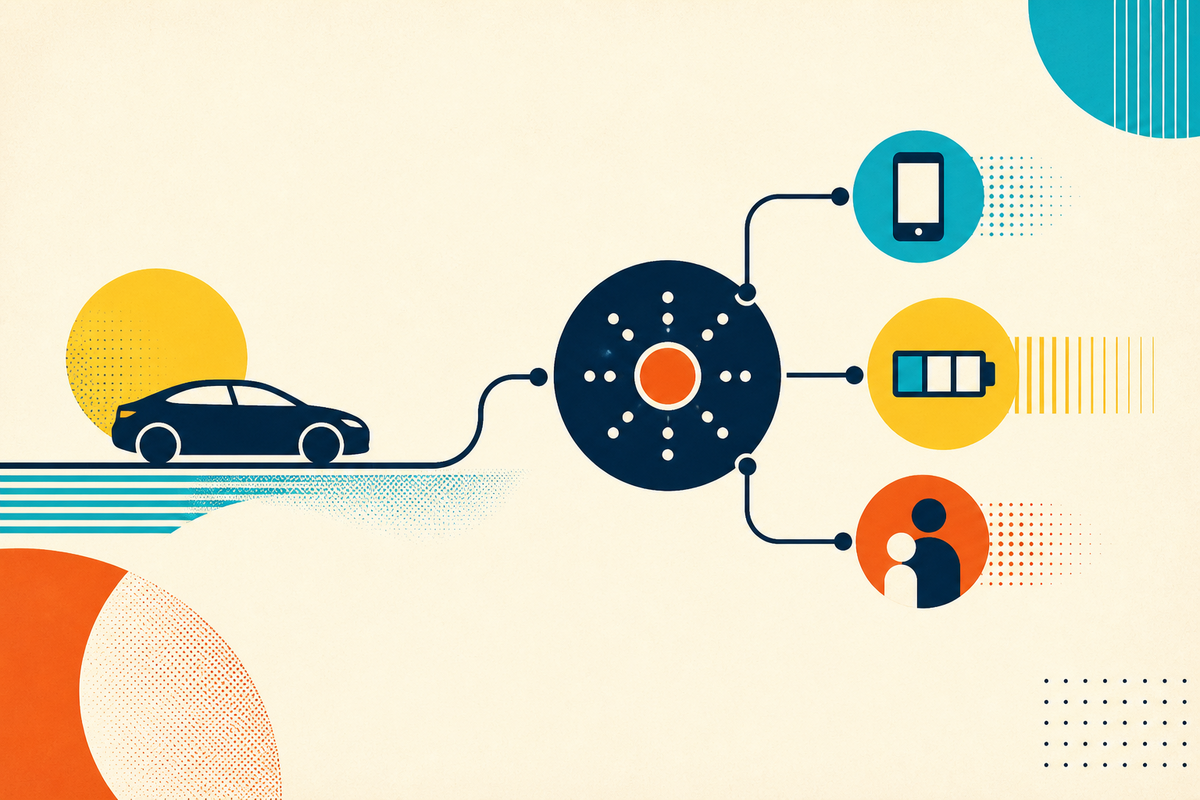
The promise is speed. The product is relief.
Roojai's customer is not buying software for the pleasure of owning software. A Thai driver wants a policy that fits the car and budget, proof of cover, help at the roadside and a repair that does not become a second accident. The online flow lets customers get a personalized quote, adjust deductibles and benefits, pay in installments and receive digital documents. A video call can replace an appointment for vehicle inspection. The app can report a crash, send GPS coordinates, request round-the-clock breakdown help and show the approaching surveyor in real time.
For suitable minor collisions, Roojai introduced video claims in 2020. An agent guides the customer through what to show and record; more difficult cases still get a surveyor. That qualification is important. A five-minute claim is appealing only when the incident is simple enough to deserve one. The same system should know when to stop being clever.
“We still prefer to send a surveyor for difficult cases, but for minor car accidents, video reporting is our channel of choice.”Nicolas Faquet, founder and Group CEO
The physical network remains part of the digital product. Roojai advertises more than 1,600 preferred garages and a 12-month warranty on eligible repairs. It offers a 10 percent dash-camera discount and a money-back price promise under stated conditions. Those details are not interface polish. They are the mechanisms by which lower risk, distribution savings and customer trust become something a driver can use.
A direct model with a human voice
Roojai is often described as direct-to-consumer, but it is not an internet-only purist. Its differentiation comes from joining risk selection, an e-commerce funnel, a mobile service layer and a contact center. The company says it underwrites the customer rather than only the vehicle. Driving history and other risk signals help segment customers, which can give safer drivers more competitive pricing. Installment payments make the annual premium easier to absorb.
There is a useful tension here. Automation is good at moving facts: identity, policy status, photos, location, payment. A trained person is better when facts arrive shaken, incomplete or disputed. Roojai's contact center won the Thai Contact Center Trade Association's top title three times, and the company keeps human help next to its self-service tools. The lesson is not that software replaces service. It is that software clears routine work out of the way so service can concentrate on the moments with consequences.
The old route
Intermediaries carry the relationship. Quotes and inspections can move across separate organizations. Product feedback travels slowly toward the underwriter.
The Roojai route
The customer enters through a direct digital funnel. Pricing, documents, assistance and claim signals live closer together, with people stepping in when judgment is needed.
The business model is consequently mixed. Roojai Insurance earns premiums and carries underwriting risk in Thailand. Direct online distribution can lower acquisition and servicing costs, but Roojai also plans to reach customers through brokers and agents. MrKumka, launched in 2018, compares motor policies in Thailand. In Indonesia, Roojai operates as a managing general agent with local insurance partners, while Lifepal remains an independent comparison broker. It is less a single website than a collection of regulated roles built around shared digital operations.
The ladder from storefront to stack
Capital financed each widening circle. Primary Group supplied a reported $20 million seed investment. The International Finance Corporation invested $7 million in the 2018 Series A. HDI International led a $42 million Series B in March 2023, with IFC participating again. In November 2025, funds managed by Apis Partners and Asia Partners co-led a $60 million Series C; HDI, Primary and IFC joined them. The disclosed total reached $129 million.
Four rounds, $129 million disclosed
Bar length is relative to the $60M Series C. No public valuation was announced.
The spending trail is visible in geography and capability. Roojai entered Indonesia in 2022 with Sompo Indonesia. It acquired Lifepal in 2024, gaining a comparison business that Roojai said attracted roughly two million users a month. In December that year, it acquired DirectAsia Thailand from Hiscox, taking the combined Thai portfolio above 300,000 insured vehicles. The 2025 financing was earmarked for growth in Thailand and Indonesia and further strategic acquisitions.
The online front door opens
Roojai launches in Thailand with direct, digital motor insurance.
The claim enters the camera
Video reporting extends the online journey into minor accidents.
Indonesia becomes market two
Roojai launches with local insurance partner Sompo Indonesia.
The broker becomes the insurer
FWD General Insurance is acquired and rebranded; Lifepal and DirectAsia Thailand join the group.
EV cover, fresh capital, ten years
A new EV policy and $60 million Series C set up the next regional chapter.
The next policy is not necessarily for a petrol car
Motor insurance remains Roojai's anchor, from compulsory cover to comprehensive Type 1, lower-cost Type 2 and third-party plans, plus motorcycle policies. But the catalog now includes personal accident, cancer, critical-illness and travel insurance. The company is trying to transfer a relationship earned around the car into protection for the person inside it.
Electric vehicles offer a more immediate extension. Roojai's 2025 EV plans include accident damage to the traction battery, optional wall-charger protection, named-driver cover and repair through dealer networks, depending on the plan. EV policies require different repair expertise and confront the high cost of batteries. A digital insurer can adjust questionnaires and product rules quickly, but it still needs credible repair capacity and enough claims data to price an unfamiliar fleet.
The market position is now awkward in the productive sense. Roojai competes with established Thai insurers on capital, claims and repair coverage; with brokers on choice and customer acquisition; and with newer digital brands on convenience. Its comparison sites can distribute other insurers' products, its MGA can design products with partners, and its Thai insurer can manufacture its own. Few customers will care which legal entity sits behind a button. Regulators, investors and the finance team care a great deal.
Roojai's moat is not a kangaroo, an app or a cheap quote. It is the choreography between underwriting, software, a ringing telephone and a garage with the right parts.
There are limits to the model. Person-centric pricing must remain explainable enough to feel fair. A direct channel can reduce commissions but transfers marketing costs to the insurer. Fast growth makes claims discipline more important, not less. Expansion into health and travel introduces different customer anxieties and risk patterns. Indonesia adds a vast market, local regulation and formidable distribution competition. Full-stack status gives Roojai more control, along with more ways to be wrong.
Still, the company has found a useful place in Southeast Asia's insurance market: between legacy carriers with deep balance sheets and software startups that stop at the lead form. Its expertise is the messy middle - acquiring a customer online, turning individual risk into a price, helping that customer inspect a vehicle, collecting payment, answering when something breaks and learning from the result.
The name Roojai roughly carries the sense of understanding someone in Thai. That promise will be tested not when the quote page loads, but when rain hits the windscreen, the bumper folds and a customer reaches for a phone. Ten years in, Roojai has assembled more of the machinery behind that moment. Its next task is to make the machinery disappear.