The Story
Selling the Outdoors, One Promise at a Time
There is a particular kind of pressure that comes with marketing a company older than the automobile industry's assembly line. L.L.Bean was founded in 1912, back when Leon Leonwood Bean sold a leaky rubber-and-leather boot, watched most of them fail, and did something almost unheard of - he refunded every unhappy customer and rebuilt the design. That single decision became the company's spine. More than a century later, the person responsible for translating that founding gesture into modern marketing is Nick Wilkoff.
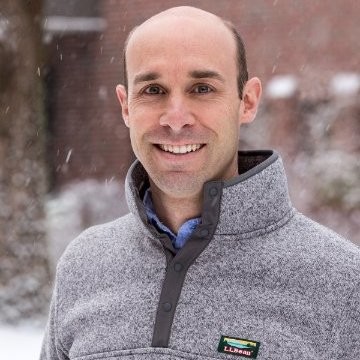
Wilkoff is the Chief Marketing Officer of L.L.Bean, the outdoor apparel and equipment retailer headquartered at 15 Casco Street in Freeport, Maine, where the flagship store keeps its doors open 24 hours a day, 365 days a year and famously has no locks. He oversees brand, marketing, and customer engagement for a business doing roughly $1.7 billion in annual revenue, with about 5,500 employees. It is a large job dressed in flannel.
"A brand that old is either a museum or a living thing. The work is keeping it the second one."
The animating idea behind Wilkoff's role at L.L.Bean
His path there was quieter and more logical than most marketing origin stories. Wilkoff studied environmental policy at Middlebury College, graduating in 1997. It is a detail that reads, in hindsight, like foreshadowing. Few executives can claim their college major aligned so neatly with their life's work: a degree about the natural world, followed by a career spent convincing people to go and enjoy it. He did not set out to sell parkas. He set out understanding why the outdoors matter, which turns out to be the more durable qualification.
Before Freeport, Wilkoff worked the analytical side of the business. He was a Project Manager at Applied Geographics, Inc., and then a Senior Analyst at Forrester Research, the firm whose entire trade is studying brands, consumers, and the technologies that connect them. So he spent years dissecting how companies behave from the outside before crossing over to run one from the inside. Analysts who become operators tend to carry a useful skepticism with them - they have seen how the sausage of consumer behavior is actually made, and they are hard to fool with a shiny deck.
The Freeport Years
Wilkoff joined L.L.Bean in 2018. He climbed through roles that tell you where the company was placing its bets: Vice President of International and Direct to Business, then Vice President of Marketing and International. In 2020 he was named Chief Marketing Officer. The through-line in those titles is expansion - taking a brand that Americans associate with duck boots and canvas totes and figuring out how it travels, both across borders and across a media landscape that changes faster than Maine weather.
The challenge Wilkoff inherited is the one every legacy brand faces, and most fail. Change too much and you betray the people who loved you. Change nothing and you become a nostalgia act, admired and unpurchased. The trick is finding the narrow third path - modernizing the delivery while keeping the promise intact. L.L.Bean's technology stack tells that story on its own: Salesforce Commerce Cloud, a modern omnichannel setup, personalization engines, and the full apparatus of contemporary e-commerce, all in service of a company whose best-known product has barely changed in a hundred years.
"The lifetime guarantee is the best marketing campaign the company ever ran, and nobody wrote it as an ad."
On L.L.Bean's founding philosophy of quality and service
That last point deserves dwelling on, because it is the key to understanding how Wilkoff thinks about the brand. L.L.Bean built its reputation not on advertising but on a return policy - a guarantee that the product would last, and if it did not, the company would make it right. For decades that meant you could return a decades-old boot. Marketing durability in an economy that quietly rewards things falling apart is a strange, almost contrarian position. It is also, done right, the most trustworthy story a retailer can tell. Wilkoff's job is to keep believing it on the brand's behalf, and to say it out loud in a way that lands with people who were not alive when the boot was invented.
Everyone Outside
If durability is the inheritance, inclusion is the addition. In his public appearances - including a turn on the Marketing Trends podcast discussing how L.L.Bean stays relevant after 111 years, and speaking engagements with Brand Innovators - Wilkoff has consistently returned to a few themes: transparency, inclusion, customer, and community. The strategic argument is that a legacy brand does not stay relevant by shouting louder. It stays relevant by widening the door.
L.L.Bean has leaned into this through its Outdoor Discovery programs and schools, which teach fly fishing, kayaking, archery, and the general art of not being intimidated by a trailhead. The marketing insight underneath is sharp: the company's real competition is not another outdoor retailer. It is the couch. Every hour someone spends indoors is an hour they are not buying, using, or falling in love with gear. Get people outside and the rest follows. It is a rare case of a marketing strategy that is also, more or less, a public service.
"The competition isn't the store across the street. It's the sofa."
The strategic logic behind L.L.Bean's outdoor experience programs
The company backs the philosophy with real money, giving millions of dollars to nonprofit and environmental organizations each year and partnering with causes tied to the outdoors and national parks. For a CMO, that giving is not a footnote - it is a promise the marketing has to earn out in trust rather than transactions. It is harder than it sounds. Consumers have become fluent at spotting performative purpose, and a brand that talks about the environment while behaving carelessly gets caught quickly. Wilkoff's environmental policy background is not a coincidence here; it is closer to a credential.
The Quiet Kind of Ambition
What is striking about Wilkoff's profile is how little of it is about Wilkoff. He is not a personality-driven executive building a personal brand louder than the company's. He is based in Brunswick, Maine, a short drive from Freeport, living inside the same coastal geography that gives L.L.Bean its identity. There is a coherence to that - the outdoor brand run by people who actually live near the outdoors, rather than from a marketing tower in a city that has never seen a moose.
His aspiration, as far as the public record shows, is not personal ascendancy but institutional endurance: to hand L.L.Bean to its next century in better shape than he found it, still recognizable to the family that owns it and still true to the founder who refunded those first leaky boots. In an industry addicted to reinvention, that is a genuinely unusual goal. Most marketers are hired to change things. Wilkoff seems to understand that the more valuable skill is knowing what not to touch.
It helps that the raw material is so good. A boot from 1912 that still sells. A store with no locks. A guarantee that treats customers like partners rather than marks. These are not things a marketing team invents in a brainstorm; they are inheritances, and the smart move is stewardship. Wilkoff, the analyst turned operator, the environmental policy student turned outdoor evangelist, appears to have grasped the assignment. Keep the promise. Widen the door. Get people outside. Then, quietly, do it again next year.
For a brand founded on a refunded boot, it turns out the most modern marketing strategy is also the oldest one: mean what you say, and make it last.
#llbean#cmo#outdoorretail#brandstrategy#directtoconsumer#maine#omnichannel