Nick Popovici went into the restaurant business and found something else to sell. Vita Mojo’s customers could assemble a meal on a screen, adjusting their order rather than negotiating it across a counter. Other restaurant operators looked at the arrangement and wanted the machinery. There was a business hiding inside the business, somewhere between the customer’s finger and the kitchen’s next instruction.
That discovery changed the company he had co-founded with Stefan Catoiu. Vita Mojo began in London in 2015 and went on to operate three restaurants. Eventually, the founders concentrated on supplying technology to other operators. The restaurants had given them a place to learn what their software needed to do. They also gave prospective buyers something more persuasive than a demonstration: a working lunch service.
It is an agreeable reversal of the usual restaurant ambition. Many owners dream of opening another branch. Popovici’s business found its future helping somebody else run theirs. The food left the business model; the operational problems remained. Those problems would carry him through crowdfunding, venture investment and partnerships with brands whose names were already on the high street.
The other thing people wanted to buy
At the beginning, choice was the attraction. Vita Mojo let customers pick ingredients and adjust quantities through an iPad, an app or its website. Personalisation gave the customer more say in the order. Behind that freedom sat a demanding practical question: how would the restaurant turn all those individual decisions into meals without losing track of them?
By June 2017, Popovici and Catoiu were already talking about licensing their white-label software to other restaurants. Their Crowdcube campaign had raised £3.28 million from 1,179 investors. Elior Group, the catering business, supplied £1 million of that total. The campaign offered 14.15 percent equity and put Vita Mojo’s post-money valuation at £23.1 million.
Those figures belong to the company, but the direction belongs in Popovici’s story. The software opportunity had appeared while the restaurant proposition was still young. He and Catoiu were building for people who needed to serve customers, manage staff and make the numbers work. A technology purchase would have to justify itself amid all three.
By 2019, Vita Mojo had shifted its attention to software. Closing the restaurants removed the most visible part of the original idea. It also let the team pursue the demand coming from other operators. The founder’s job changed with it: instead of persuading someone to order lunch, he had to persuade a business to trust Vita Mojo with the process of selling thousands of lunches.
A menu with seventy-five addresses
Popovici’s later explanations of restaurant productivity have the appeal of arithmetic anyone can follow. Imagine fifteen locations. At each one, a dish appears on the point-of-sale system, an online ordering channel and three delivery platforms. Changing it can mean visiting seventy-five places. A small menu adjustment has acquired the itinerary of a concert tour.
This was his example of the work created when separate systems each solve a piece of the problem. The restaurant gains more ways to sell, then inherits the labour of keeping those ways in agreement. Somebody has to update the dish, check the price and make sure the kitchen receives the right instruction. The customer sees a menu. The operator sees accounts to log into.
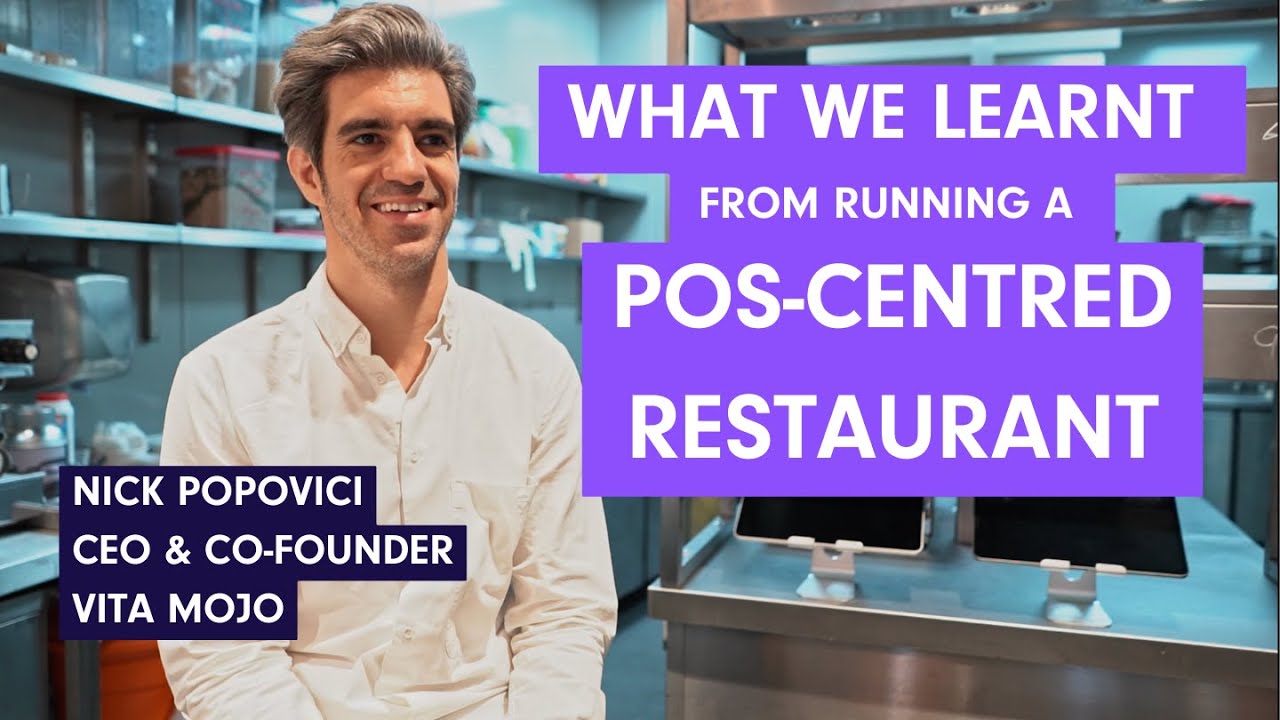
His own account of running Vita Mojo’s restaurants describes the same friction. A collection of separate products looked sensible on paper. In practice, maintaining menus took extra labour and the kitchen had to contend with multiple screens. The team developed its own system to connect digital ordering, the till, kitchen management and reporting.
This helps explain the kind of founder he became in public. His arguments keep returning to processes: where information goes, how often it gets entered and what the next person has to do with it. There is little romance in eliminating a second menu edit. For someone responsible for seventy-five of them, however, romance may be overrated.
The money went behind the screen
In June 2022, Vita Mojo announced a $30 million funding round led by Battery Ventures. Its stated plans included developing product functionality, improving data and reporting, and expanding its client success, product and engineering teams. European growth was part of the plan. Battery’s Morad Elhafed and Zak Ewen would join the board.
It was a different proposition from the one that had brought diners through the doors. Vita Mojo was selling an integrated platform for ordering and restaurant operations. A kiosk or a phone could provide the customer’s entrance. Behind it, orders from different channels needed to travel into a process the restaurant team could manage.
Popovici’s work with LEON and payments provider Adyen showed another part of that thinking. A restaurant might recognise a familiar face while knowing little about how that person moved between an app, a kiosk and another branch. Connecting ordering and payment information gave the business a clearer view of repeat visits across those encounters.
For Popovici, the commercial argument extended beyond installing screens. The tools changed what an operator could understand about the business and how staff could spend their time. His interviews discussed technology enabling employees to make decisions and move towards more worthwhile tasks. Software had to be considered alongside the work it rearranged.
He had been making that case in public for several years. In a 2019 Hospitality Mavericks conversation, Popovici discussed restaurant businesses becoming more technology-led, including the possibilities for customer control and for employees to make better decisions. In 2020, he joined David Haimes for the Henley Coaching Partnership’s Business Owners Forum. The setting put the restaurant-software business into a conversation about running and growing a company.
His 2022 Digital Titans discussion returned to data, back-of-house work and the challenges of introducing technology. Across these appearances, his subject kept extending beyond the purchase of a product to the organisation around it. For a founder selling software, this was consequential ground to occupy. A restaurant could buy a tool and continue operating much as before. Getting more from it required attention to how people used information, divided tasks and responded when the next order arrived.
Three countries, one familiar sandwich
In May 2024, Vita Mojo announced that Subway had appointed it to roll out self-order kiosks in the UK, Finland and Germany. The announcement followed an almost three-year process in which Subway had searched for a partner. For a company that had started by operating its own London restaurants, the customer offered a different scale of responsibility.
The project included kitchen management, kitchen display screens and order-ready screens. Popovici described close collaboration with Subway to fit technology developed for it into its existing systems. That detail matters to his career: the product now had to work inside another company’s established habits, rather than inside restaurants his own team controlled.
The customer’s tap was only the beginning. A sandwich still had to be prepared, an order identified and a customer or delivery driver directed to collection. Popovici spoke about reducing the need for staff to work across multiple tablets and paper checks. Even a very large partnership came back to the hand-offs he had encountered as an operator.
- 2015
Vita Mojo begins in London.
- 2017
Crowdfunding supports plans to license the software.
- 2022
A $30 million round backs the software business.
- 2024
Subway rollout announced across three markets.
- 2025
Charlie Horrell succeeds Popovici as CEO.
The change after the launch
By January 2025, Popovici was writing about a problem that outlives any installation: making operational change last. Hospitality businesses constantly deal with new demands, new channels and interruptions. A quick solution can resolve the immediate problem while creating another somewhere else. His advice was to define goals and measures before launching, then examine what happened afterwards.
He asked operators to consider the wider operation when changing a single process. A new ordering channel affects a kitchen. A menu change affects more than its appearance on a screen. The question becomes how the parts work together, and whether a fix leaves the business better prepared for the next interruption.
“So, to make a change last, remember to test, iterate, and think of the big picture.”
Nick Popovici · January 2025
That argument has a particular resonance beside Vita Mojo’s history. The founders had changed the nature of their own company after seeing what other operators wanted. Later, they sold tools that asked those operators to change familiar routines. Popovici’s writing acknowledged the continuing effort involved: a launch gives people a date to celebrate, while the work continues the following morning.
On 14 January 2025, Vita Mojo announced another change. Charlie Horrell would succeed Popovici as CEO. Horrell had previously led Imagen, the cloud media-management business acquired by Reuters in 2023. Vita Mojo said it was entering the handover with 40 percent year-over-year growth and more than 150 restaurant and hospitality brands using its technology.
“After nearly a decade with Vita Mojo, I feel very proud of everything we have accomplished,” Popovici said. The pronoun was apt. Catoiu, the restaurant teams, the software builders, customers and investors had all participated in the company’s changes. A founder can supply the starting idea; a working business soon contains other people’s ideas about what it should become.
Popovici’s decade is most revealing when viewed through that willingness to change the offer. He began with meals that customers could adjust to their liking. He helped build software that other restaurants could use in their own operations. Along the way, the question moved from what a diner wanted on a plate to what an operator needed to get the plate out. Lunch had supplied a rather thorough brief.