Mohamed Al Fayed went looking at a cloud kitchen with an investor’s interest and a retailer’s eye. He was considering a business where several food brands could share the same production space. What caught his attention was the work between the incoming order and the outgoing meal. The digital customer had arrived. Inside the operation, people were still bridging the gaps between systems.
He recognised the pattern. At Al Tayer Group, he had worked on moving retail businesses into an economy where a customer could browse, buy and expect fulfilment without entering a store. A restaurant order presented a related challenge, with rather less tolerance for delay. A handbag has some patience. Dinner has a cooling curve.
That encounter helped redirect his career. Al Fayed left his corporate role and became a co-founder of Grubtech, which launched in October 2019. His fellow founders were Mohamed Hamedi and Omar Rifai. Before they built the software, the founders spent time in restaurants and cloud kitchens, watching how the work actually happened.
There is a useful distinction in that sequence: familiarity helped Al Fayed notice the problem, while observation helped the team understand its particulars. The opportunity sat inside an ordinary working day. Someone had to follow the order far enough to see it.
A late bloomer, with a retailer’s eye
Al Fayed has described himself as a late bloomer. His early work included restoring cars, before merchandise planning at Macy’s gave him a more durable professional direction. The route was less tidy than the familiar founder biography that begins with a childhood revelation and proceeds, without a wrong turn, to a funding announcement.
Merchandise planning is an instructive background for someone who eventually builds operational software. It requires attention to the relationship between what people want and what a business can supply. A sale looks simple from the customer’s side. From the business’s side, it belongs to a system of decisions about stock, timing, capacity and money.
His career took him from Macy’s to Al Tayer Group, where he worked for 12 years and served as senior vice president of omnichannel. He led launches of Gap and Mamas & Papas in the Gulf and helped launch the luxury e-commerce business Ounass. His work on Ounass included a two-hour delivery proposition, bringing the physical consequences of an online promise into sharp focus.
Luxury retail may seem an improbable apprenticeship for restaurant software. Yet both ask a business to make an attractive digital experience survive contact with warehouses, staff and delivery schedules. The photograph sells the promise. The operation has to keep it. Al Fayed’s move across industries makes more sense when viewed from that side of the counter.
“I became more resilient, and with resilience came a risk appetite.”
Mohamed Al Fayed, 2024
He connects his willingness to take risks with accumulated failures. In his account, resilience developed through repeated difficulty, and his decisions became bolder over time. The emphasis falls on what experience changed in him. Leaving an established role then becomes part of a longer development, rather than an isolated gesture of confidence.
That is an appealingly unromantic explanation of entrepreneurship. You can become better at tolerating uncertainty through practice. There is no need to imagine that the person making the leap has never minded the height.
Dinner is an integration problem
The founding team brought different forms of experience. Al Fayed knew retail. Rifai came from private equity and hedge funds. Hamedi brought a technology and logistics background. The combination helped them examine a kitchen as both a business and a flow of work.
Consider the basic problem they addressed. An order arrives through a delivery platform. It needs to reach the restaurant’s point-of-sale system, the right preparation station and the people arranging dispatch. Menu changes must appear wherever customers order. Each separate channel increases the coordination required behind the scenes.
Grubtech centralises menus and brings orders into a connected workflow. Its technology routes orders and supplies operational data. In a shared kitchen running several brands, this matters because the customer sees one menu while the operator manages a much more complicated collection of responsibilities.
The ambition becomes clearer if you resist the temptation to start with the dashboard. A useful dashboard follows useful connections. Otherwise, it risks becoming a very handsome place to discover that the information you need is still somewhere else.
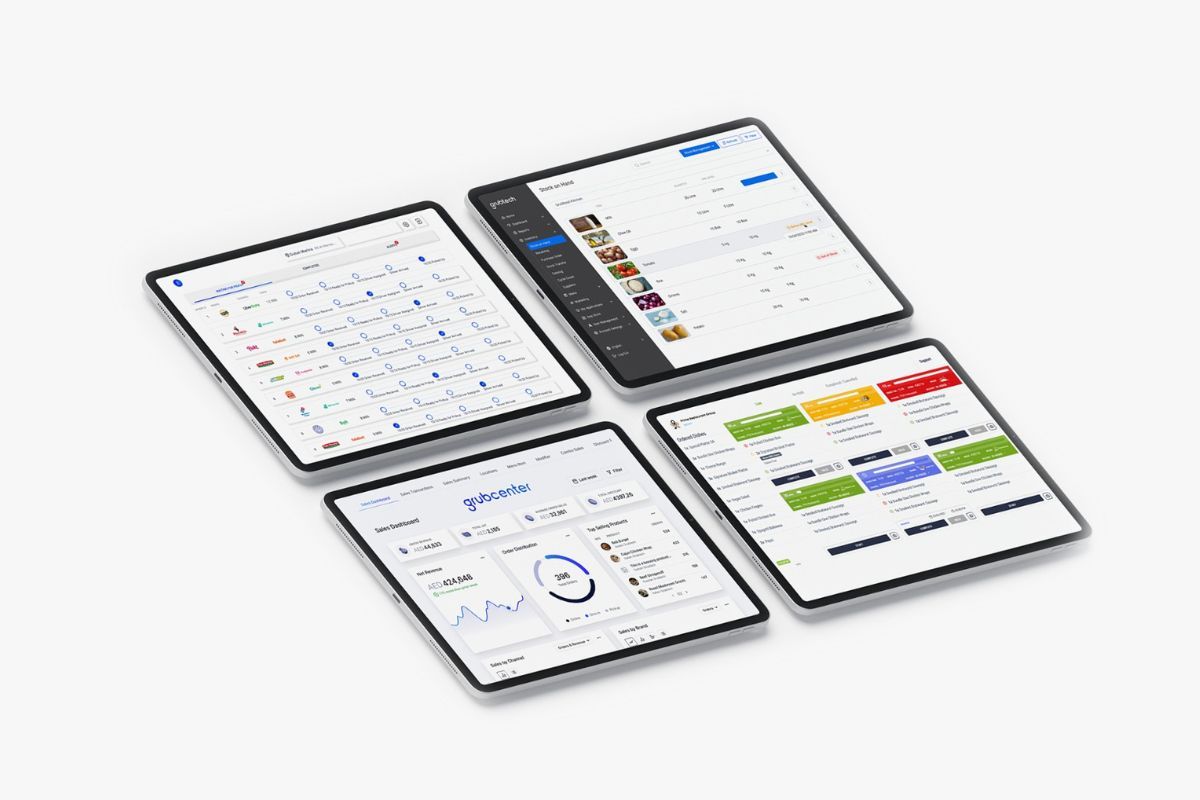
In 2021, Al Fayed discussed a partnership with Foodics designed to connect its restaurant customers with delivery aggregators. He also described Grubtech’s work with talabat on a remotely controlled smart-locker system at Expo 2020 Dubai. The projects reached different parts of the same journey, from the order entering a restaurant’s software to the customer collecting food.
These connections also explain why replacing every existing system is an awkward sales proposition. Restaurants have already made investments and trained staff. In its 2024 funding announcement, Grubtech described enabling customers to retain elements such as their point-of-sale system while adding new digital channels. The practical appeal lies in making the pieces cooperate.
Al Fayed has also acknowledged the constraint imposed by restaurant margins. Food, labour and rent leave limited room for experiments with technology. His stated approach is to make the value exceed the cost. That supplies a stern test for a software business: the operator has to see a reason to pay, even when the product’s broader possibilities are interesting. The kitchen’s budget gets a vote.
The company had to learn in public
By February 2020, Grubtech had two restaurants signed up. For a business that would later talk about international reach, that is a useful starting point to remember. Two customers provide a very particular kind of education. Their problems have names, and their complaints are difficult to hide inside an average.
Early adopters received free trials. That gave restaurants a way to use the system without immediately making a financial commitment, while Grubtech learned from deployment in real operations. Al Fayed also expressed a wish that he had released the product sooner to collect feedback earlier.
There is a tension here familiar to anyone responsible for putting a product into use. You want it polished enough to deserve the customer’s time. You also need the customer’s experience to discover what polishing should mean. Al Fayed’s account puts the learning relationship at the centre of that decision.
The team itself was geographically distributed. In a 2023 account of hiring, he described development centres in Sri Lanka and Istanbul, with headquarters in Dubai and shared services in Cairo. He recalled recruiting seven engineers at the beginning and using outsourced coding to cover an early capacity gap. Building the organisation required its own set of connections.
Fundraising supplied another apprenticeship. Al Fayed described learning to adapt his pitch to investors with different interests and motivations. Years in corporate leadership did not make that experience automatic. A founder can bring substantial experience into a new company and still find whole parts of the job waiting to be learned.
His curiosity extends to other businesses. Asked which startup he wished he had started, he chose Airbnb, drawn to the way it made unused space accessible through a marketplace. It is a revealing choice beside the cloud-kitchen opportunity: both invite a closer look at physical capacity and how digital systems can organise access to it.
A bigger map, the same handoffs
Recognition and financing followed. Grubtech ranked 48th in Forbes Middle East’s 2022 list of MENA’s most funded startups. That profile reported operations in 20 countries and more than 2,500 restaurants served. In May 2024, the company announced $15 million in Series B and Series A extension funding. Jahez Group’s venture arm led the Series B, with existing investors Addition and Oryx Fund participating.
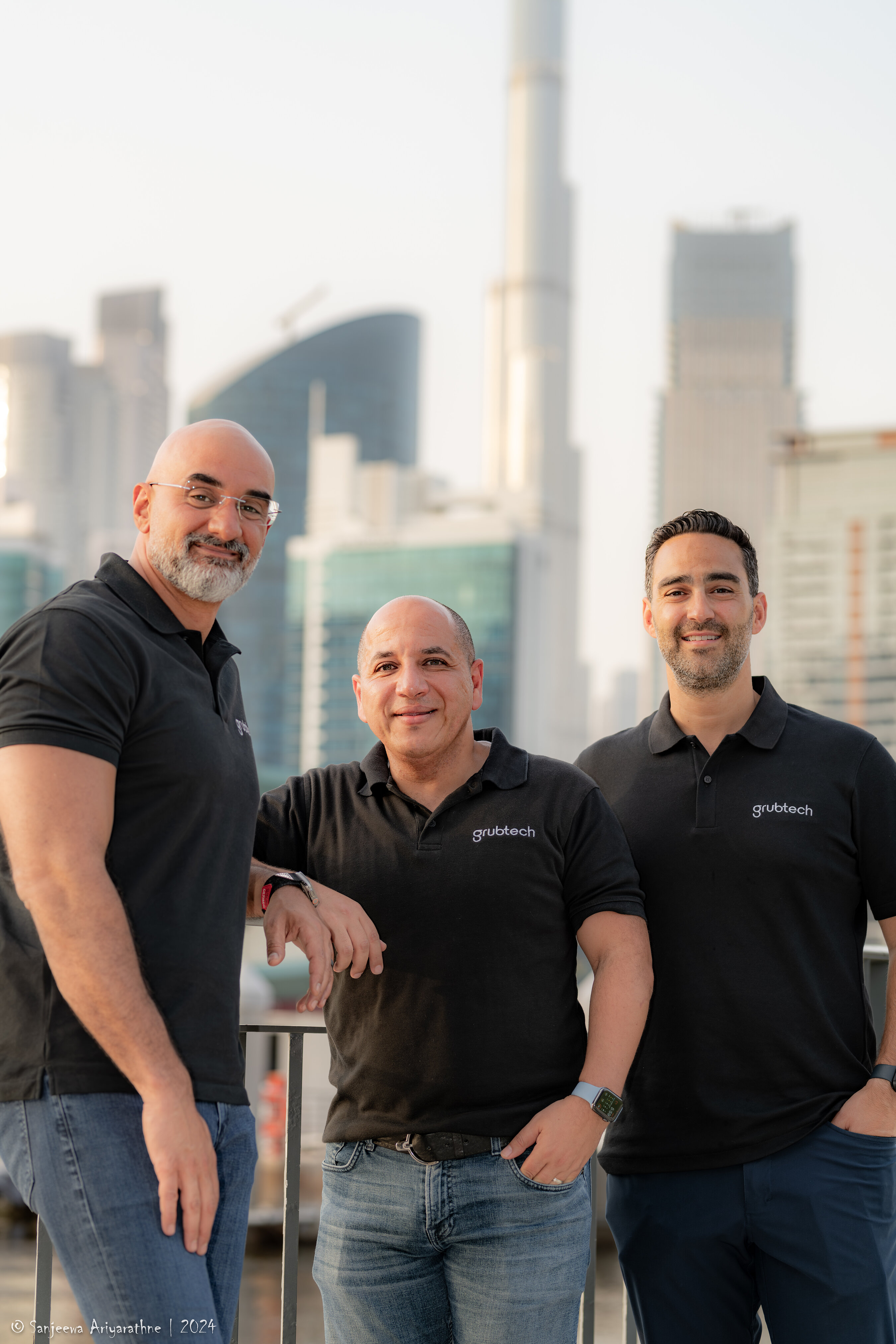
The funding was intended to accelerate expansion into Saudi Arabia, Europe and the UK. By October 2026, Grubtech’s own figures described customers in 28 markets and more than 14,000 active locations. Its 2026 timeline also reported processing over 350,000 orders daily. Those are company-reported measures of a business that began by observing individual kitchens.
Each order still has to make the journey from customer to fulfilment.
Scale changes the founder’s responsibilities. The original problem remains recognisable, but every additional market brings more systems and operating habits to accommodate. A promise to simplify work becomes harder to keep as the number of circumstances grows.
Al Fayed’s recent public writing returns to precisely that difficulty. He argues that integrations, customer trust and experience in live operations retain value even as AI makes software faster to build. He describes Grubtech’s integration layer as the product of years of unusual cases, deployments and partner relationships. The emphasis is on what happens after an impressive demonstration meets a complicated customer.
His leadership language has a related emphasis on giving people room to work. He advocates autonomy for colleagues and learning from the people around him. Running a company whose product connects systems requires a founder to accept that the necessary knowledge is distributed too.
The arc of his career runs from merchandise planning through luxury delivery to restaurant operations. Throughout it, the interesting question sits just beyond the transaction. What has to happen now? Who needs the information? Which piece of work has everyone quietly learned to do by hand?
A cloud-kitchen visit gave Al Fayed a new setting for those questions. Grubtech gave him a company through which to pursue them. The customer still wants dinner to arrive as promised. Somewhere behind that modest expectation is the retailer who kept following the order.