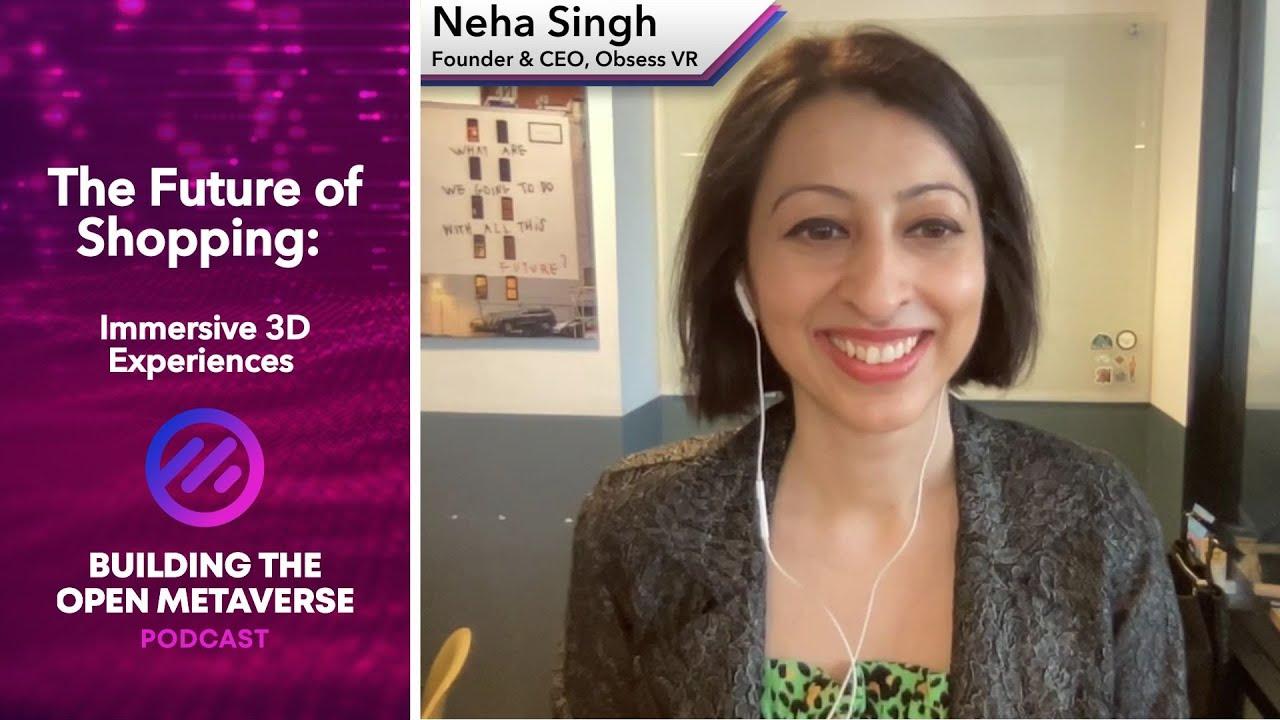
Neha Singh wanted to work in fashion. She was already a software engineer at Google, with a graduate computer science degree from MIT, so she approached the ambition with a sensible experiment: take fashion design classes. There was one awkward discovery. She loved the clothes. Drawing them proved rather less agreeable.
A sketchbook can be a surprisingly efficient career adviser. Singh kept the fashion and reconsidered the job. She moved into luxury e-commerce, then became head of product at Vogue. Eventually, she built Obsess, a company that gave brands virtual shops people could explore. The would-be designer found a different way to make a collection look interesting.
Her career has repeatedly returned to the distance between making something and helping another person encounter it. At Vogue, the problem appeared in small rectangles. A brand could spend years developing a visual language, then arrive on a phone as a few product thumbnails. Singh thought something had gone missing on the journey. She was prepared to build the missing part.
A sketchbook beside the code
There was considerable engineering before the virtual shop windows. Singh earned her undergraduate computer science degree at the University of Texas at Austin, followed by a master’s at MIT in 2005. Her thesis concerned an architecture for distributed systems. Her public education record places her in MIT’s Advanced Network Architecture group, working as a research assistant. Fashion had some competition for her attention.
At Google, where she worked from 2005 to 2010, she contributed to AdWords and Google News. These were products whose usefulness depended on helping people handle information. An advertising dashboard and a fashion website may have different dress codes, but both require decisions about what appears, how it is arranged and what a user can do next.
AHAlife, the luxury-commerce startup where she led product and engineering from 2010 to 2012, supplied a smaller-company education. Building a product meant living closer to the business around it. The experience put her technical work alongside the commercial realities of selling things online. It also gave her a place to apply the fashion interest that had survived those drawing classes.
What Vogue could see that a grid could not
Vogue brought her into a business that understands presentation down to the placement of a sleeve. As head of product between 2012 and 2016, Singh worked on the magazine’s digital business, including content, advertising products and distribution. Vogue.com and Vogue Runway were among the products she helped launch. Fashion became a daily product problem, with an audience attached.
The advertisers mattered, too. Working with luxury brands let her see the gap between their ambitions and the formats available online. A fashion show offered movement and atmosphere. A shop arranged objects into relationships. The mobile shopping page offered rows. Someone had taken an industry devoted to appearances and handed it a filing cabinet.
Singh’s objection was specific. Search and filters are useful when a shopper already knows what to buy. Browsing serves a different appetite: seeing what sits nearby, finding an unexpected combination, learning why a collection exists. She wanted brands’ own websites to accommodate more of that behaviour, instead of leaving discovery to physical stores and social platforms.
“this is how I want to shop”
Neha Singh, recalling her first Oculus experience
Trying an Oculus headset gave that dissatisfaction a possible shape. Singh could imagine the feeling of entering a shop without making the trip. Obsess, founded in 2017, pursued that idea. A virtual environment could carry a collection’s setting as well as its price tags. For someone with her particular combination of interests, it was a problem worth leaving Vogue to solve.
The door was too narrow
The early company built shopping experiences for Google Daydream and Samsung Gear VR. These were the phone-powered headset days, when visiting a virtual environment involved a fairly conspicuous piece of preparation. A retailer could commission a new kind of shop and still face an old problem: too few people could get inside.
Singh later described the audience plainly: “the reach was very low”. Obsess shifted toward a web platform. A browser link could travel through the channels brands already used. Someone could follow it from a social post, a message or an email and arrive without installing an app. The invitation became much easier to accept.
That change deserves space in a founder’s story because it required adjusting the delivery of the idea. The headset had helped Singh imagine a different shopping experience. The browser helped bring it to an audience. Keeping those two things distinct required judgment. A beautiful room is of limited commercial use if the customer needs special equipment to find the entrance.
- 01Follow
a link - 02Explore
the space - 03Choose
a product - 04Continue
to checkout
A browser-based experience connected to the retailer’s commerce system.
A room needs a working till
The customer relationships became an education in their own right. In 2017, Obsess joined the New York Fashion Tech Lab, where it came to the attention of sponsor Vera Bradley. The resulting project gave a young company a connection with an established retailer. For a founder introducing an unfamiliar format, a customer willing to try it carried practical weight.
By June 2021, Obsess had raised a $10 million Series A led by Jump Capital, with the Venture Reality Fund and WXR Fund participating. Total funding then stood at $13.4 million. The plan included product development and expansion into categories beyond fashion and beauty. Singh’s shopping complaint was acquiring a broader customer list.
Coach used an Obsess virtual showroom that recreated its Fifth Avenue flagship for wholesale buyers. Buyers could encounter collections without travelling to the store; global teams could also use it for visual merchandising guidance. This was a useful extension of the idea. A digital environment could help the people selling the collection as well as those buying it.
Other projects allowed more theatrical freedom. Describing Crate & Barrel’s experience in 2024, Singh talked about a version of its New York Flatiron flagship with rooms to explore, colour schemes to change and products that could be added to a cart. The attraction lay in seeing objects together. A sofa had surroundings. The tableware had somewhere to go.
She also described a Taylor Swift virtual shopping environment built around a Christmas tree farm. Retail architecture could now follow a story rather than a lease. For the engineer who had once considered fashion design, these projects joined several satisfactions: software, visual choices and a working transaction at the end. Even a fantastical shop still needed to sell the merchandise.
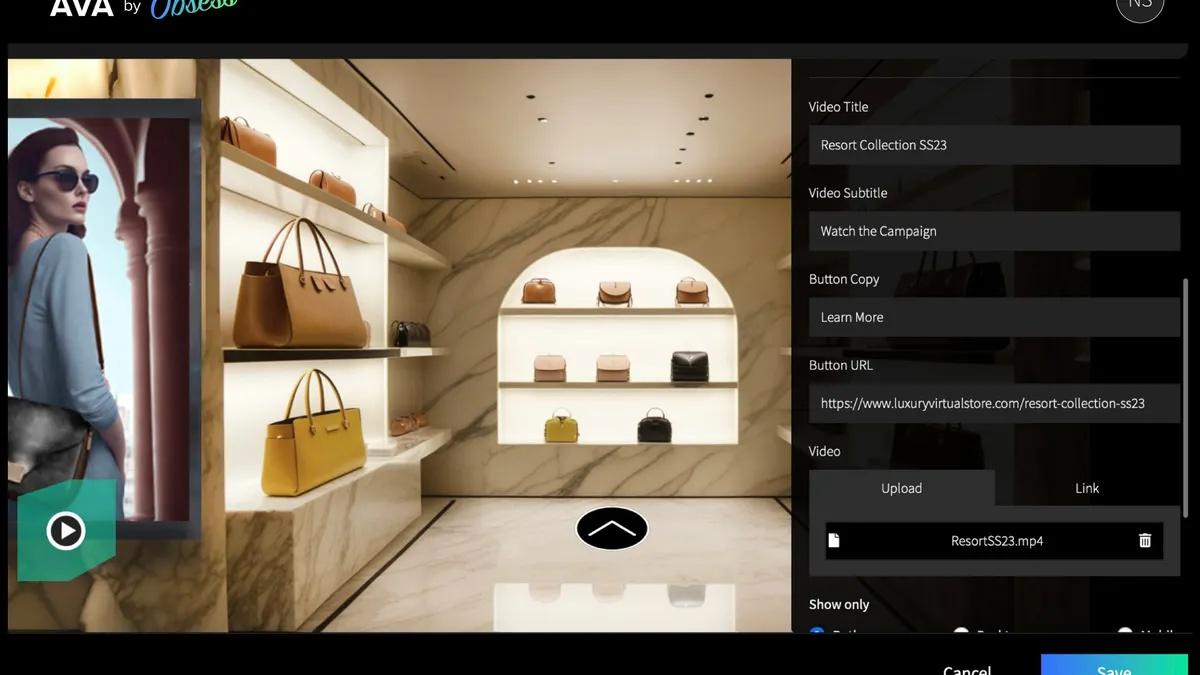
Ava, introduced in 2023, put more of the setup into brands’ hands. Retail teams could manage elements of virtual stores themselves. That changed the relationship between the founder’s original idea and its daily use. A campaign needs revisions. A new collection arrives. Software earns its place partly by making those ordinary jobs manageable after the launch-day excitement has passed.
Launched by Obsess at the January 2025 acquisition announcement. A count of projects, rather than individual customers.
The judgment behind the optimism
Singh received a place on Inc.’s Female Founders 100 list in 2022. Recognition made her work more visible, but her account of running a company is often concerned with the less photogenic business of deciding what to do. Outside advice could conflict. She learned to give weight to the knowledge accumulated through working on the problem herself.
Her phrase for it was to “trust my instincts”. That sits alongside her emphasis on energy, positivity, persistence and a tolerance for risk. These are her descriptions of what helps her function as a founder. The interesting detail is how they coexist with a willingness to change course. Obsess’s browser move gave the long-term ambition a more usable route.
When the acquisition arrived, she named the people who had helped carry the company: senior colleagues including Andee Olson and John Mann, and supporters including Martina Welkhoff and David Asper. Her announcement thanked customers for trusting a startup to represent their brands. A virtual world could look like an individual’s vision while depending on a very real group of people.
Another way to disappear online
On January 23, 2025, Infinite Reality announced its agreement to acquire Obsess. Singh joined as chief innovation officer, with a remit to develop new products for digital interactions. By then, the company’s work spanned hundreds of experiences and customers including Ralph Lauren, L’Oréal, J.Crew and Disney Music Group. An irritation with the shopping grid had become a business someone else wanted to buy.
Her current venture, Stellar AEO Labs, turns to AI search. The company helps businesses improve how they appear in generated answers, a field commonly called answer engine optimization or generative engine optimization. Its work concerns clear content, technical accessibility and the evidence that helps a business be understood. Singh is its founder and CEO.
The continuity is worth considering. At Obsess, she wanted a brand’s character to survive the journey onto a screen. At Stellar, she is working on what survives when an AI system summarizes a business for someone asking a question. The scale has contracted from a room to a few sentences. There is still a person at the other end, trying to discover something.
She has spent a career attending to what an interface leaves out. A product grid omitted atmosphere. A headset limited the audience. An AI answer introduces another set of decisions about what gets seen and understood. The drawing classes did not produce the fashion designer Singh once imagined. They helped send an engineer toward a subject she has kept finding new ways to work on.
Keep following the thread
Conversations, projects and places to find her work.