The bed was taking too long. Sylvana Ward Durrett had spent years working on the Met Gala, an occasion requiring rather more coordination than furnishing a child’s bedroom. Yet here she was, discovering that the internet could offer an abundance of beautiful things without offering an agreeable way to buy them. A parent could admire a photograph, track down a brand, find its website, and begin again somewhere else. The child, meanwhile, continued to grow.
That domestic irritation helps explain Maisonette, the children’s marketplace Durrett launched with her former Vogue colleague Luisana Mendoza Roccia in March 2017. Clothes, toys, furniture: the necessities were scattered, and the work of bringing them together fell to the shopper. Durrett wanted a destination that could make the choices feel considered and the shopping less laborious. For someone trained to put complicated productions together, the gaps between those websites were a fairly interesting problem.
Eleven interviews and the wrong outfit
Her own entrance into fashion had an awkward costume change missing from it. After college, Durrett went through roughly eleven interviews at Condé Nast before discovering that the final conversation would be with Anna Wintour. She had dressed for a corporate interview. She remembered the outfit with horror. Anyone hoping for a story in which the future fashion executive arrives perfectly turned out must settle for a more recognizable beginning.
A Princeton graduate in English literature, she started in Wintour’s office and went on to work as an accessories editor. Bags and shoes gave way to events; events broadened into special projects, with sponsors and their arrangements becoming part of the job. Over a fourteen-year Vogue career, she learned to connect an idea to the people and decisions required to deliver it.
Durrett credits Wintour’s example with teaching her to be resourceful and persistent. Fashion supplied the setting, but the daily instruction concerned work: pursue a solution, protect the brand, keep moving. When she began a company of her own, those habits came along. The wardrobe from her interview was easier to leave behind.
An evening on one sheet
The Met Gala makes an unusually photogenic case for administrative competence. Durrett’s preferred tool was a one-sheet: a running list following the sequence of the evening, reviewed repeatedly as the event approached. Begin with the tent and work through what each part requires. An evening admired for its surfaces depended on somebody thinking through its order.
“I’m a big fan of a one-sheet.”
Sylvana Ward Durrett, on event planning
Even the invitation had a production story. Nearly fifty options could be considered before the final choice. Guests had already confirmed; the printed invitation offered their first glimpse of the occasion’s appearance. Taste was being expressed through a small object that arrived before the party itself.
Durrett also helped open that production to a camera. Director Andrew Rossi has described being contacted by her, then meeting Wintour, about a film showing the Costume Institute’s work. The resulting documentary, The First Monday in May, followed the 2015 exhibition China: Through the Looking Glass and the gala surrounding it. Durrett was a producer as well as a participant.
A documentary gives the audience access to the preparations that a successful occasion usually conceals. The exhibition, the event, and the people making them happen become part of the same narrative. Durrett’s place in that project makes her later entrepreneurial turn easier to understand: she had experience bringing a finished public experience out of a great many private tasks.
The nursery has an editorial problem
Her children’s shopping experience presented another collection of unfinished tasks. She and Mendoza Roccia had both become mothers and both wanted to go into business together. They knew the frustration of searching across separate sites. Their professional familiarity gave the partnership a history before it acquired a storefront.
At Maisonette, their selection could include established names as well as smaller shops and newcomers. Durrett described a simple buying standard: they wanted products they would put on their own children. That gave curation a personal reference point. The retailer’s judgment was being tested against life at home.
The ambition also extended beyond a rack of clothes. Durrett wanted editorial material, introductions to people and organizations, and help with decisions. A parent might arrive needing an item; the surrounding experience could offer ideas about choosing it. The early company paired buying with that interest in guidance.
At the May 2017 launch celebration, Wintour was among the guests, alongside people including Keri Russell and Maggie Gyllenhaal. The founders’ old working world had come to meet the new business. The occasion offered a neat picture of their connections, although the original problem remained wonderfully ordinary: shopping for children ought to be easier.
Durrett’s own rooms supplied a less formal picture of the same relationship. An Irving Penn monkey print given to her by Wintour found a place in her son’s bedroom. Art from an adult working life could move quite comfortably into a child’s space. The room could accommodate bright colors and the interests of its inhabitant, rather than behaving like a solemn miniature drawing room.
Her decorating advice was equally accommodating to reality: measure before ordering. A photograph may persuade the eye, but it cannot negotiate with the dimensions of a room. For all the attention to taste, there is still a tape measure somewhere in this story.

The school run gets a vote
A founder serving families has some particularly candid observers at home. Durrett has described launching Maisonette while nine months pregnant, and she has repeatedly spoken about allocating time deliberately between work and her three children. In one account, leaving work by five helped make room for the family evening. She recommends continuing to learn as interests develop, a sensible attitude in a household where the customers keep changing.
The small details are more telling than a tidy theory of balance. She treasures a cameo brooch from her grandmother. Backgammon has a place in her beach bag. An annual family visit to Montego Bay gives everyone a familiar destination. These are recurring pleasures rather than another set of professional milestones.
School mornings have their own production schedule. In 2022, Durrett described an intended wake-up at 7:15, breakfast at 7:30, and a walk to school with her. Her description of the atmosphere was brief: chaos. The precision of the timetable and the looseness of the result will be familiar to anyone who has tried to get several children through a door.
Clothes have adjusted accordingly. Her preferred uniform became jeans, a straightforward top, comfortable footwear, and personal jewelry. She has joked about wanting a little edge, adding piercings while abandoning the highest heels. There is considerable practicality in wanting to look like yourself without making getting dressed the morning’s main event.
When Maisonette expanded its women’s offering, Durrett connected the decision to customer requests and the response to its Mommy & Me category. Versatile clothes suited busy lives. The proposition was close to her own preference: an outfit that could take on another engagement with a change of shoe or bag.
At her Connecticut country property, the family’s hospitality takes a similarly practical form. The farmhouse, barn, and guest accommodation were designed with visitors in mind; the children asked for trundle beds. Durrett grew up in Los Angeles with a large extended family visiting, and she is comfortable with a house that seldom stays quiet. Guests need somewhere to sleep, just as children need somewhere to put their things.
Her pleasures include pasta and red wine at Brooklyn’s Popina, and listening to How I Built This. She has said that hearing other entrepreneurs describe their difficulties makes her own harder days easier to get through. The business is personal enough for her to call Maisonette a fourth child. It also remains work, with problems that no carefully chosen dress can solve.
A company with obligations
Recognition arrived early. Durrett appeared on Inc.’s 2019 Female Founders 100 list. Maisonette had raised a $15 million Series A in 2018. Those are dated milestones, useful for understanding the company’s development without turning an early expectation into a claim about its present performance.
The later record includes a difficult chapter. On April 6, 2026, Delaware’s Court of Chancery largely denied motions to dismiss investor claims involving Maisonette, Durrett, and other defendants. The investors alleged investment-related misrepresentations and other misconduct following a restatement of the company’s financial information. The opinion addressed whether claims could proceed at the pleading stage. It did not establish liability or decide that the allegations were proven.
That proceeding belongs alongside the retail story. A company’s public life includes the experience it offers shoppers and its obligations to investors. Both form part of the work of an executive.
Children who choose for themselves
By August 2026, the original shopping problem had acquired older participants. Durrett and Maisonette president AJ Nicholas introduced Neon Rebels as a marketplace for ages seven to fourteen, launching with more than a hundred brands. The parents who had once chosen baby clothes now had children looking for a say in their wardrobes. The destination aimed to serve that stage between younger children’s ranges and adult offerings.
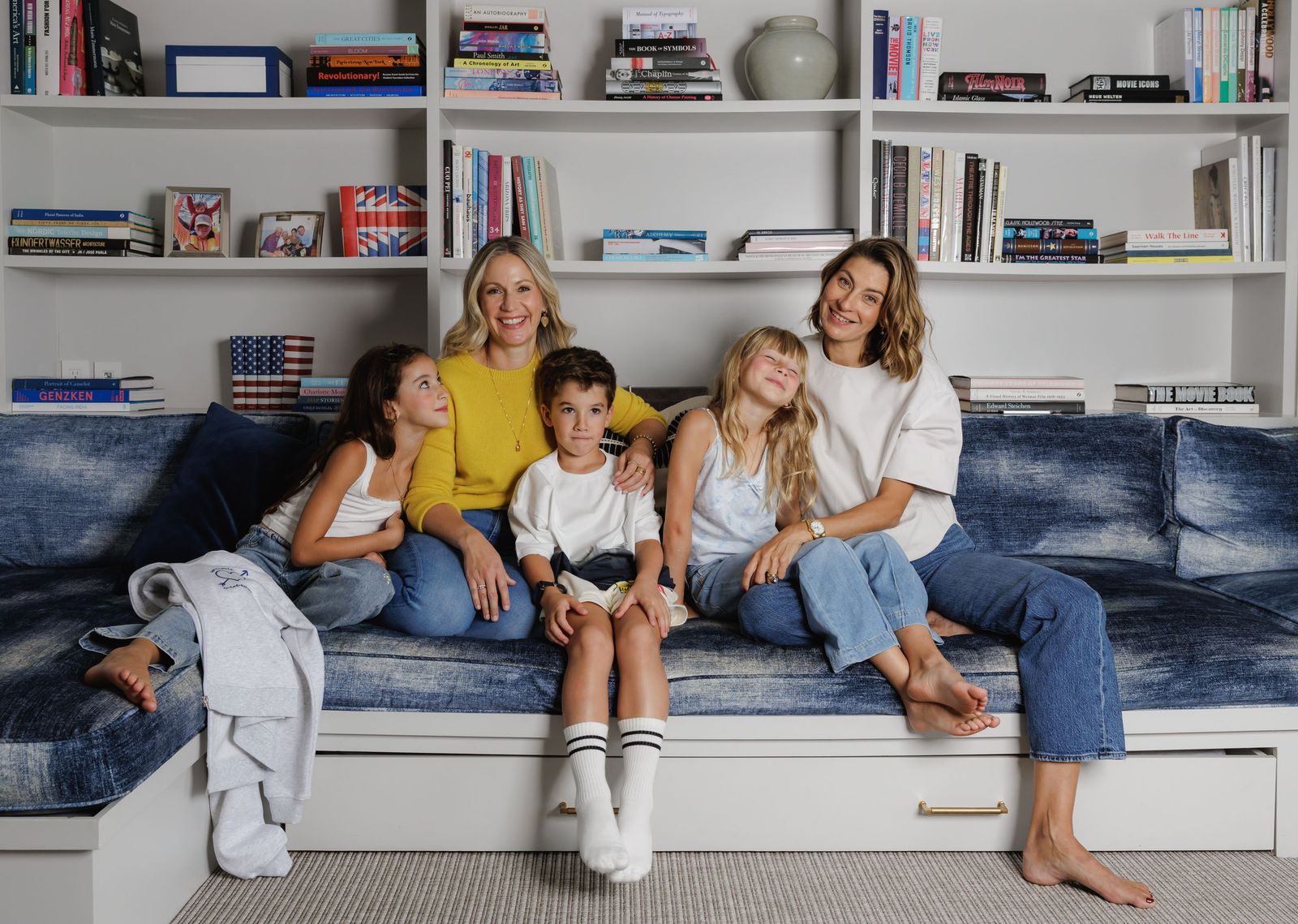
A dedicated marketplace for the years when children increasingly want a say.
Durrett’s own launch announcement emphasized how children’s needs and identities had evolved. The aim was to let them discover their style while giving parents confidence in the selection. The founder was following a change she could observe both in customers and at home.
The name also has a history within Maisonette: Durrett discussed Neon Rebels as a private-label line for older children in 2021. Its 2026 incarnation as a dedicated marketplace gives that interest a broader setting. A child’s taste, once something a parent interpreted, becomes an active presence in the shopping experience.
There is a satisfying continuity here. Durrett began by wanting to reduce the work adults did to find things for children. She now has to make room for children who want to find things themselves. At the kids’ table, the guests have opinions. The person arranging the occasion has learned to listen.