The family garage had become a shipping center. Nathan Yap was in eighth grade, selling inkjet cartridges, and his parents had permitted an experiment that many households would have ended with a firm request to put the car back. A few years later, while he was in college, he persuaded a friend's parents to let used cars occupy their yard so he and his friend could obtain a dealership license. Entrepreneurship arrived with a surprisingly large parking requirement.
Those episodes help explain the founder of SupportZebra better than a corporate title does. Yap remembers parental support as permission to try things, including things that failed. At thirteen, he was already trading currencies before school and following Bank of Japan announcements at night. His parents gave an unusually curious child room to make decisions. Years later, his work would revolve around how much room to give other people.
The copper came before the customers
At twenty-two, fresh from college, Yap went into the Philippine mining business. He describes entering with little understanding of the industry, then securing exclusive agreements to export copper ore and meeting prospective buyers in China. He was learning while moving, with the expensive confidence of someone who had yet to discover how many things could go wrong.
The venture failed when the 2008 financial crisis drove copper prices down. In later conversations about his career, he has treated the episode as an education in risk and timing. His recollection retains a certain affection for his younger self's willingness to begin. The attraction was the chance to work something out in unfamiliar territory. The difficulty was that unfamiliar territory also contained a commodity market.
SupportZebra emerged from a more immediate frustration. Another business needed an offshore team, and the available outsourcing providers left Yap dissatisfied with control, service quality and communication. He helped build the operation he had wanted to buy. That origin matters: his experience of outsourcing began on the customer's side of the arrangement, with expectations that somebody else had failed to meet.
A 2019 awards biography supplies a less commercial itinerary: water sports, beaches and golf. It also records a goal of visiting one hundred countries, with thirty-one reached at that point. That is a dated snapshot of his interests, but it helps fill out the portrait. The travel in his life has included both the pursuit of a buyer and the rather more agreeable pursuit of a beach.
An unpaid bill changes the plan
Building that alternative did not spare him the ordinary hazards of running a service business. Yap has described a period when a major customer refused to pay and payroll became a serious concern. The team tried calls, emails, negotiation and an in-person visit. None produced the result they needed. A growing company can look perfectly busy while its bank balance tells a much less agreeable story.
His response was to redirect effort toward customers who might actually become customers. He contacted friends, clients and other people in his network for referrals. The company emphasized customer experience and flexible service, while reducing unnecessary spending. In his account, five new clients arrived within three months, replacing the missing revenue and doubling it. The episode remains his own recollection of a difficult period, with the lesson located in the decisions he could make.
There is a practical cast to the way Yap tells these stories. The grand entrepreneurial idea soon acquires a training schedule, a collection problem or a management bottleneck. Even a promising service has to survive the week. His public reflections keep returning to the mechanics that make another week possible.
When every escalation reaches the founder
In 2014, Yap says, he was SupportZebra's only account manager. Every client escalation reached him. Every weekly call needed his attendance. The arrangement made him intimately familiar with the business, and it also made his availability a limit on what the business could do. A founder can become an impressively well-informed traffic jam.
The structure he later described was considerably more deliberate. Groups of ten to twelve agents had a dedicated team lead, with quality assurance alongside them. Four team leads reported to an account manager; four account managers reported to a senior operations manager. These were ratios refined through years of running the operation, rather than an assertion that a determined founder could simply work longer.
Yap's description of the operating model, published in 2024.
What interests him is access and accountability: an agent should know where to get help, and a manager should have a workload that allows help to arrive. The numbers make his idea of delegation tangible. Giving people responsibility requires somebody to think carefully about the shape of the responsibility.
The founder takes a seat at dinner
Hierarchy has its uses. Yap also makes an effort to step around it. He has described visiting the Philippines twice a year and holding founder dinners with frontline agents from different accounts. The invitation goes directly to people doing the work. A conversation over a meal gives them a chance to describe problems that may look different by the time they reach an executive report.
He says those discussions have influenced workloads, team structures and workflows. Agents suggest improvements that managers have missed. The appeal is easy to understand: a person answering customers all day has detailed knowledge of what makes the day unnecessarily difficult. Dinner gives that knowledge another route into a decision.
“I never skip our founder dinners.”
Nathan Yap
The same interest in crossing internal boundaries appears in SupportZebra's Sports Fest. Yap describes mixing departments into teams for basketball, volleyball, table tennis and badminton, with esports and other activities also entering the program. Managers play alongside support representatives and trainers meet people from operations. An organizational chart becomes a somewhat less formal document once its occupants have played badminton together.
There are more routine forms of hospitality, too. Yap has described a cafeteria with professional chefs, a shuttle service and an internal employee wish program. He presents these choices as part of keeping a team together. They also make his interest in dinners feel less like an isolated gesture. Food, transport and time together appear repeatedly in his account of what an employer can arrange for the people doing its work.
The job starts before the first call
His recruiting methods extend beyond a vacancy posted online. Yap describes university partnerships, conversations with graduating students and career fairs. SupportZebra has also recruited through mall kiosks and street teams using a branded vehicle. The approach puts the employer into familiar local spaces, where a possible applicant can ask a question or have an interview without first navigating an impersonal application funnel.
Once people arrive, he wants preparation to include practice under progressively harder conditions. He has described two to four weeks of training before live calls, including role-play and support from team leads. Knowing the procedure is one part of the job. Being able to deliver an answer without sounding stranded is another.
Documentation carries some of that burden. Yap calls for process trees, screen recordings of tasks and clear project workflows. His concern is the everyday knowledge that normally passes between nearby colleagues. Remote teams need a way to recover that knowledge without relying on someone happening to overhear the right conversation. A useful instruction should survive the absence of the person who wrote it.
He applies similar attention to the beginning of a client relationship: define the goals, review existing processes, set a week-by-week launch plan, then build the playbooks and train the team. The sequence makes his original frustration with outsourcing recognizable. Clear expectations have to be established before either side can sensibly decide whether they have been met.
A technology enthusiast with people on the payroll
Yap's interest in systems includes the tools that agents use. With Zendesk Contact Center, SupportZebra explored automated call summaries and other ways to reduce manual work. He described one client case where average handle time fell by 29 percent and average order value rose by 18 percent. Those are results from a particular customer implementation, rather than a promise about every account.
The combination is revealing. A shorter call might suggest efficiency; a larger order might suggest a different commercial benefit. Neither number, on its own, tells the entire customer story. Yap's operating interests span the person answering the call, the information available to them and the outcome the client needs. Software enters an organization that already has to recruit, teach and manage.
One customer implementation described by Yap in the Zendesk customer case study.
The route keeps passing through Cagayan de Oro
In August 2026, Lean Solutions Group announced its acquisition of SupportZebra's assets. The business had more than 1,300 employees across the Philippines and Mexico and served more than forty clients. For Yap, joining a larger group opened a new set of possibilities for the people who had built the operation.
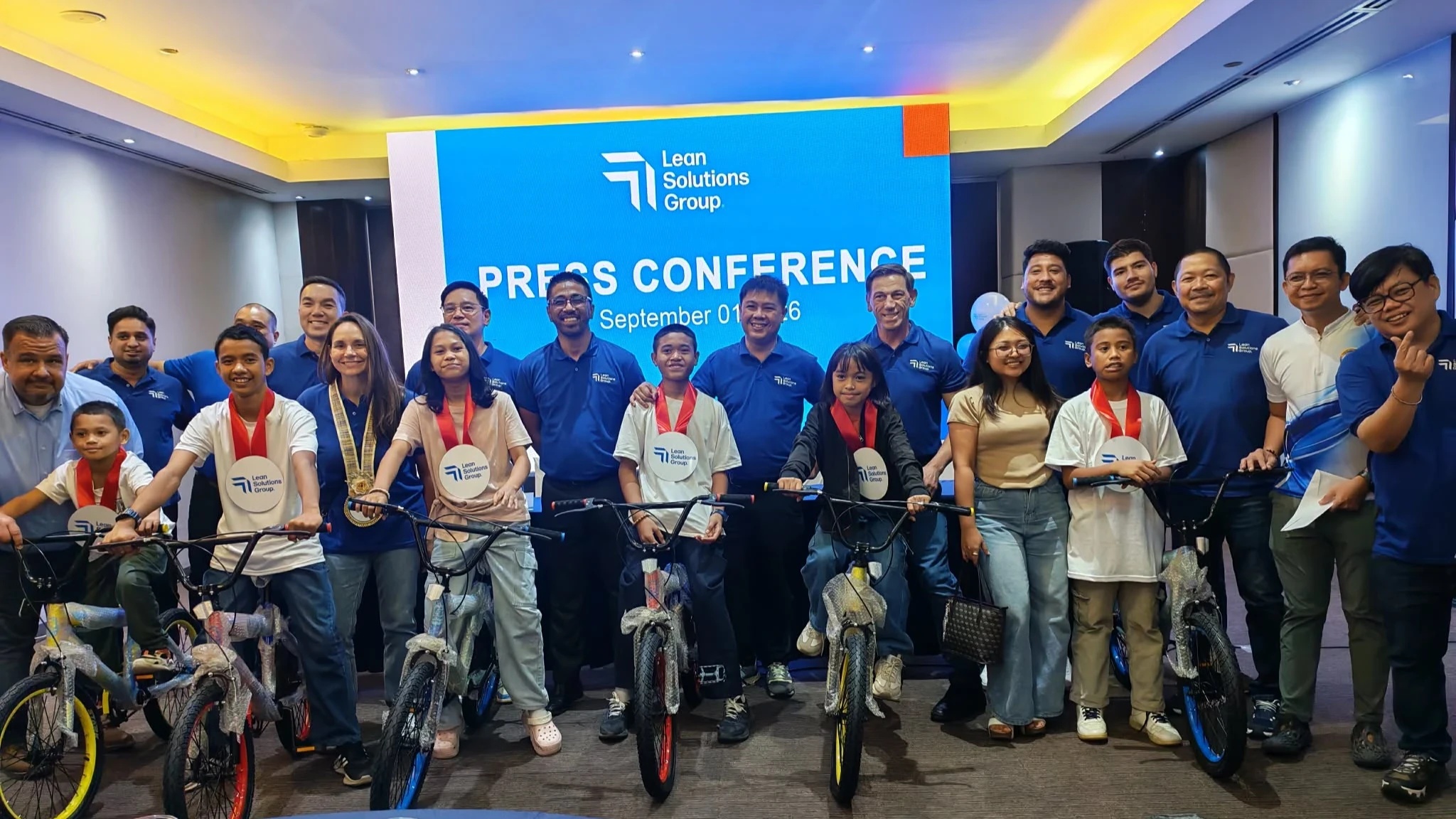
At a subsequent Cagayan de Oro gathering, he explained the family connection. Co-founder Niño Duran is his first cousin. Their parents grew up locally, in Balulang. The city belongs to their family history, which gives employment there a meaning beyond a delivery location on a company presentation.
Yap spoke about helping local employees pursue opportunities across the enlarged group's international operations. The gathering also marked a ₱100,000 contribution to the Calabrian Children's Foundation. His ambition, as he described it, was to expand what this connection to Cagayan de Oro could accomplish. The geography of the company might grow while the obligation to a particular place remained.
On the company website, he uses the title “Head Zebro,” a small act of zoological license in an otherwise fairly demanding job. The joke fits someone whose operating vocabulary includes escalation ratios and dinner conversations. The boy finding room for cartridges and cars became a founder thinking about how to make room for other people's careers. The business has changed hands; that question still gives him work to do.