In 2009, Nate Skinner sat for an interview at Salesforce and gave the sort of answer career coaches quietly remove during rehearsal. Asked why he wanted to move into marketing, he said he did not. He had spent a decade in software sales, sales engineering, management, and product. From that side of the building, he had formed an uncharitable theory: marketers were people who could neither sell nor build. He could do both. A silence might reasonably have followed.
Instead, the conversation became a hinge. Skinner learned a definition of marketing that he could respect: done properly, it creates room for product and sales to operate. It sees where the customer is headed, gives the journey language, and lets the rest of the company build and sell into that space. He joined Salesforce as a product marketer. The skeptic did not merely cross the corridor. He eventually ran marketing organizations.
“Marketing done properly creates space for product and sales to operate.”Nate Skinner
The candor of that interview story is part of its charm, but the useful detail is the decade before it. Skinner had begun in banking. In 1999, as the internet was becoming an ordinary part of business life, he moved into technology as an inside sales representative, pulling prospects from a lead queue in GoldMine. He sold, managed sellers, ran demonstrations as a sales engineer, and became a product manager after an acquisition by Embarcadero Technologies in 2001. His first education in messaging came with a live audience who could object.
The route to the revenue seat
- Before 1999Banking
- 1999-2009Sales, demos, product
- 2009-2019Salesforce, AWS, Campaign Monitor
- 2020-2024Oracle and Onfido
- 2024-2026AffiniPay to 8am
A marketer with field dirt on his shoes
Skinner divides his career into two neat halves. The first ten years were field-facing. The next began in marketing. The line is tidy, but the skills kept crossing it. He spent five years at Salesforce, moved to Amazon Web Services to lead enterprise marketing and executive programs, then joined Campaign Monitor. There he completed another useful rotation: two years as chief customer officer. He returned to Salesforce in 2017 to lead Pardot marketing, occupying the pleasingly recursive job of marketing B2B marketing software to B2B marketers.
That role turned his customer empathy into a public point of view. Marketers faced what he jokingly called a “data-palooza,” yet more data did not automatically produce more understanding. AI could surface segments a team did not know to seek. Analytics could reveal leading indicators instead of issuing an elegant obituary for last quarter. But the practical test remained plain: can an ordinary marketer use the insight, and does it improve a customer's experience?
At Oracle, where he became senior vice president of global marketing for advertising and customer experience, the lesson arrived at home. Working beside his three children during the pandemic, Skinner watched how quickly young users understood devices, services, and interfaces. He called the living room a customer-experience lab. The phrase is executive-speak with socks on. It also made a serious point: companies often underestimate customers, then compensate with broad generational labels and blunt segmentation.
Onfido followed in late 2021. As chief marketing officer of the identity-verification company, he argued for organic search, direct language, and websites that respect a visitor's path. He borrowed a 70/20/10 budget rule from a peer: 70 percent for pipeline and demand, 20 percent for awareness, and 10 percent for experiments. The arithmetic admits what many budget presentations conceal. A marketing team must fund the business it has, the reputation it needs, and a few intelligent surprises.
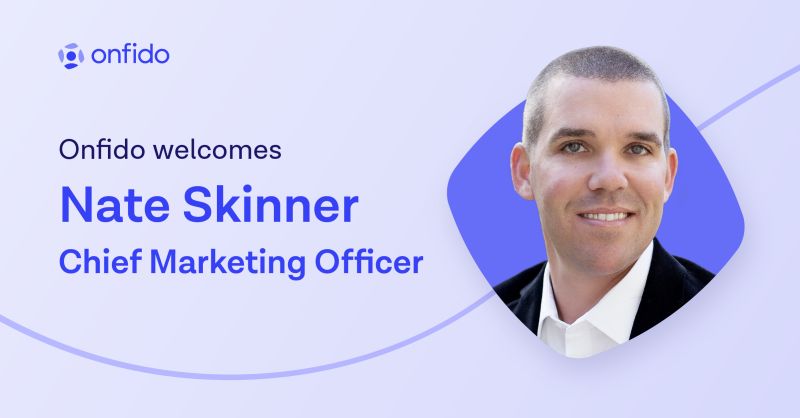
The name on the alarm clock
In September 2024, Skinner joined AffiniPay as chief marketing officer. The attraction was personal as well as strategic. His father, an attorney, had once observed that attorneys, architects, accountants, and engineers may be excellent at practicing their profession without being excellent at running the business. AffiniPay sold the machinery around the craft: compliant payments, practice management, timekeeping, billing, and related services. It helped experts spend more of the day being experts.
There was a naming problem. AffiniPay had grown beyond payments, especially after adding software businesses such as MyCase. Its product brands had useful recognition - LawPay, MyCase, CasePeer, DocketWise, and CPACharge among them - but the parent name kept pointing backward. The company needed an idea broad enough to hold the portfolio without discarding the trust inside each product.
The answer was 8am. It evoked the start of a professional's day, the hour when plans still look possible and the inbox has not yet won. Skinner also enjoyed its small practical virtues: easy to say, easy to spell, easy to remember, and early in an alphabetical list. A grand corporate transformation, aided by the schoolchild logic that numbers come before letters.
“Customers do not buy product lines. They buy outcomes.”Nate Skinner
The rebrand mattered because it escaped the brand department. AffiniPay had payments sellers and software sellers. Under the revised motion, 8am organized people around legal and accounting customers. A seller could discuss the whole system through the work a firm needed to accomplish. More than 100 relationships with bar and accounting associations were connected more closely to geographic teams. The external promise and internal design began to resemble each other.
Skinner prefers “decomplexifier” as a description of his messaging role. The word is not beautiful, which may be why it is trustworthy. Enterprise software grows thickets: platforms, modules, integrations, acronyms, and diagrams with arrows that seem to have private motives. The customer still wants to send an invoice, reconcile a payment, manage a matter, or leave work on time. Decomplexifying means walking back through the thicket until the sentence sounds like the person with the problem.
The 8am operating idea
Keep trusted product names. Organize sellers around professional audiences. Bring payments and practice software into one outcome-led conversation. Make the corporate brand describe the next workday, not the last acquisition.
Faster tools, slower judgment
Skinner's later work at 8am applied the same philosophy to generative AI. Teams used it to reduce repetitive production, accelerate research, prototype messaging, and analyze large bodies of customer conversation. In one example, the company found it had been describing a feature with a term customers did not naturally use. The fix was embarrassingly cheap: call timekeeping “timekeeping.” Machines helped reveal the pattern. A human still had to notice that clarity beat novelty.
He also insists leaders use the tools they ask teams to adopt. Skinner has described bringing a rough AI-made mock-up into a creative review, not as finished work but as a faster way to show direction. He knows enough to stay out of Figma when a designer should be in it. The point is not amateur hour in the name of velocity. It is replacing a week of interpretive waiting with an afternoon of visible choices.
By 2026, his concern had shifted from access to paralysis. Companies could choose among too many models and copilots, then spend months seeking a perfect answer that did not exist. Skinner called the habit “AI perfectionism.” His alternative was disciplined iteration: define guardrails, narrow the scope, keep people accountable, and learn in use. Speed without judgment simply lets a team arrive at the wrong place before lunch.
In January 2026, 8am promoted him to chief revenue officer, joining sales and marketing under one leader. The move completed a circle that began in the GoldMine queue. In September, the company announced David Schielein as its new CRO without detailing Skinner's next post. Job titles move quickly. The durable part of Skinner's record is the connective tissue: seller to marketer, product to story, data to decision, and corporate structure to customer outcome.
The useful suspicion
Away from operating roles, Skinner has mentored growth companies through Endeavor, served on DemandJump's board, supported organizations working to expand opportunity for women in revenue, and returned to Arizona State University for graduate study in history. He calls himself a history nerd. It suits an executive interested in how categories acquire meaning, how companies outgrow old names, and how yesterday's operating choices become tomorrow's friction.
He remains cheerful about technology while refusing to grant it magical authority. In his telling, modern marketing is entering a creative renaissance because ideas can become prototypes faster. Yet identical tools also make it easier for companies to produce identical language. The advantage returns to taste, customer understanding, and the nerve to choose. Old is new again, he says. Experience matters. Words matter. Showing up like a human matters.
Perhaps Skinner never entirely lost his suspicion of marketing. He refined it into a standard. Marketing that cannot help a seller, guide a product decision, or make a customer feel understood deserves the raised eyebrow he brought to Salesforce in 2009. Marketing that can do those things creates space. Then the rest of the business has somewhere useful to go.