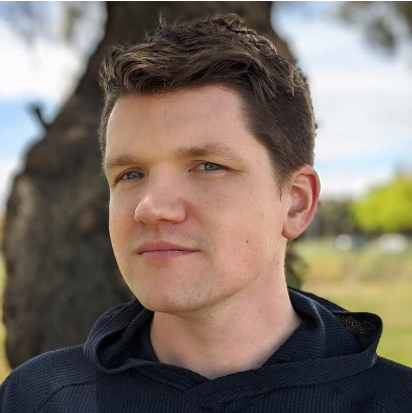
The Fraud-Fighter Who Was First a Fraudster
At 13, Nate Kharrl's ISP called his father. He'd been distributing malware. It was the kind of early chapter most people quietly omit from their LinkedIn summary - and also, it turned out, the most useful education he'd ever get.
Two decades later, Kharrl runs Spec, a San Jose-based fraud prevention platform that Fortune 500 companies trust to guard the billions of dollars moving through their digital infrastructure every day. The company has raised over $33 million, grown to 180 people, and built a technology that analyzes 14 times more behavioral and linking data than the tools it replaced. The backstory matters: you don't understand fraudsters the way Kharrl does from reading reports.
The idea for Spec first crystallized in 2014, when Kharrl and his eventual co-founder Patrick Chen were deep inside the fraud-fighting industry and kept running into the same wall. The tools weren't good enough. They were siloed, reactive, and blind to the kind of multi-session, multi-device behavior that sophisticated fraud operations had figured out how to exploit. The problem was obvious. The moment to act was not - not yet.
That moment arrived in early 2020. COVID-19 locked down physical commerce and sent e-commerce traffic - and e-commerce fraud - through the roof. On March 6, 2020, Spec (then SpecTrust) was incorporated. The timing was less lucky break than informed patience.
The Career That Built the Thesis
Before Spec, Kharrl spent years building a very specific kind of expertise - not in one corner of the fraud and security world, but in all of them. At Akamai Technologies, he managed custom security solutions for the largest financial services firms in the world. At ThreatMetrix (now LexisNexis Risk Solutions), he ran product and customer engagement, building an analytics platform that improved fraud detection by 20% and customer satisfaction by 30%. At eBay, he drove financial crimes management across a multi-billion dollar payments ecosystem.
Each role added a layer. The fraud patterns. The gaps in the tooling. The frustration of security teams drowning in alerts from point solutions that couldn't talk to each other. By the time he and Chen decided to build Spec, Kharrl had a precise diagnosis of what was broken - and a very specific idea about how to fix it.
Spec's Edge: What the Platform Catches
Detection rates among leading brand customers using Spec's platform
The Insight Everyone Missed
Most fraud tools look at a session. Spec looks at the relationship between sessions. When a fraudster rotates devices, changes IP addresses, and cycles through email addresses, the standard tools lose the thread. Spec doesn't - because it's watching behavior, not identity. Behavioral signatures are much harder to fake than credentials. You can buy a new email in thirty seconds. You can't buy a new way of moving through a checkout flow.
That insight - that behavior is the signal, not the credential - underpins everything Spec has built. The platform links sessions across time and touchpoints, building an identity graph from how people actually interact with applications rather than from the data they provide. It's the difference between knowing who someone claims to be and knowing how they actually move. Fraud rings that rotate every surface-level attribute can't rotate the way they click, scroll, and time their requests.
Building the Company
Spec started with a $4.3 million seed round in May 2021, led by Cyber Mentor Fund with participation from Rally Ventures, SignalFire, and Dreamit Ventures. That same year, Kharrl brought the company through Dreamit Ventures' SecureThisSpring accelerator program - a signal of where the company was positioning itself within the security investment ecosystem.
In August 2022, as the company raised additional funding to reach $8.8 million total, Kharrl did something quietly significant: he renamed it. SpecTrust became Spec. The reasoning was both practical ("easier to pronounce," in his own words) and architectural - the simpler name signaled a broader vision. Not just a trust tool. A platform for securing the entire digital customer journey.
The October 2023 Series A - $15 million led by SignalFire, with participation from Legion Capital and Rally Ventures - validated the thesis. SignalFire, known for data-driven investing, put its weight behind a company whose core product is, in essence, a data advantage. The investment arrived alongside a Mastercard selection: Spec was chosen as one of five startups for Mastercard's inaugural Start Path Security Solutions program, a signal that the payments establishment was paying attention.
The AI Resistance Problem
Here's the specific tension Kharrl has been tracking longer than most: AI makes fraud easier. Generative models can create convincing synthetic identities. Automated agents can solve CAPTCHAs, mimic human browsing patterns, and launch account takeover attacks at scale that previously required armies of human operators. The fraud industry, always entrepreneurially inclined, has enthusiastically adopted these tools.
Spec's answer is behavioral fingerprinting that's designed to resist AI-generated mimicry. The argument is that even the most sophisticated AI-powered bot still exhibits statistical patterns that differ from genuine human behavior at the session level - and that by analyzing enough cross-session, cross-device behavioral data, those patterns become visible. The platform is explicitly designed to be "AI-resistant": not resistant to using AI, but resistant to being fooled by AI-generated fraud.
Kharrl appeared on Glenbrook Partners' Payments on Fire podcast specifically to address this - the episode was titled "Bot Attacks Are Getting Smarter - Are You?" It's a question his company is built to answer.
On Podcast Circuits and Public Thinking
Kharrl is a regular on the fraud and security podcast circuit, which is worth noting because it reflects something about how he operates. He appeared on the Fraudology podcast with Karisse Hendrick multiple times - once on "The Newest Generation of Bot Attacks," once on "The Real Challenges in Implementing New Fraud Technology," and once for a bluntly titled episode: "Breaking News: Fraudsters Exploiting 3rd Party Fraud Tools." That last one is particularly on-brand. Most founders avoid that conversation. Kharrl leans into it.
He spoke at RSA Conference, the gathering where the security industry takes its own temperature. The Category Visionaries podcast hosted him in late 2024, where he laid out the company's positioning in his clearest public format yet. These aren't just marketing moves. They're the moves of someone who built conviction through years of industry immersion and still finds the topic worth arguing about in public.
What He's Building Toward
With 180 employees, a Series A in the bank, Mastercard's institutional attention, and a platform that's demonstrably outperforming legacy tools, Spec is past the "will this work?" stage and into the "how big can this get?" stage. Kharrl's stated vision is a behavioral intelligence platform that unifies fraud and security teams across the digital economy - not just a better fraud tool, but the connective tissue between all the tools.
The Trust Cloud concept - where businesses can share data and insights about fraud patterns across the network - represents the endgame. Fraud operates at network scale. Defense, until recently, has been reactive and local. Kharrl is building the infrastructure for defense at network scale.
His co-founders Patrick Chen (COO) and Bryce Verdier built this with him. His leadership team - Charlotte Hembree Capps on finance, Meghan Thomas on product, Jay Cunningham on engineering, Be'Anka Ashaolu on marketing - rounds out a company that's moved from zero to serious contender in the time it takes most startups to figure out product-market fit.
The 13-year-old who distributed malware is now, it turns out, the person who decided to fix the problem he once helped create. The ISP call that alarmed his father turned out to be the first chapter of a very specific kind of expertise. Most people would have buried it. Kharrl built a company on it.