In 2009, a rental car that honked when summoned by an iPhone felt faintly magical. Zipcar’s new app could find a nearby vehicle, reserve it, extend the booking and help a member locate the right car in a crowded street. Nancy Scott, then a company spokeswoman, explained the product with a less enchanted fact: more than a quarter of Zipcar members already carried iPhones. The software belonged on the device customers had in their hands.
It is a small scene from an early mobile-internet moment, and a useful key to Scott’s career. She has spent more than two decades introducing technology while resisting the temptation to make technology the whole story. The object may be an app, a cloud database, a conversational AI system or an agent that completes a workflow. Her question stays wonderfully unfashionable: what does this let a person do?
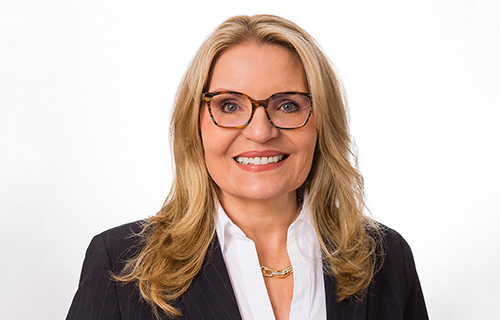
Scott is now Chief Marketing Officer at IntelePeer, responsible for corporate marketing, demand generation, analyst relations, partner and channel marketing, and public relations. She joined in September 2025 after eight years across Nuance Communications and Microsoft. By July 2026, she and her colleagues had helped give IntelePeer’s agentic AI operation a new company, Aqurio, with its own identity and mission.
A career in making the new feel usable
The public trail begins before the smartphone. In 1999, Nancy Scott Lyon appeared as a media contact for Ticketmaster Online-CitySearch, part of the rush to turn local entertainment and tourism into an online utility. By the middle of the next decade, she was running her own public relations practice in Arizona and working with arts and civic organizations. Arizona State University recognized that community partnership with its President’s Medal for Social Embeddedness in 2006.
At Zipcar, the translation job became visible. Car sharing was a bundle of unfamiliar behaviors: reserve a vehicle you did not own, find it on a city block, unlock it without a rental counter, return it on time. The iPhone app removed several pieces of friction. Scott spoke in the vernacular of members, “Zipsters,” and tied the launch to observed demand. When reviewers challenged the app, she answered with adoption data: nearly 140,000 downloads in the first few weeks.
Her later stops changed the stakes and the vocabulary. Ektron sold web solutions. EnterpriseDB worked in enterprise software and open-source databases. Eliza Corporation used data, analytics and multichannel communications to improve engagement. At each company, marketing sat near a technical system that required interpretation. By the time Scott reached Nuance, conversational AI and cloud software had become a corporate story large enough to stretch across industries.
When communications keeps a revenue score
Scott’s work at Nuance offers a rare numerical view of corporate communications. In fiscal 2021, her assignment was direct: tell the company story, help sales through customer success and demonstrate the product portfolio and industry expertise. The surrounding news cycle was crowded, and internal leaders cared about business outcomes more than polished corporate narration. Scott built the plan around that reality.
The team strengthened customer relationships, trained executives to become credible public voices and created a steady pipeline of product, customer and company news. In the first six months, those pieces opened profiles, media introductions and specialist bylines. Across the year, the program generated more than 1,900 pieces of coverage, 90 speaking engagements and 282 blog posts.
The fourth number is the one that changes the interpretation. Scott also ran reference and customer advocacy, and that work influenced more than $33 million in sales. Stories were not decoration around the business. A customer example could help a buyer understand the product, give a salesperson evidence and give a journalist a reason to pay attention. Communications became a system in which each artifact had more than one job.
“We built something from an idea.”Nancy Scott on the launch of Aqurio
Ragan Communications named Scott a Dynamic Do-er in its 2022 Top Women in Communications awards. The citation connected her program to Nuance’s visibility during the period leading to Microsoft’s $19 billion acquisition. Scott then helped map the communications operation into Microsoft, where she later served as Global Head of Audience Marketing for Health & Life Sciences.
Acquisitions can turn a clear role into a fog of systems, titles and overlapping teams. Colleagues who recommended Scott publicly describe a leader who remains calm in crises, keeps customers in view and holds strategy alongside practical execution. They also describe empathy: a manager who trusts people to deliver, coaches them and keeps the team’s confidence through organizational change.
Nine months to a new company
When Scott arrived at IntelePeer, she described its technology as powerful, elegant and under-recognized. Her stated task was to build a scalable marketing engine connecting strategy with execution and measurable growth. The language is executive, but the underlying tension is ordinary. A capable product cannot help a customer who cannot understand where it fits.
IntelePeer had spent years combining communications infrastructure with AI-based automation. In July 2026, the AI business emerged under the Aqurio name. Scott drew a firm boundary around the launch: this was a new company with its own identity, mission and future. Her post about it moved quickly away from brand theory and toward the people who had done the work.
She named teammates one by one. She said they had carried the weight of two companies at once, handling present demands while building a future brand. She credited conversations, challenges and aspirations for turning an idea into something people could believe. The act of public attribution revealed a management habit: the launch belonged to the crew who endured the drafts, changes and competing calendars.
That generosity is also practical. Brand work often appears finished and inevitable on launch day. Naming the labor restores the human sequence: listening, arguing, revising, deciding and shipping. It also makes Scott’s favored word, trust, less airy. Trust exists between a product and a buyer, but first it has to exist among the people promising one another that the work will be done.
There is another lesson in the span of Scott’s résumé. She has repeatedly worked where a market is changing its grammar. Ticketmaster Online-CitySearch belonged to the moment when a city guide became a website. Zipcar turned access into an alternative to ownership. Eliza made automated engagement part of an organization’s day-to-day operations. Nuance taught machines to handle speech and language. Each shift produced its own thicket of terminology, and each asked customers to adopt a new behavior before the language around it had settled.
A marketer in that position has two audiences. The customer needs a reason to change a habit. The company needs a shared account of what it is building and why. Scott’s career suggests those jobs cannot be separated for long. A vague internal story produces scattered external claims. A clear internal story gives product, sales, communications and customers a common sentence to improve.
This is why her remit at IntelePeer stretches across analysts, partners, demand and public relations. The narrative has to travel through every route to market without becoming a different promise at each stop. Consistency is not repetition for its own sake. It is a way to make sure the product a customer buys resembles the product the company described.
Proof before performance
AI has created an awkward season for marketers. The demonstration is easy to dramatize. The operating environment is harder: old software, incomplete data, policy constraints, impatient callers and work that must finish correctly. Scott’s public writing about Aqurio keeps pulling attention back to visibility and proof. Her August 2026 discussion of SmartAnalytics framed the problem as a signal-to-noise gap. Organizations see activity, but often make decisions from only a fraction of their interaction data.
Her answer is characteristically procedural: analyze the full set, benchmark it, identify the abandoned calls or conversion gaps, then prioritize where to act. The CMO’s language resembles an operator’s checklist. It has verbs, scope and a next step.
That approach also explains her advice at a 2026 industry event: pick one area to improve and start now. A tightly drawn problem gives the technology somewhere to succeed. It gives the customer a result to inspect. And it gives marketing something sturdier than adjectives.
The useful story is the one a customer can test, a salesperson can repeat and an operator can measure.
Scott graduated from Regis College with a bachelor’s degree in communications. Her profile there includes a telling combination: vice president of the senior class, later an Alumni Board member and guest speaker. Communication, in that record, is not merely the art of the sentence. It is the work of representing a group, maintaining a relationship and returning to explain what happened next.
Her career has crossed city guides, shared cars, web infrastructure, healthcare engagement, cloud software and AI agents. Each market arrived with fresh terminology and an invitation to exaggerate. Scott’s method has been more durable: watch what people do, make the useful action clear, build an evidence trail and give the team credit. The nouns will change again. The work of translation will remain.