At fourteen, Naama Stauber Breckler and her older brother ran a summer cafeteria at their local country club. Their parents supplied encouragement and a small loan. The siblings supplied the menu, arranged vendors, set prices, and kept the monthly books. Pizza-pita was the specialty. By the end of the summer, they had made a few thousand dollars. Before the venture rounds and board meetings, there was lunch.
She grew up in a moshav in central Israel, a small community she remembers as roughly 120 families. With one television channel, entertainment required some initiative. Her friends invented adventures; occasionally, those adventures acquired customers. A childhood cactus-fruit business was less comfortable than the cafeteria. Ski gloves proved inadequate protection for picking the fruit. The resulting thorns provided an unusually persuasive objection to the plan.
The cafeteria is the more revealing episode. It involved the ordinary work that disappears from entrepreneurial origin stories: someone has to choose a price, someone has to order ingredients, and someone has to check the books. Pizza-pita makes a modest founding product. It also puts the customer and the operating details in the same room, which is a useful place to begin.
An engineer with people in the picture
Breckler's adult career began with software. She spent about six years in the Israel Defense Forces developing defense systems, then working as an officer and product manager. She completed her undergraduate computer-science studies during that period. Later, at ForeScout Technologies, she worked on network security. The work preceded her life as a founder and supplied a professional grounding in building systems.
Her education also included a different kind of responsibility. From June 2006 to October 2009, she served as a team leader at House of Wheels in Israel. Her public career record describes leading forty people, fundraising, and organizing special programs. The distinction between technical competence and responsibility for other people was already becoming less tidy than a résumé makes it look.
At Stanford, that combination remained visible. She became an Arbuckle Leadership Fellow and helped lead a study trip to Israel. Carole Robin, who directed the fellowship program and advised the trip, praised her integrity and willingness to do the work she had committed to. A recommendation is a personal judgment, but this one describes something specific: reliability when a group depends on you.
- Before 2010Build systemsEngineering & product management
- 2010-2012Change the planStanford MBA
- 2012Begin buildingCompactCath
- 2019Build togetherBetter Health with Adam Breckler
- 2025Pass it alongSerial female founders panel
Stanford changes the destination
She arrived at Stanford Graduate School of Business in 2010 expecting to graduate into a job at a large technology company. It was a sensible next step for an engineer who wanted to learn how to build at scale. Her MBA years, ending in 2012, gradually made a different next step imaginable.
The surroundings mattered. Founders and classmates supplied examples of lives she could try. Professors Irv Grousbeck and Joel Peterson, in their final lectures, encouraged students to take risks early in their careers. Breckler has identified those lectures as a push toward starting a company. The encouragement was consequential precisely because she was still considering the established-company route.
A project at Stanford's design school brought together people with different kinds of expertise. It became the beginning of CompactCath. Her subsequent companies included MocaCare and Avails Medical. Better Health, co-founded with Adam Breckler in 2019, became her fourth venture. The sequence connects an engineering career to repeated practice at assembling teams and bringing ideas into the world.
The interesting change at Stanford was permission. She had already sold things and built things. Now she was surrounded by people who treated starting a business as a plausible use of those abilities. An ambition can become easier to act on when it has recognizable neighbors.
The people who make ambition ordinary
Breckler's account of her early engineering environment complicates the familiar image of a woman working entirely among men. Women were present in her programming cohort and in positions of authority. Her direct manager, a mentor, and the lieutenant colonel leading her division were women. She could look around and see examples of the responsibility she might eventually hold.
By August 2023, she reported that nearly sixty percent of Better Health's employees were women, with women represented at different levels of the company. That is a dated snapshot, rather than a permanent description of the workforce. It does, however, give a concrete shape to her argument that visibility affects what people believe they can become.
The argument is practical. A mentor can answer a question, explain a decision, and show what authority looks like in daily use. Representation gives ambition an address. Breckler also wanted women among her investors and has described the difficulty of finding that backing. Her account holds both experiences together: supportive early examples and a later fundraising process that still required effort.
“Representation matters so much.”
Naama Stauber Breckler
A partnership with a very long word
Adam Breckler is her husband as well as her Better Health co-founder. They met after she had started her first company. Through the difficulties of building businesses, he offered a word that she has returned to repeatedly: sticktoitiveness. It is not a word designed for an elegant logo. It does have the advantage of sounding like the work it describes.
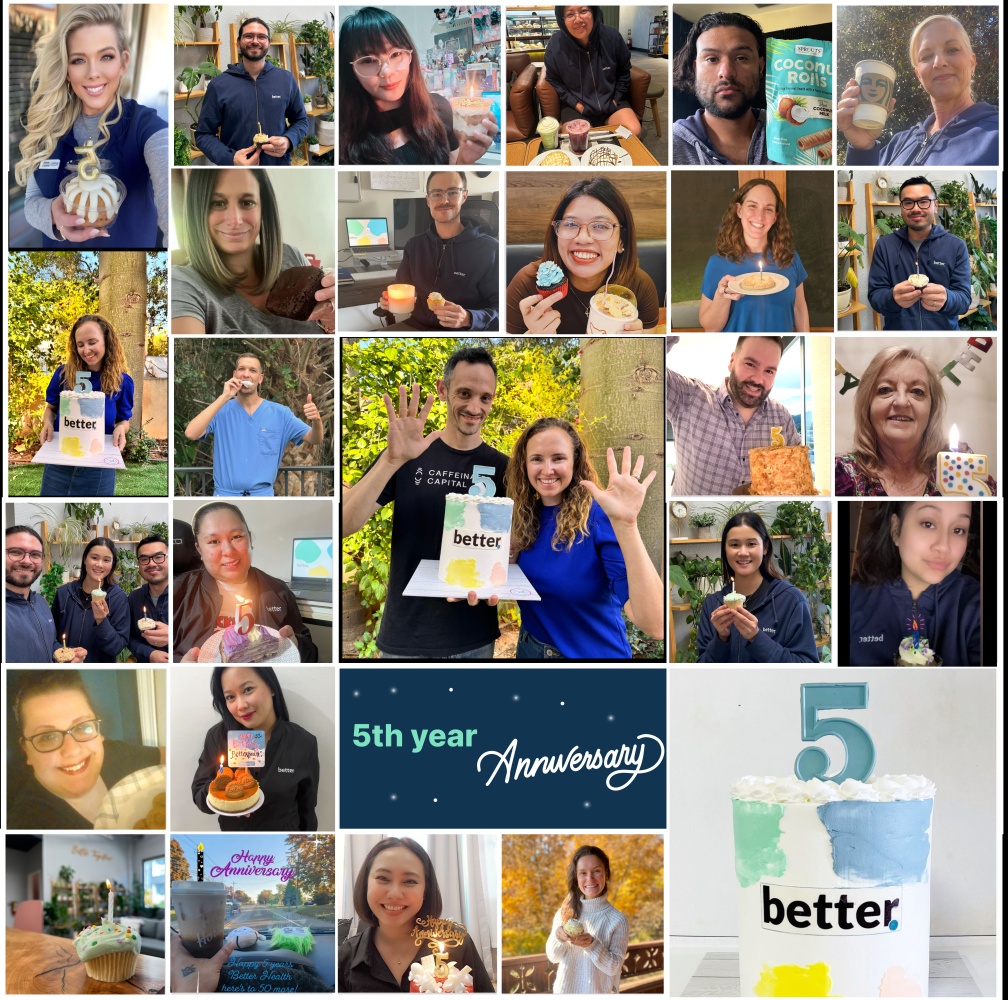
When Better Health marked its fifth anniversary in October 2024, she again recommended persistence to new founders. The team sometimes used an image of a person digging for diamonds who stops just before reaching them. Such pictures are comforting because they turn uncertainty into a visible distance. In actual company building, the distance remains frustratingly obscure.
Her accompanying thought was more measured than the diamond picture alone suggests. Even an effort that fails can leave its participants with learning, growth, and an effect on other people. That gives persistence a purpose beyond the promise of a triumphant ending. Time spent building can matter without a guarantee that the next shovel will hit treasure.
The book that joins the team
Tony Hsieh's Delivering Happiness has a place in Breckler's leadership thinking. In 2021, she described it as a favorite book and said new employees received a copy. The gesture makes an idea about company culture tangible: someone joins the business and receives something to read, rather than only a list of tasks.
Her later explanation of the book's influence emphasized four ingredients: perceived control, perceived progress, connectedness, and a sense of meaning. She wanted colleagues to feel they were developing, forming relationships, and contributing to a shared purpose. Those are aspirations for the workplace, not proof that every employee experiences it identically. Their specificity makes them more useful than a general pledge to have a pleasant culture.
A founder can spend considerable energy deciding what a company should produce and give less attention to how it should feel to work there. Breckler's reading choice brings the second question into view. The idea asks a manager to notice whether people can make decisions, see their progress, and know one another. A book cannot organize a company. It can give a team something concrete to discuss.
Room to make decisions.
A sense of moving forward.
Relationships with depth.
A reason for the work.
A company big enough to require new habits
By June 2024, Breckler described Better Health as a remote-first business with around fifty team members spread across more than fifteen states. The company was operating in forty-eight states. That same month, it announced a fourteen-million-dollar strategic funding round, bringing its reported total funding to twenty-seven and a half million dollars.
These numbers describe different things. The financing concerns resources entrusted to a company. The state count concerns its operating footprint. The team count concerns the people doing the work. None is a measure of Breckler's personal wealth, and none by itself explains how a distributed team makes decisions on a Tuesday afternoon.
They do mark the distance from the summer cafeteria. A sibling partnership could keep its conversations close to the counter. A team spread across many states has to make coordination deliberate. The contrast is a matter of organizational scale, and it gives her attention to control, progress, and connection a practical setting. Culture becomes harder to leave to proximity when colleagues are elsewhere.
Returning to the room where the idea began
In August 2025, Breckler joined Mada Seghete and Tara Viswanathan for a panel on the journeys of serial female founders. Organized through Stanford's GSB Women's community with Female Founders Edge, the event was hosted at Foley & Lardner's San Francisco office. Anna Chukaeva moderated the discussion. Breckler thanked the organizers and her fellow panelists afterward.
Before the event, she had described Stanford as evidence that entrepreneurs can be made through experience and encouragement. She arrived expecting big tech and left launching a company. Returning to that community as someone with four ventures behind her put her on the other side of the exchange: the person whose experience might help another founder decide to try.
Her work now also includes Sovereign Ventures, which lists her as an operating partner. The collective backs founders and builds or acquires businesses. Alongside her CEO role, the position extends her involvement into other people's companies. It is another setting in which operating experience can become useful to someone still deciding how to build.
Three syllables, and a life beyond the pitch
Her personal website supplies a small courtesy before the professional biography: Na'ama is pronounced Na-ah-ma, in three syllables. It also says she lives between Miami and Israel. Away from work, she can often be found with her three children at a park or a local coffee shop. The details place an actual person alongside the company names.
Family also figures in her account of motivation. She has described her grandmother, a Holocaust survivor, as an early example of courage and belief in other people. The responsibility she draws from that memory is to do useful work. It sits behind the business ambition without needing to become a slogan for it.
Her path has room for a cafeteria, an engineering unit, a classroom, a partnership, and the work of being a parent. The common thread is a willingness to learn in company with other people. Breckler keeps returning to the chance to try, and to those who helped her take it. Somewhere near the beginning of that story, two siblings still have a menu to price.
Keep the conversation going
Read Naama’s personal site, follow her on LinkedIn or X, and visit Better Health and Sovereign Ventures.