Naama Stauber Breckler’s first business lesson arrived by cactus. She was in third grade, growing up in a small moshav in central Israel, and the plan looked splendid: pick cactus fruit, sell it at the local country club, collect the proceeds. The trouble was operational. She and her friends wore ski gloves. The gloves lost. Their hands were full of thorns for days.
The story has the neat proportions of a fable, except that Breckler actually lived it. Its moral has followed her through four companies: an opportunity is only as good as the system built around it. The fruit can be free, the customers nearby and the timing right. Ignore the awkward middle and you still go home with thorns.
At fourteen she tried again, this time with her older brother and a small loan from their parents. They opened a summer cafeteria at the same club. Pizza-pita was the specialty. They chose the menu, coordinated vendors, set prices and kept the monthly books. By summer’s end they had earned a few thousand dollars and, more usefully, learned that a business is a hundred ordinary decisions wearing one name tag.
The engineer learns to widen the frame
Before Breckler became a serial founder, she became an engineer. She studied computer science while serving in the Israel Defense Forces and spent about six years developing and managing defense and security systems. It was a world of constraints, dependencies and consequences, an education in seeing a product as more than the shiny object at its center.
In 2010, she moved to the United States for an MBA at Stanford Graduate School of Business. The plan was conventional by Silicon Valley standards: graduate, then join a large technology company. Stanford made that sensible future feel less inevitable. The founders around her supplied nerve. A class at the design school supplied a problem worth following.
The project became CompactCath, a company built around making an established medical product more discreet and practical for daily use. Breckler helped take the idea from a whiteboard toward nationwide commercialization. The work also exposed a larger truth. Inventing a better object did not automatically create an easier journey. Distribution, selection, reimbursement and follow-through were their own stubborn system.
This is where her engineering background becomes more interesting than a line in a biography. Breckler did not abandon systems thinking when she moved into leadership. She expanded the boundary of the system. The customer, the form, the expert, the shipment and the anxious question after delivery all belonged inside it.
“Everything with great potential deserves to be pushed back on at least once if you encounter a barrier at first.”Naama Stauber Breckler
Three ventures, then a larger question
CompactCath was followed by operating and founder roles at MocaCare and Avails Medical. The products differed. The repeated work did not: find a neglected gap, assemble technical and commercial teams, turn an idea into something usable, then learn what the market had forgotten to make easy.
Breckler describes herself as a software engineer and product manager turned entrepreneur. The phrase matters because it refuses the usual founder mythology. She did not wake up one morning with a visionary costume. She accumulated tools. Code taught logic. Product work taught trade-offs. Commercialization taught that distribution is part of design. Repetition taught which frustrations were isolated and which belonged to the architecture.
Before choosing the first focus for Better Health, Breckler spent months talking with people across the industry. Her team studied where customers stopped, hesitated or dropped out. They met people online and in their homes. The method was unglamorous and therefore valuable: watch the work as it is actually done, especially the work nobody put in the pitch deck.
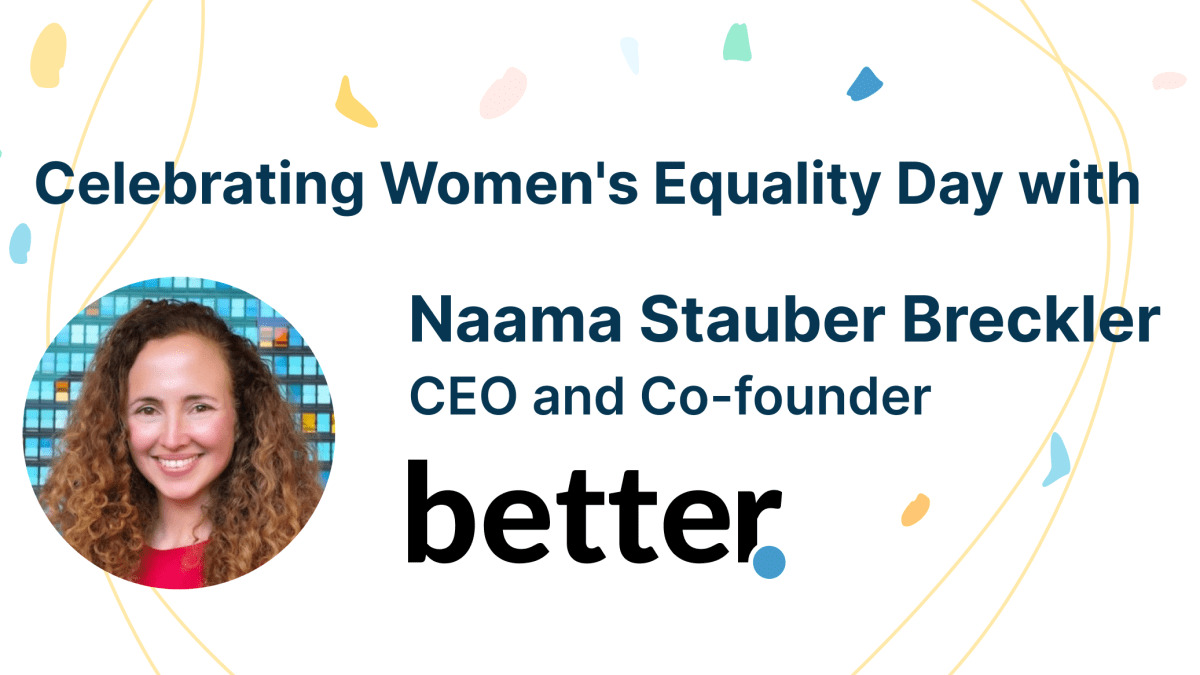
A useful pitch gets corrected
Better Health began with a broad, elegant idea: give a cumbersome category the ease of a modern digital transaction. Investors could understand the marketplace. Customers complicated it. They did not simply want a larger shelf or a smoother payment. They wanted a guided path shaped around a specific situation and ongoing support from people who understood the day-to-day questions.
So the company narrowed. The catalog became less important than the fit. Support, which had emerged organically, became a defining part of the model. This was an unfashionable kind of ambition: fewer abstractions, more specificity. It replaced the fantasy of a universal user with the discipline of serving an actual person.
The next shift was distribution. Better Health started close to the consumer to learn and build evidence. A collaboration with the University of Miami Health System helped the company learn how to work with larger institutions and address their operational needs. That experience became a catalyst for more partnerships. Start close, understand the repeated friction, then invite scale.
In June 2024, Better Health announced $14 million in strategic funding, bringing its reported total to $27.5 million. Breckler said the work ahead included expanding tools for institutional partners, improving data sharing and exploring where newer AI systems could remove tedious coordination. The technology changes. Her criterion does not: it should take work off somebody’s desk, not add another dashboard to admire.
Persistence without theater
Breckler’s public advice to younger women is to push back. She credits consequential moments in her own life to refusing an initial no, and she applies the same instinct when recruiting someone she believes belongs on the team. The point is not endless combat. It is one honest second conversation. Say where you stand. Test whether the barrier is real. Avoid the antique regret called “what if.”
Her view of representation is equally practical. In her military engineering class, women outnumbered men, a reversal of the typical ratio. Her manager, mentor and unit leader were also women. Seeing them altered her sense of what was available. Years later, she spoke openly about wanting women among Better Health’s investors and about the different experience a more varied group brings to a boardroom.
Her management vocabulary owes something to Tony Hsieh’s Delivering Happiness, a book she has named as a favorite. Its framework connects happiness to control, progress, relationships and a sense of meaning. Breckler’s interpretation is operational: leadership should create those conditions in the ordinary week. A mission may attract someone to a company, but perceived progress and clear ownership help that person stay engaged once the inspiring sentence has met the Monday calendar.
That distinction sharpened during Better Health’s years as a distributed team. Giving smart people freedom remains attractive, but freedom lands differently for different colleagues. Some thrive with a broad destination; others need clearer expectations and a more explicit definition of success. The humane response is not to canonize one management style. It is to notice what lets each person do strong work, then supply enough structure without turning the company into a permission queue.
The same philosophy appears at home in smaller clothes. Breckler has three children. She uses the Hanukkah shamash, the candle that lights the others, as a lesson in kindness. The worthy act may be lending a pencil, helping on the playground or offering a kind word. Leadership, in this telling, is less spotlight than transfer: use whatever light you have to make another flame possible.
“Representation matters so much because when you see someone succeed who has similarities to you, you get a vision for what you could develop into.”Naama Stauber Breckler
What a founder can steal
Breckler’s career offers a compact operating manual. First, observe before scaling. A customer’s workaround is often more instructive than a competitor’s feature list. Second, let the mission stay fixed while the route changes. Better Health’s broad marketplace story gave way to a narrower model without surrendering the underlying purpose. Third, treat service as product. If the transaction is polished but the surrounding work remains miserable, the design is unfinished.
Fourth, absorb complexity. Many organizations improve their own margins by making the customer perform unpaid clerical labor. Breckler’s companies keep reaching for the opposite bargain: put the tedious work inside the system, automate what can be automated and let expertise travel with the product. Finally, push back once. Not because every no is wrong, but because promising things deserve a clear hearing.
There is also a lesson about sequencing. Breckler did not begin Better Health by demanding that large partners adopt an untested theory. The company worked directly, learned the repeated jobs, and used those lessons to become a more useful institutional collaborator. Distribution followed definition. For founders tempted to chase a logo before they can describe the customer’s Tuesday afternoon, the order is worth pinning above the desk.
These principles sound obvious once listed. So do most useful principles. Their value arrives in application, when a grand marketplace needs to become a specific service, when a beautiful object needs an ugly distribution problem solved, or when a cactus fruit needs gloves made for cactus rather than snow.
Four companies in, Breckler is still working the middle. It is the place between an idea and its use, between a purchase and its aftermath, between what institutions offer and what people must actually do. The middle rarely photographs well. It is full of forms, handoffs, edge cases and stubborn little rules. It is also where a patient engineer can build a career.