A ticket to Muslim Tech Fest London 2026 started at £199. Lunch came with it. So did prayer facilities, workshops and the possibility of meeting somebody who could help build, back or buy what you were working on. The food was the easy part to price. The introduction was the reason to go.
That is the commercial proposition behind a company with a community movement’s vocabulary. Muslim Tech Fest, or MTF, brings Muslim technologists, founders and investors together, then gives them several ways to get past the name badge. There are product demonstrations, startup pitches, small-group discussions and practical sessions. Faith shapes the setting; business gives people something to do once they arrive.
The London event on June 6 has finished. Its organizers say 2,000 builders attended and mark it sold out. As of September 2026, the website is advertising an October gathering in Sarajevo. What began as a London festival now sells something more ambitious: repeated opportunities for a dispersed professional community to work out who it should know.
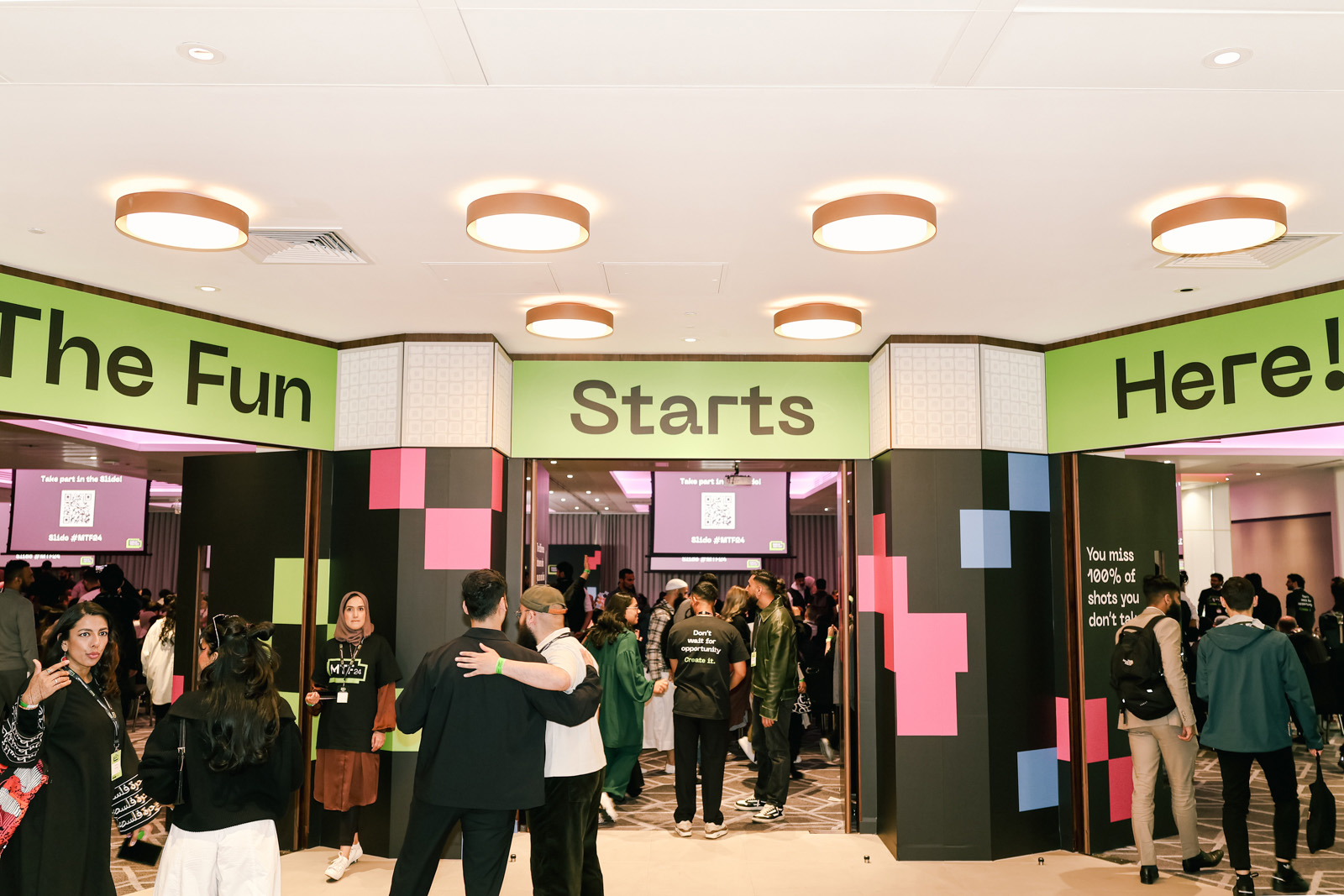
The volunteer network had a ceiling
MTF’s roots reach back beyond its first festival. In 2016, Arfah Farooq and Murtaza Abidi started Muslamic Makers after connecting over Twitter about Muslim representation in technology. Meetups became a wider community, supported by people giving time around their jobs. Its archive describes a decade of volunteer effort before the brand retired in 2026.
Farooq brought that accumulated trust to Muslim Tech Fest. Zahid Mahmood brought entrepreneurial experience and a willingness to make the project commercial. Their published origin story dates the domain registration to May 2022; the first festival followed in 2023. The distinction matters: the business launched with relationships already in place.
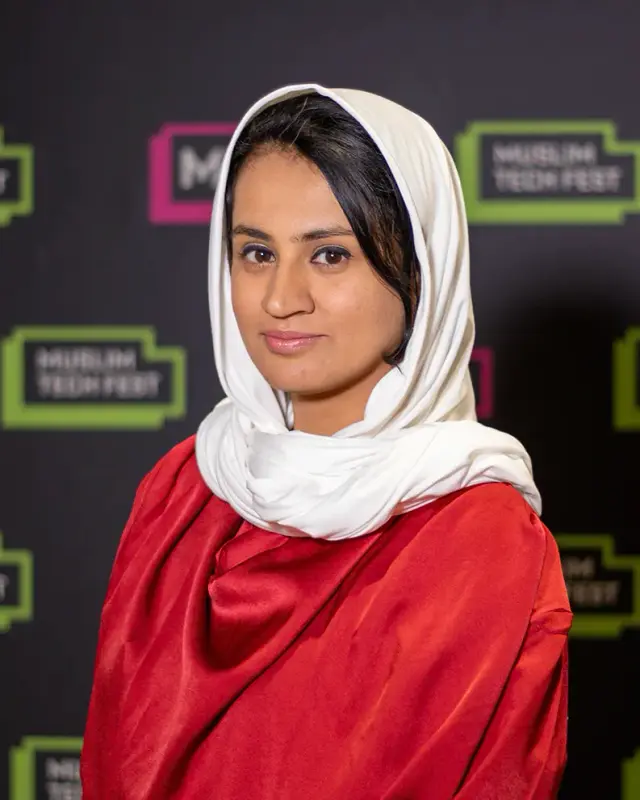
Community builder & co-founder
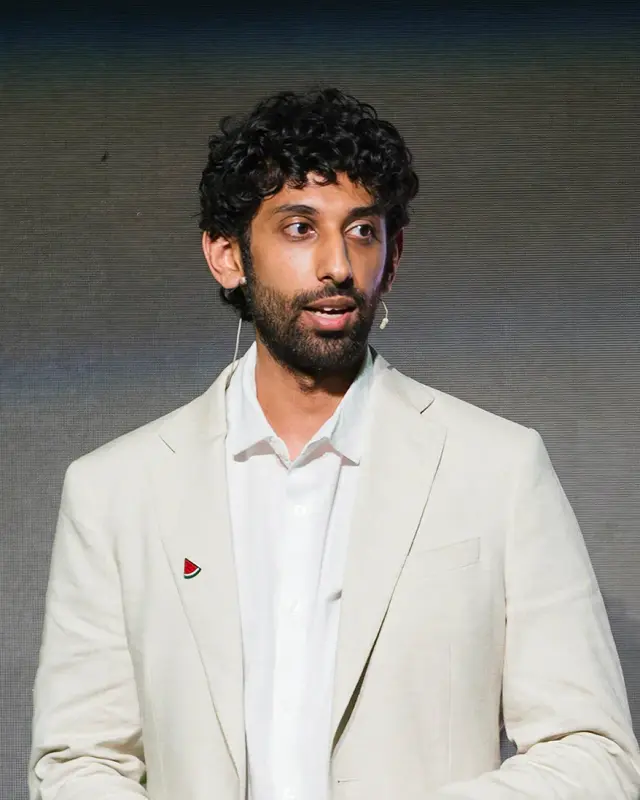
Entrepreneur & co-founder
The constraint they describe was dependence on goodwill. Volunteer labour could sustain connections, but the founders wanted an organization capable of attracting commercial support and operating at greater scale. That is the documented change in thinking, rather than a neat tale of a failed product suddenly finding its market.
Branding and events agency Manza says the inaugural London festival sold out with 300 attendees. The founders subsequently enlisted it for identity design, the website, ticket marketing and event support. The practical move was to put professional delivery around existing demand. A community’s affection could open the door; somebody still had to sell the tickets and run the day.
A specific audience, several customers
MTF serves overlapping groups with different reasons to pay attention. A developer may want peers and career conversations. A founder may need early customers or investor feedback. A sponsor may want prospective hires, product users or business relationships. The festival’s job is to arrange enough useful encounters that these interests support one another.
Its 2025 programme shows the range. Nester co-founder Javaid Karim led a workshop on turning ideas into minimum viable products with no-code and AI tools. Muslim Women Connect and Tech Sisters roundtables addressed careers, salaries and mentorship. Four startup finalists were scheduled to pitch for a £30,000 investment opportunity. These are distinct offers: learn something, meet someone, demonstrate something, ask for backing.
Four finalists. One advertised investment opportunity.
Funding for competing startups, separate from MTF’s own finances.
The company occupies the space between a broad technology conference and a close-knit professional meetup. Its advantage is specificity. An Islamic finance app can meet people for whom its religious requirements are already intelligible. A Muslim founder can discuss commercial ambition alongside questions of faith without first explaining why the two share an agenda.
Specificity does not make membership compulsory. MTF’s startup application explicitly welcomes non-Muslims, while prioritising Muslim-led and mission-aligned ventures for exhibition space and subsidies. Its code of conduct also covers participants regardless of religion. The proposition depends on a recognisable centre of gravity and a door that remains open.
The invoice is real. So is the access question.
Ticket sales, sponsorship and exhibitor packages underpin the business. London’s published 2026 prices were £199 for limited early bird admission and £249 for general sale, with lunch and refreshments included. For the buyer, travel, accommodation and time away from work can make the full cost appreciably larger.
The event offered limited subsidised student access through applications and partners. Its startup exhibition page similarly describes partner support that can reduce or cover participation costs. These arrangements matter to the mission, but allocation is limited. A paid event serving underrepresented talent has to manage the tension between paying for the room and keeping its intended audience able to enter.
For companies, the relevant calculation is whether the audience contains people likely to need their product. On MTF’s sponsorship page, Kestrl chief executive Areeb Siddiqui credits the festival with a 270% increase in app downloads in one month. That is a customer testimonial published by the organizer. It illustrates the pitch to sponsors; it cannot establish what another exhibitor will earn.
The £30,000 competition should be read just as carefully. It was advertised as investment for startups pitching at the festival. It is neither the company’s fundraising total nor proof that attending guarantees capital. MTF creates occasions for transactions. The founders, investors and customers still have to agree on the transaction itself.
Give the microphone back
The most revealing product document may be MTF’s March 2026 roundtable guide. It asks expert facilitators to get participants speaking quickly, keep contributions brief and draw out quieter voices. The goal is a useful conversation among people who have something to offer, including those who are unlikely to seize the microphone unaided.
Its suggested hour has a deliberate rhythm: establish the rules, warm up the room, explore a problem, challenge assumptions, identify actions and close. Facilitator interventions should generally last 30 to 60 seconds. Respectful disagreement is encouraged. Expertise earns a role in the discussion, not possession of it.
An hour with room to answer
- 00–10Set expectations & warm up
- 10–25Explore the problem
- 25–40Challenge assumptions
- 40–52Choose practical actions
- 52–60Connect the ideas & close
There is a lesson here for organizers with a much smaller budget. Copy the discussion design before copying the scale. Invite people around a concrete problem, explain how airtime will work and finish with a next step. A famous speaker can attract registrations. A well-run conversation gives attendees a reason to exchange contact details.
The design has conditions. It needs participants willing to contribute, facilitators able to interrupt politely and enough shared subject knowledge to make disagreement useful. If one voice occupies the hour, the format loses its purpose. MTF’s instructions acknowledge that by supplying practical ways to rebalance airtime and bring a wandering discussion back.
The Monday morning test
MTF is unusually explicit about the work surrounding attendance. Its preparation guide asks ticket holders to complete profiles explaining what they are building, seeking and offering. That information supports introductions by email. It also advertises a badge-scanning upgrade for capturing contacts and notes, giving commercial attendees a way to remember conversations once the day becomes a blur.
The exhibitor guide is equally practical: announce your presence beforehand, show what the product does, keep the stand staffed and follow up within five working days. These instructions reveal where the event’s value can leak away. A conversation that nobody records, qualifies or revisits may remain an enjoyable conversation and nothing more.
A founder can copy that approach without buying a stand. Decide which people would make attendance worthwhile. Bring a demonstration or a precise question. Record the promised next step with permission, then do it. This is also why the model will disappoint anyone expecting a ticket alone to produce customers: access still requires preparation and follow-through.
Faith belongs on the agenda
The festival’s Islamic identity is visible in its practical arrangements and intellectual priorities. Prayer facilities feature in the London offer; the San Francisco agenda explicitly made space for Dhuhr alongside lunch. The programmes place entrepreneurship beside questions about responsibility, representation and the consequences of technology.
In its June 2025 reporting, Anadolu, that event’s global media partner, counted more than 1,500 participants from 27 countries. Mahmood spoke about accessibility and the presence of Gaza Sky Geeks. The community being assembled included people whose professional circumstances extended well beyond the usual startup discussion about finding customers.
“Technology alone is not going to save the world.”
Zahid Mahmood / speaking to Anadolu, June 2025
That observation puts a useful limit on the festival’s ambitions. Shared values can inform what people build and whom they consider. They do not settle every ethical dispute or make a product effective. The value of having founders, engineers and other perspectives together lies partly in being able to question one another’s assumptions.
Sarajevo buys more time together
The next advertised stop extends the offer beyond a single festival day. MTF’s Bosnia page lists package-dependent dates in October 2026, with summit access, dinners and a Sarajevo tour in different combinations. The VIP itinerary runs October 14–18 and includes four nights’ accommodation. These are plans for a future gathering, rather than completed results.
The proposed programme also includes matched companions, small learning groups and mentoring conversations. It makes the business direction clear: MTF wants to organize more of the time around the introduction. The commercial test will be whether people find enough value in that extra time to return, recommend it and keep working together after they leave.
For an attendee, the most useful question remains pleasantly concrete. Who would you like to meet, and what would you do together on Monday?