Nobody opens an online shop for the pleasure of fixing a product-import file. Nobody launches a magazine to spend the afternoon configuring a cookie banner. Yet these are the chores that arrive with the keys to a website. Mozilor has built a software business around that neglected stretch of the working day: the necessary jobs that sit between having a website and being able to run it.
The company’s three current product brands divide that work neatly. CookieYes manages cookie consent. WebToffee supplies e-commerce plugins and apps. WebYes checks websites for problems in accessibility, performance and search visibility. The names are cheerful; the assignments are stubbornly practical. A merchant needs product data moved. An agency needs settings maintained across clients. A website manager needs to know what has broken since the last update.
That gives Mozilor a recognizable place in the software market. It builds products that attach to businesses’ existing websites and routines. The appeal is straightforward: finish an awkward job without commissioning a separate piece of software. Its range also invites a useful question. How far can a company travel by paying attention to work its customers would happily stop doing?
A request at the edge of WordPress
Mozilor dates its beginning to 2017, in the technology incubator at the National Institute of Technology Calicut. Anvar TK is its chief executive; the regional industry body CAFIT identifies Anvar and Faseela Areekkal as its founders. Its Indian company was incorporated that April. The UK entity followed in April 2019, with a registered office in Milton Keynes. Today its corporate contact page also lists Kochi and Kozhikode offices.
The revealing origin story belongs to the products. In a LearnWoo interview, Anvar said WebToffee started with existing WooCommerce extensions and roughly 10,000 active users. CookieYes grew from a WordPress consent plugin after customers asked for a version that would work on other kinds of websites. The constraint was specific: useful software had reached people whose sites could not run it.
There is a repeatable idea here. A customer asking for another integration may be describing an adjacent market. The request gives a product team something concrete to investigate: who else has this problem, what prevents them from using the existing solution, and whether removing that obstacle is worth the work. Mozilor’s expansion offers a particularly legible example because the obstacle was the website platform itself.
“Launch faster, create a feedback loop with customers, and continue improving.”
Anvar TK · LearnWoo interview

The banner is the visible bit
A cookie consent platform has an unusually public front door. Visitors meet it before they have read the article or browsed the shop. Behind that little panel sits a larger set of tasks: finding cookies, presenting choices, recording consent and connecting those choices to the services running on the site. CookieYes packages those functions for website owners and the developers or agencies working for them.
Its WordPress.org listing records more than one million active installations. That is evidence of distribution, with an essential qualification: active installations are not paid subscriptions. The listing describes a free plugin with commercial upgrades. WebToffee separately reports more than 1.8 million websites using its products. Those figures measure different product populations and should not be added into an imaginary customer total.
CookieYes also sits inside an advertising ecosystem with its own technical requirements. Google hosts a profile of the product as a consent management partner. CookieYes connects with Google Consent Mode, while its current plan comparison lists support for the IAB Transparency and Consent Framework. For customers, the practical attraction is coordination: consent choices can inform how connected advertising and measurement tools behave.
Installing it still involves decisions. CookieYes’s implementation documentation distinguishes between installation routes and warns existing users to remove an earlier script when moving to its Google Tag Manager template. That is a small but telling detail. A working consent setup depends on how it is installed, as well as what the software can do. A banner appearing on the screen is only the most visible checkpoint.
Choices + records
Imports + operations
Audits + monitoring
What changes at 120 websites
The clearest account of the customer problem comes from agencies. A CookieYes case study published in June 2026 describes Best4U Media, a Netherlands-based digital business, managing more than 120 client websites through one dashboard. Its previous cookie pop-up was too basic for its growing requirements, and separate site management had become cumbersome. Here, the first thing to stop working was the operating method.
The agency adopted centralized management, templates and Google Consent Mode integration. CookieYes reports a 50 percent reduction in licensing costs compared with individual client licenses, plus up to two hours saved per onboarding. These are vendor-published results for one customer. They explain the purchase more usefully than a claim that the product is simply easy to use: the agency was buying fewer repeated tasks and a different licensing arrangement.
Another case study, published in April 2026, describes the UK agency Adtrak migrating 149 websites. CookieYes reports 45 percent licensing savings through its agency program. Adtrak’s earlier difficulty involved fragmented tools and site-by-site checking. Both accounts point toward the same commercial opportunity. Once an agency repeats a job across a portfolio, central settings and volume pricing become part of the product’s value.
One agency’s result, published by CookieYes in June 2026. Savings compared with individual client licenses.
A small bill, multiplied by domains
CookieYes’s public pricing makes the business model unusually easy to inspect. At the September 2026 check, it listed a free plan and monthly per-domain prices of $10 for Basic, $25 for Pro and $55 for Ultimate. The free tier allowed 5,000 monthly pageviews and 100 pages per scan. Higher tiers expanded capacity and added features. Taxes and applicable usage charges sit outside those headline prices.
The unit matters as much as the price. A business with several domains must think in several subscriptions; an agency can investigate a separate partner arrangement. A quiet site and a busy publisher also put different demands on traffic allowances and scanning. The buying decision starts with the actual estate of websites, then the features each needs. The smallest number on a pricing page cannot answer those questions alone.
That structure helps explain why free distribution can coexist with a paid business. A useful entry tier attracts people with modest needs. More traffic, more sites or more demanding workflows create reasons to pay. This is an interpretation of the published offer, rather than a disclosed account of Mozilor’s conversion rates. The commercial boundaries are visible even when the movement of customers across them is not.
Behind the shop counter
WebToffee addresses a different source of repetitive work. Its catalogue spans product imports, invoices, packing slips, coupons, subscriptions and other store functions. Its company page describes more than 40 freemium solutions and a presence across more than 100 countries. WordPress and WooCommerce supply the original setting; Shopify apps extend the range to merchants on another platform.
The product-import tool makes the proposition tangible. A shop has product records to bring into WooCommerce or move elsewhere. WebToffee sells software for that task. The attraction is concentrated in a particular workflow, which is how much of this catalogue reads. A store owner can look for the missing function instead of treating every operational improvement as a wholesale website project.
This is also where compatibility becomes a buying condition. A WooCommerce extension belongs in a WooCommerce store; a Shopify merchant needs an appropriate app. The products share a parent company without becoming interchangeable. Against other plugin and app vendors, WebToffee’s visible positioning is a broad collection of store utilities, free entry points and paid capabilities. Buyers still have to evaluate the individual tool against the job in front of them.
The next chore is finding the faults
WebYes brings the portfolio back to the wider website. Its public offering combines checks for accessibility, search optimization, performance and quality, along with monitoring. The free audit examines one URL; an account opens access to a broader workflow. The intended users include website managers, marketers and agencies, making it a neighboring purchase for people already dealing with consent or commerce operations.
Its documentation makes a useful distinction between an automated finding and a completed accessibility review. Some issues enter a needs-review area for manual verification. The product also offers a manual checklist. That creates a sensible division of labor: software can surface problems and organize attention, while people investigate questions that still need judgment. A report gives a team work to do.
For someone considering the product, that distinction is the condition to understand. Scanning is useful when someone can act on the findings, check the results and keep watching as the site changes. It is less useful as a forgotten dashboard. Across Mozilor’s portfolio, recurring maintenance is both the customer’s burden and the reason the tools have continuing work.
A company built around the next task
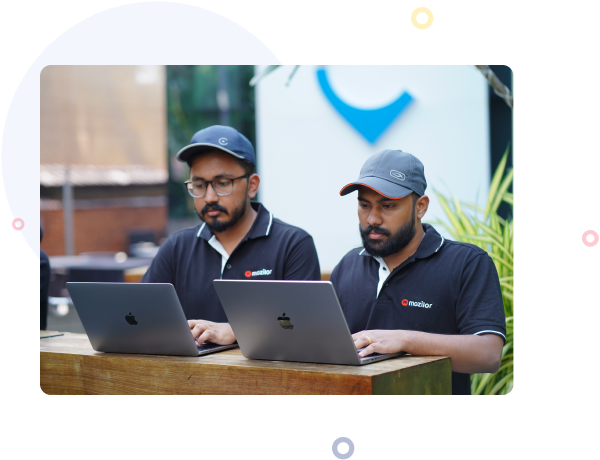
Mozilor’s public culture code emphasizes trust, shared success, learning and ownership. CAFIT reported a 140-member team in December 2025, larger than the 100-plus figure still displayed on the corporate about page. The products require that mix of maintenance and attention: website platforms evolve, integrations need tending, and customers arrive with another configuration to untangle.
CookieYes names Cookiebot, iubenda and Complianz in its competitive comparisons. Consent is therefore a market with alternatives, while WebToffee and WebYes face their own product-level choices. Mozilor’s distinctive thread is the audience running through the portfolio. It keeps returning to the person responsible for a website after the launch celebrations are over. There is always another import, another consent setting, another page to check. For that person, a smaller to-do list is a persuasive sales pitch.