An old application can be remarkably difficult to retire. It knows the customers. It holds the records. It works, more or less, until somebody asks it to recognize a modern login. Then a small box on a screen becomes a surprisingly large business problem. This is the territory miniOrange has chosen: the space between the systems an organization owns and the security it now needs.
- The job: connect employees, customers, and administrators to applications with appropriate access controls.
- The opening: older software and platform-specific login problems that require extra integration.
- The buying question: does it solve your hardest connection at an acceptable total cost?
The application nobody wants to replace
Consider Vodafone Egypt. In miniOrange’s account, the telecom’s identity system had accumulated rising licensing costs, slow synchronization, repeated logins, and gaps in logging. Its older SOAP services also needed to communicate with modern REST APIs. The application estate had moved in different directions. Authentication was where the mismatch became visible.
miniOrange describes inserting a proxy to translate between those interfaces, adding single sign-on and tailored multi-factor authentication, connecting Active Directory for provisioning, and redesigning the database. The work preserved the existing setup. The vendor reports 78% fewer login-related support tickets and 92% fewer provisioning tasks. Those are case-study claims, rather than a forecast for the next buyer.
The useful lesson is architectural: changing the connection can sometimes avoid changing the application. A company buying authentication is also buying a way to keep its other investments usable. That makes compatibility part of the product’s economic value.
A business built in the middle
miniOrange supplies identity and access management, usually shortened to IAM. Single sign-on lets a person authenticate once and reach connected applications. MFA adds verification. Provisioning creates, updates, or removes accounts. Customer IAM applies identity management to people outside the workforce. Privileged access management handles the accounts with unusually powerful permissions.
Privileged access makes the distinction tangible. A normal employee might open a document; an administrator can change the system holding it. miniOrange’s PAM product includes credential vaulting, password rotation, and session monitoring. It offers cloud, on-premises, and hybrid deployment choices. For a buyer, those features address a different question from convenient login: how much power should this account have, for how long, and what record will remain of its actions?
Its distribution is unusually easy to see. There are miniOrange products for WordPress, Atlassian, Shopify, Drupal, and other application ecosystems. On WordPress.org, its SAML single sign-on plugin shows more than 10,000 active installations. A website administrator can encounter miniOrange while fixing one login, without first shopping for an organization-wide identity platform.
A Ford Shopify case study illustrates that smaller doorway. The storefront needed to accommodate ordinary customers alongside employees and dealers or suppliers. miniOrange describes a separate Ford employee login route. The interesting task was recognizing different kinds of shopper and directing them to the appropriate authentication path.
Another published example concerns BNY Mellon’s Jira REST API. miniOrange describes validating tokens from a third-party provider using a public certificate. These are specific integration jobs. They help explain why the company can sell its own identity platform while also helping customers connect applications to an identity provider they already use.
A company buying authentication is also buying a way to keep its other investments usable.
The price of getting connected
The commercial model combines subscriptions, paid platform plugins, and partner distribution. Workforce IAM has a published Essential list price of $2 per user per month. Premium is $3 and adds capabilities including passwordless authentication, adaptive authentication, and SCIM provisioning. Enterprise pricing is quoted. Customer identity has a separate pricing structure.
Per user, per month. Enterprise is quoted separately. Checked October 17, 2026.
For 500 employees, those list rates imply $1,000 or $1,500 a month before any additional charges. That arithmetic is useful for an initial comparison. A deployment budget must also account for the chosen products, integration work, operating responsibilities, and contract terms. A low license price cannot make an incompatible application compatible by itself.
The alternatives include Okta and Microsoft Entra ID for workforce identity, and an open-source system such as Keycloak for teams able to operate it. miniOrange’s case rests on the combination of deployment choice, application-specific connections, and technical assistance. The relevant comparison is the work each option can complete in the buyer’s actual environment.
Products, with people attached
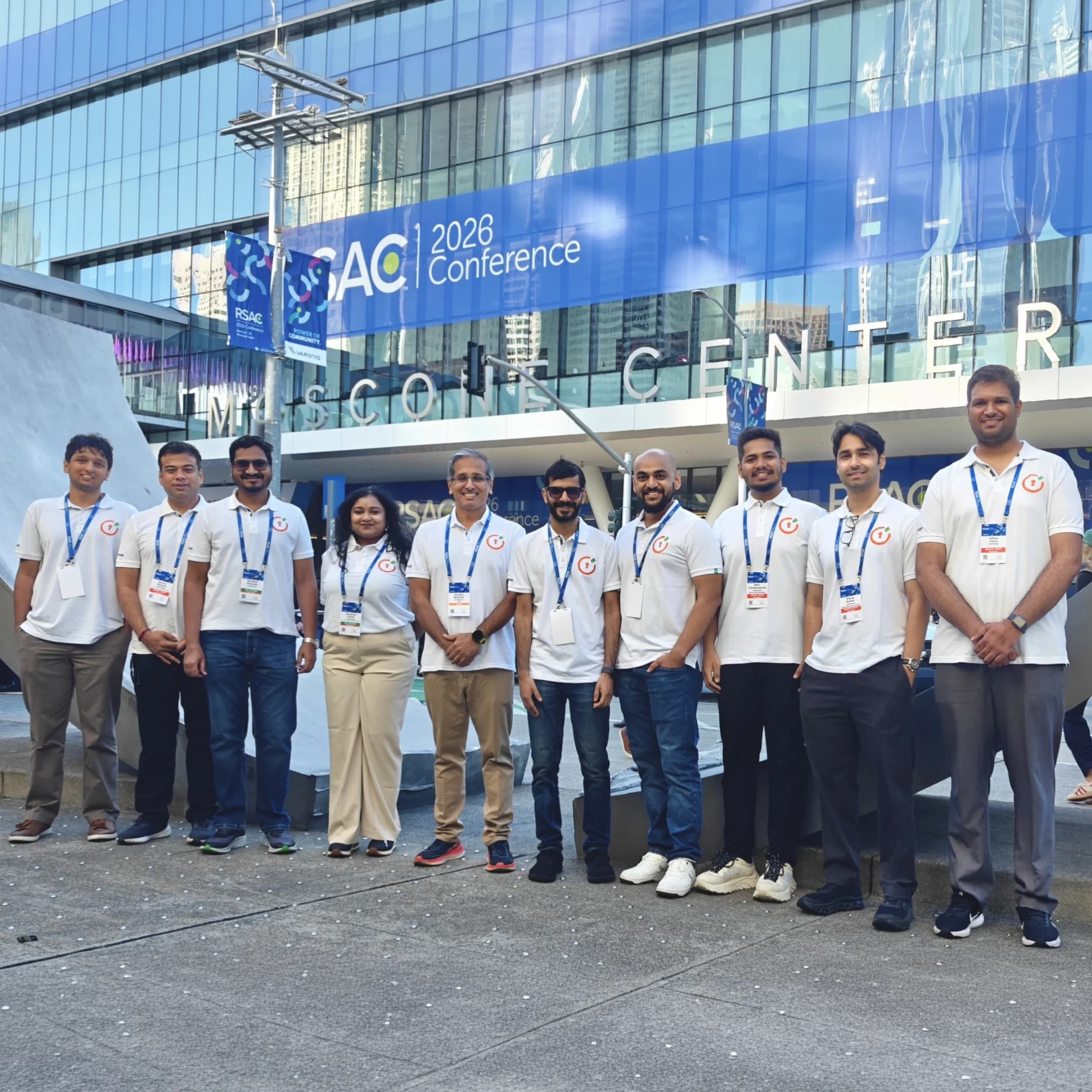
Founded in 2012 by Anirban Mukherji, miniOrange describes itself as bootstrapped. Its own chronology records a move from security services toward products in 2013. Today it emphasizes direct human support, a revealing detail for software whose difficult moments often occur between two vendors’ systems.
In a May 2026 interview, Mukherji linked building in Pune to engineering depth and cost efficiency. He also described a hurdle: earning trust internationally as an Indian product company. DSCI’s 2025 Security Product Company of the Year award offers one concrete marker of recognition.
Start with the awkward application
A useful evaluation begins with the application everyone quietly avoids discussing. Connect it in a pilot. Check role mapping, account removal, recovery, and audit records. Measure support demand as well as successful logins. An attractive dashboard is only part of the purchase; the test is whether the whole access journey works.
That approach also identifies a weak fit. An organization whose existing identity tools already cover its applications may gain little from another layer. Others may find that an integration, hosting requirement, or operating cost changes the calculation. Compatibility should be demonstrated before a long contract makes it expensive to discover.
The next user may be software
The company’s recent direction extends into privacy and AI security. Its news page announced Privacy as a Service in February 2026; its October press index highlights Mukherji’s argument that AI agents need identities and access lifecycles. The object asking for permission may change. miniOrange’s opportunity remains recognizable: make the thing doing the work fit the rules governing its access.