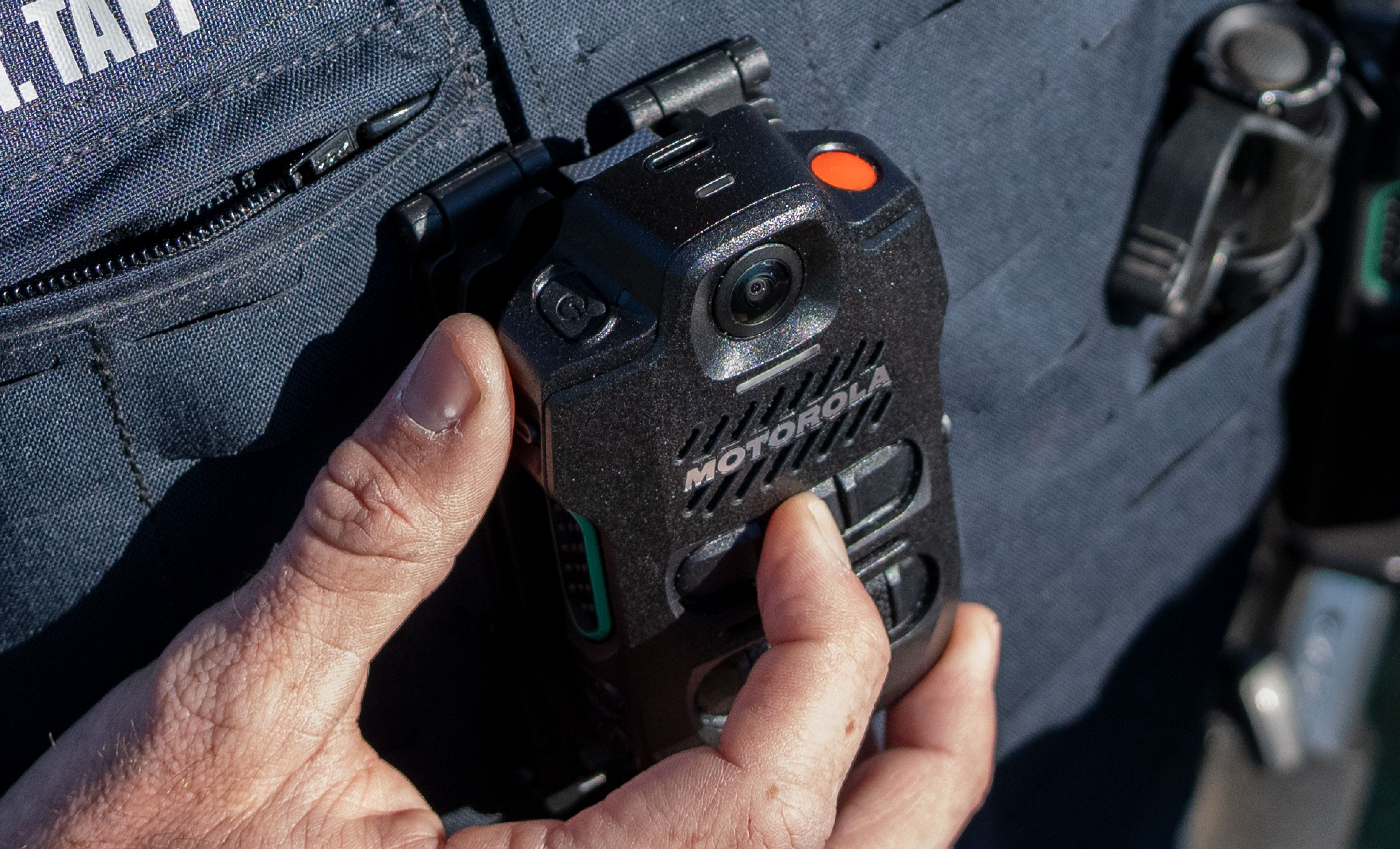
Look at the microphone clipped to an officer’s uniform. There is a lens where you might expect only a speaker. Motorola Solutions’ SVX combines a radio microphone and body camera, connected to its APX NEXT radio. It is a modest-looking object carrying an ambitious proposition: information should travel through an emergency without someone having to carry it from one system to another.
- The product: radios, cameras and software that connect public safety work.
- The business: sell the equipment, then support the system for years.
- The tension: fewer handoffs can mean a harder supplier to leave.
That proposition explains a company easily mistaken for the phone maker. Motorola’s businesses separated in 2011. Motorola Mobility took the handsets; Motorola Solutions concentrated on government and enterprise communications. Under chairman and CEO Greg Brown, it has expanded into the work surrounding the radio. The useful question is how much of that surrounding work belongs together.
The first thing to fail was the product
The company’s beginnings offer a wonderfully practical warning about attachment. Paul and Joseph Galvin established Galvin Manufacturing Corporation in Chicago in 1928. Their battery eliminator let home radios draw household electricity. By 1929, the company’s archives explain, the device was becoming obsolete. The original product was losing its reason to exist.
Paul Galvin saw technicians putting radios into automobiles and pursued that market. The Motorola-branded car radio followed in 1930. Read this as an early lesson in following a customer’s activity beyond the current product. Today’s company has considerably more money to follow it with.
A radio with a much bigger address book
APX NEXT arrived in 2019 after more than 2,000 hours of field research and testing, according to Motorola Solutions. Its touchscreen could be operated in rain and with gloves. Broadband connectivity added applications and remote programming. A radio could remain a familiar physical tool while acquiring a software business around it.
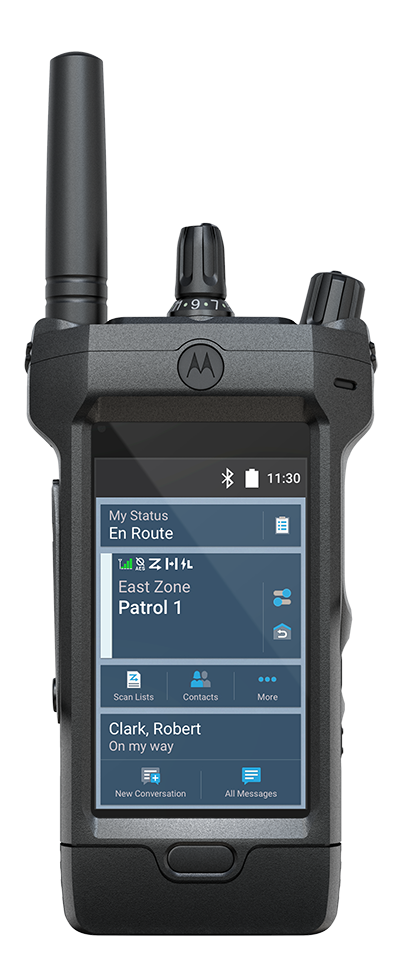
Eyes up.A touchscreen built for rain.
A button built for talking.
CommandCentral addresses another problem: the emergency call, dispatch record, officer’s report and video can live in separate applications. Its software connects information across those stages. Avigilon handles video security and access control, with Alta for cloud-native deployments and Unity for customers managing systems on premises. Schools, hospitals and businesses enter the story alongside emergency services.
SVX, launched in 2025 alongside the Assist AI offering, makes this thinking visible on a uniform. A combined microphone-camera reduces separate equipment. Yet connectivity still matters: the company’s APX documentation says SmartVideo requires broadband and does not currently support LEO satellite service.
Louisiana buys the handoff
In September 2026, Louisiana supplied a concrete test of the proposition: a $139 million, ten-year contract spanning mobile video, digital evidence, command center technology and radio-network support. Six state agencies across 64 parishes are involved. The state’s LWIN network serves more than 109,000 users.
The announcement says the decision followed nine months of evaluation. Louisiana State Police Lieutenant Colonel Robert Burns described moving away from disparate suppliers. The appeal was an integrated system through which responders could share intelligence. These are the customer’s stated reasons and the project’s intended benefits; the announcement does not establish a measured reduction in response times.
A workflow diagram, not a promise about response speed.
The contract also explains the business model. A camera sale is one transaction. Maintaining a network, storing evidence, supplying software and supporting users creates a relationship lasting years. Motorola Solutions sells equipment and integration alongside subscriptions, support and managed services. Its Software and Services segment includes much more than subscription software.
The billion-dollar shopping list
Building those connections has required purchases. The announced enterprise value of the 2018 Avigilon deal was approximately $1 billion, including net debt. By September, Motorola Solutions was announcing integration between Avigilon video software and CommandCentral Aware. The acquisition bought a capability; the connection made the strategic argument.
Silvus, acquired in August 2025, cost $4.4 billion upfront, with up to $600 million more tied to performance. Its mobile mesh networks carry voice, data and video without fixed infrastructure, serving defense and other demanding users. In August 2026, Motorola Solutions completed its $1.5 billion D-Fend acquisition, adding counter-drone technology. Neither deal is small enough to mistake for casual experimentation.
“Safety on the ground demands security in the air,” Brown said when D-Fend closed. Google Cloud supplies another route to expansion: a multi-year partnership announced in 2024 targets cloud, video delivery, mapping and AI capabilities. Buying companies is only one way to add the next connection.
The bill for being indispensable
Motorola Solutions reported $11.682 billion in 2025 revenue. But a broad portfolio does not remove alternatives. L3Harris supplies public safety radios and networks; Axon’s Fusus connects live video and operational data. Buyers have competing approaches to compare, including how readily each system works with equipment already installed.
Airwave provides the uncomfortable counterweight. Britain’s Competition and Markets Authority found Motorola’s emergency-services network could charge above competitive levels. It imposed a price cap that it said reduced charges by almost £200 million annually. Motorola disputed the findings. In January 2025, the Court of Appeal refused permission to appeal the tribunal’s judgment upholding the decision.
A connected system should make information easier to move. Buyers should ask whether it makes the supplier harder to replace.
Borrow the question, not the shopping budget
The transferable idea is straightforward: follow one task across the boundaries between products. Where does someone retype a detail, fetch a recording or telephone another department? Measure that work before buying another feature. Integration earns its keep when it removes a specific burden.
It becomes less attractive when migration costs overwhelm the benefit, connectivity cannot support the desired features, or nobody has established who may access the data. Those are procurement questions, not objections to radios or cameras. The lens on that microphone is an invitation to connect more things. Someone still has to decide which connections deserve to be made.